Background
Kaposi sarcoma herpesvirus (KSHV), also known as human herpesvirus 8 (HHV-8), is an oncogenic DNA virus that causes several diseases in people with HIV (PWH), including Kaposi sarcoma (KS); primary effusion lymphoma (PEL), an aggressive non-Hodgkin B-cell lymphoma; a plasmablastic variant of multicentric Castleman disease (MCD); and KSHV inflammatory cytokine syndrome (KICS), a systemic disorder marked by severe cytokine dysregulation. These conditions are collectively known as KSHV-associated diseases (KAD). Genetic diversity in the viral K1 gene is classified into subtypes A, A5, B, C, D, E, and F, each associated with geographic variation. The impact of KSHV subtypes on KAD outcomes is unclear.
Methods
We conducted a retrospective study of 167 patients with KAD treated between 2004–2024. KSHV DNA was extracted from various clinical samples and sequenced using next-generation and Sanger methods to determine K1 subtypes. Phylogenetic analysis was used to classify subtypes and we evaluated overall survival using the Kaplan-Meier method, and 2-sided log-rank tests were used to assess the differences between subtypes and KAD outcomes.
Results
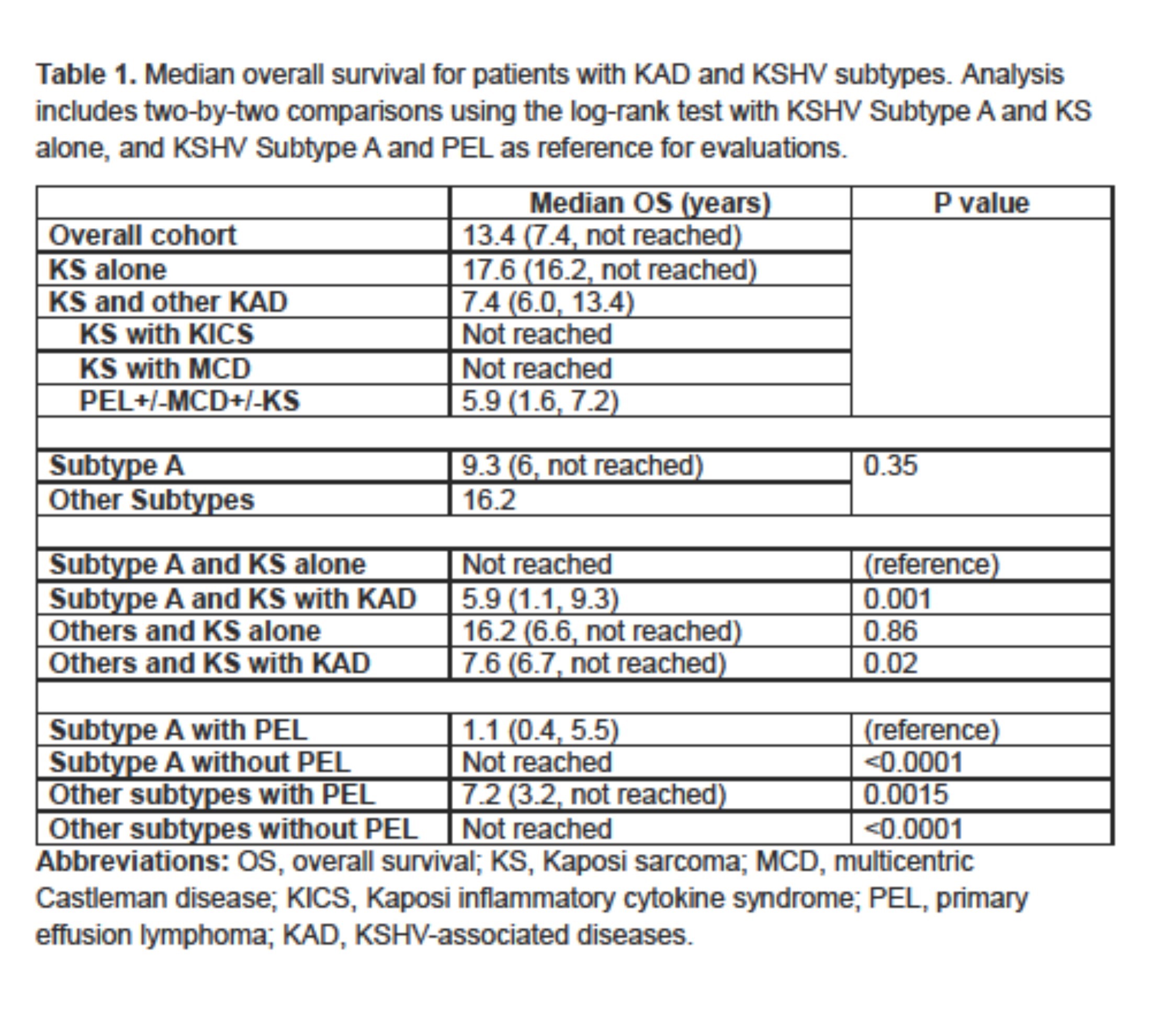
High-quality K1 sequences were obtained for 143 PWH with KADs, 40% had KS alone, 12% had MCD with KS, 17% had KICS with KS, and 31% had PEL with or without MCD and/or KS. Subtype A was most prevalent (44%), followed by C (26%), with no significant association with specific KAD type. Mixed infections, defined as two distinct subtypes in one patient, most commonly subtypes A and B, were identified in 13 individuals (9%). Patients with KS and other concurrent KAD had significantly worse survival than those with KS alone (median overall survival: 7.4 vs. 17.6 years, p<0.001), regardless of KSHV subtype. Of 45 patients with PEL, 10 had PEL alone, 24 had PEL with KS, 2 had PEL with MCD, and 9 had all three conditions. Patients with PEL and Subtype A (n=22) had significantly worse survival compared to those with other subtypes (median OS: 1.1 vs. 7.2 years, p=0.0015) (Table 1). Apart from a trend toward hypoalbuminemia suggesting inflammation and poor nutritional status, there were no other significant clinical differences found in PEL patients with Subtype A.
Conclusions
KSHV Subtype A was associated with significantly poorer prognosis in patients with PEL. These findings underscore the importance of investigating the functional impact of KSHV genetic variation on disease progression and therapeutic response in PWH with KAD.
Table or Figure