Background
Cancer burden in sub-Saharan Africa is projected to rise by >85% by 2030. In Kenya, HIV prevalence is ~5% nationally and ~16% in western Kenya, where cancer and HIV intersect. Data on cancer patterns among people with HIV (PWH) in this region remain limited, constraining integrated care planning.
Methods
We conducted a retrospective analysis of adults (≥18 years) with confirmed cancer diagnoses at Jaramogi Oginga Odinga Teaching and Referral Hospital and affiliates (2014–2025). Clinical and demographic data were abstracted from paper and electronic records. Survival was assessed using Kaplan–Meier methods and Cox proportional hazards models.
Results
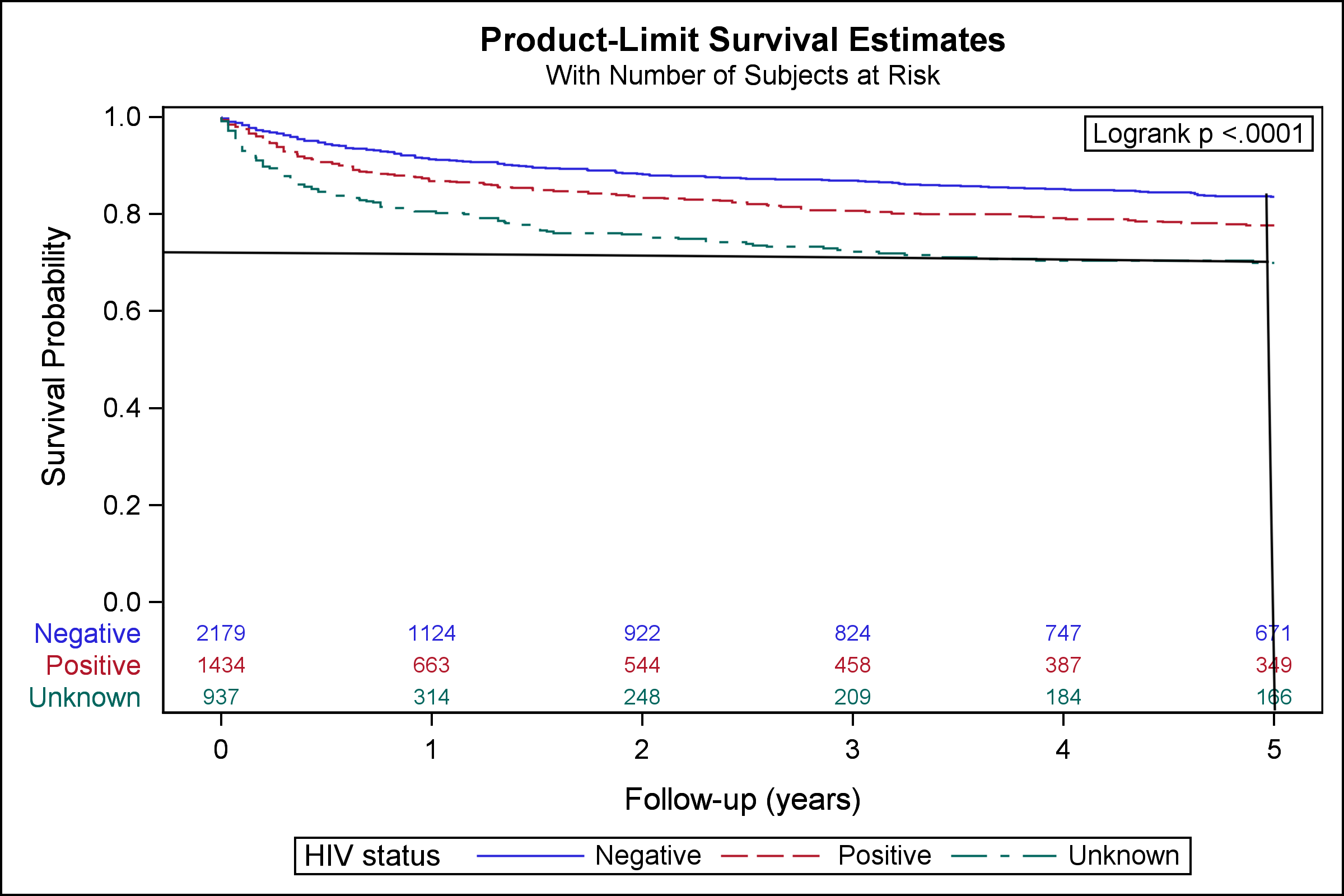
Among 4,675 cancer patients, 31% (n=1,470) were PWH, 48% HIV-negative, and 21% of unknown status. Median age of PWH was 57 years; 74% were women. The most common cancers in PWH were cervical (39%), esophageal (13%), breast (7%), Kaposi sarcoma (7%), and penile (5%). Nearly all PWH (98%) were on ART, yet only 43% received cancer treatment. Median time to treatment was 1.6 months; median follow-up was 0.8 months. Five-year survival was 80% among PWH versus 84% in HIV-negative patients and 71% in those with unknown status (log-rank p<0.001). In adjusted models, HIV infection (HR 1.27; 95% CI 1.04–1.53) and unknown HIV status (HR 1.40; 95% CI 1.15–1.72) predicted higher mortality. Treatment (HR 0.67; 95% CI 0.52–0.87) and insurance (HR 0.25; 95% CI 0.20–0.29) were protective. Cervical (HR 2.37) and colorectal cancers (HR 2.30) carried the greatest mortality risk.
Conclusions
Nearly one-third of cancer patients in western Kenya are PWH, with cervical and esophageal cancers predominating. Poorer survival among PWH and those with unknown HIV status highlights the need for integrated HIV–oncology care models and expanded HIV testing strategies in high-prevalence regions.
Table or Figure