Background
Tracing studies in sub-Saharan Africa estimate that up to 50% of individuals classified as lost to follow-up have actually re-engaged in HIV care at different facilities without formal documentation. These largely untracked “silent transfers” may obscure programmatic estimates of retention, disrupt continuity of care, and compromise treatment outcomes. While Female Sex Workers(FSW) in Kenya are known to be disproportionately affected by HIV, there has been limited study of the prevalence of silent transfers and the relationship between silent transfers and virologic outcomes among FSW in Kenya.
Methods
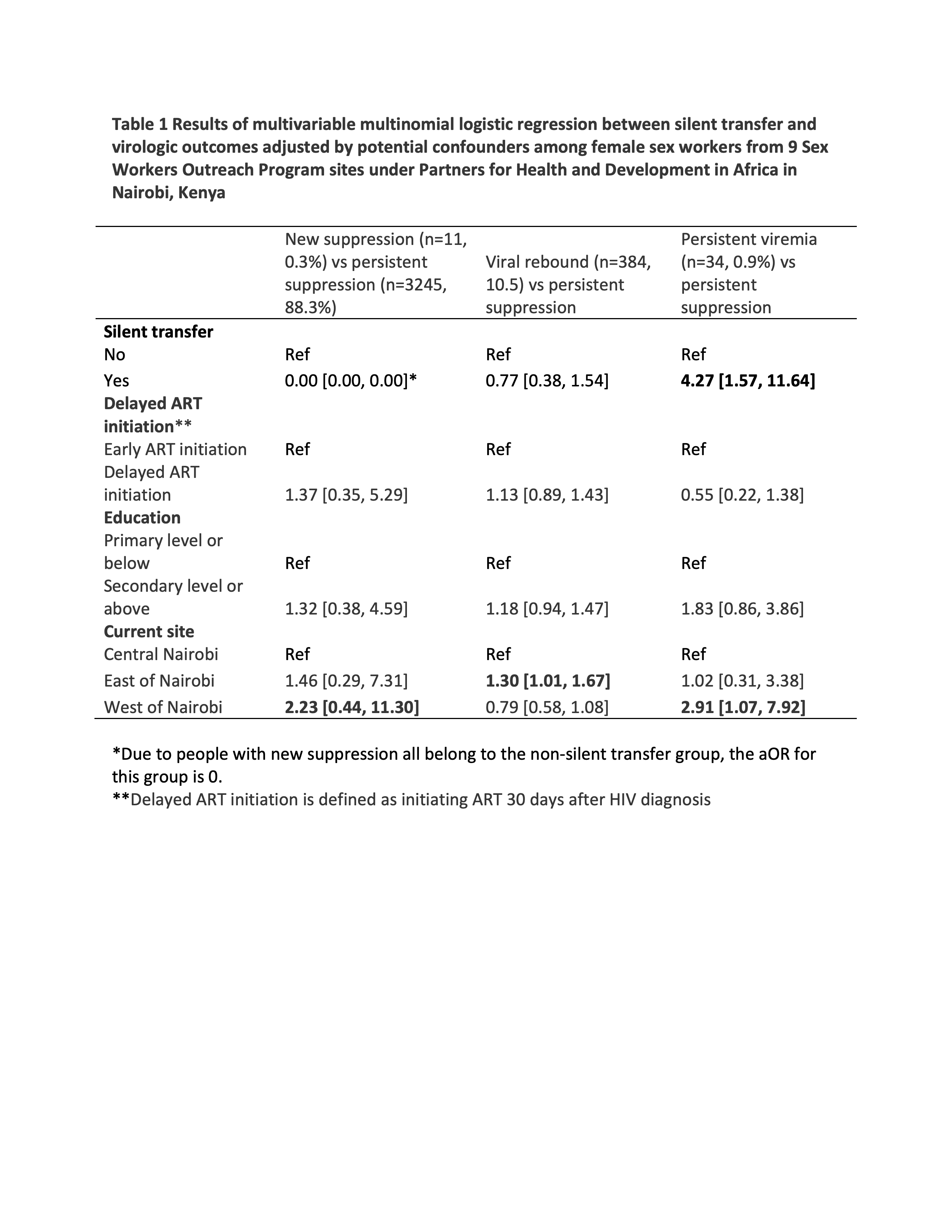
3,850 FSW on ART with electronic health records in Nairobi, Kenya and served by nine Sex Workers Outreach Program sites were included in analyses. Silent transfers were defined as documented engagement in care at two or more clinics without a formal transfer recorded and were identified using The National Unique Patient Identifier. Four virologic outcomes were assessed: persistent suppression(viral load suppression (VLS) at baseline and current visit), new suppression(VLS at current visit only), viral rebound(VLS at baseline visit only), and persistent viremia(VLS at neither) with VLS defined with a cut point of <200 HIV RNA copies/mL. Multinomial logistic regression modelling assessed the association between silent transfers and virologic outcomes, adjusting for education, delayed ART initiation(>30 days after diagnosis), and current site.
Results
A total of 152(3.9%) FSW experienced silent transfer with nearly half transferring from clinics outside of Nairobi(n=64). More than 10% of all FSW(384, 10.5%) experienced viral rebound and 1%(34, 0.9%) of FSW experienced persistent viremia. Experiencing a silent transfer was significantly associated with increased likelihood of persistent viremia(aOR: 4.27, 95%CI [1.57, 12.64]) compared to persistent suppression. Notably, no participants with new VLS had experienced silent transfer.
Conclusions
Silent transfers are associated with persistent virologic failure. Silent transfers are ongoing and likely intensifying as funding interruptions continue. The results emphasize the importance of sustained funding and stronger data integration to reduce transfers, improve continuity of care, and lower the risk of persistent viremia among key populations.
Table or Figure