Background
DNA methylation (DNAm) clocks can measure accelerated biological aging caused by HIV. However, newer DNAm clocks sensitive to disease and mortality, and predictive of future epigenetic changes, have not been compared to brain health biomarkers in the context of virally suppressed HIV.
Methods
People with HIV (PWH) and without HIV (PWoH) underwent a blood draw, brain magnetic resonance imaging (MRI), and neuropsychological testing. DNA methylation levels in white blood cells were quantified using microarrays. Four DNAm clocks were calculated: the mortality-predictive GrimAge, the morbidity-sensitive PhenoAge, the longitudinal model DunedinPACE, and DNAm telomere length (DNAmTL). HIV effects on these clocks were measured. Clocks were tested for correlation with the brain-age gap (BAG), an MRI and deep learning-based index of brain structural health, and with cognitive domains (executive, learning, recall, motor slowing, and language). Neighborhood socioeconomic status and education were examined as risk and resilience factors for DNAm aging.
Results
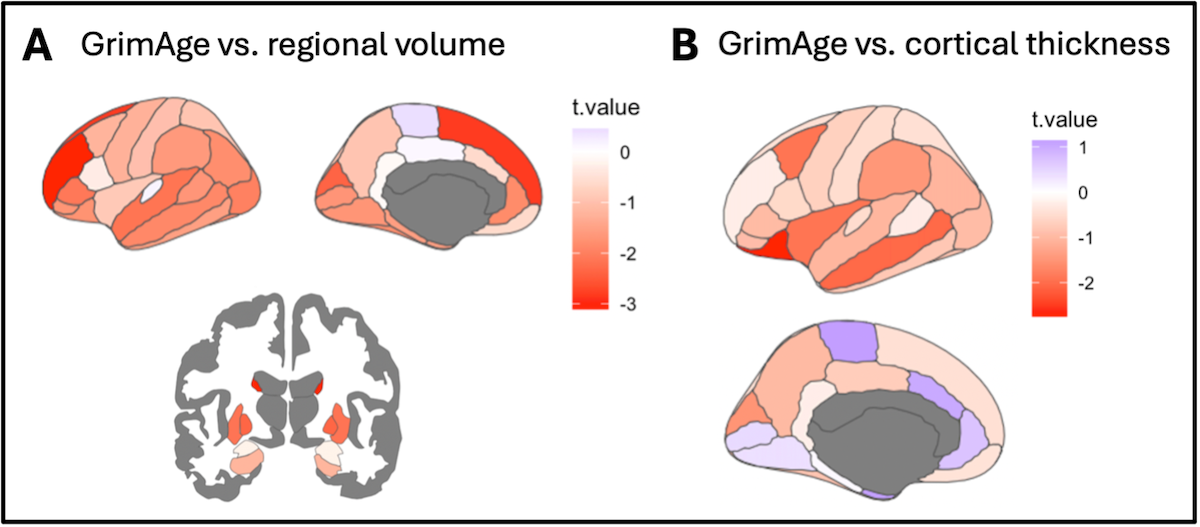
125 virologically suppressed PWH (age=53.0±12.0 yr; sex=37F/88M) and 147 PWoH (47.9±16.4; sex=68F/79M) participated. Elevated PhenoAge (p=0.025; +2.3 years), GrimAge (p<0.001; +1.7 years) and DunedinPACE (p=0.014; +4.4% aging rate) were found for PWH compared to PWoH, controlling for demographics. DNAmTL was also shorter for PWH (p=0.002). GrimAge was correlated with BAG (p=0.013) with an effect of +3.8 years in the brain per decade in blood. It was also associated with reduced regional volumes, especially in the medial frontal cortex and basal ganglia (Panel A) and reduced gray matter thickness in the orbitofrontal cortex (Panel B). GrimAge was associated with worse executive function (p=0.002) and mediated the negative effect of HIV on executive function (p=0.002). Finally, the Area Deprivation Index was associated with worse GrimAge (p=0.003), while education was protective (p<0.001).
Conclusions
Biological age acceleration persists in PWH with viral suppression, as revealed by multiple DNAm clocks. GrimAge specifically is linked with altered brain morphology and executive dysfunction. Results suggest that epigenetic changes are relevant to mental health in PWH and are influenced by modifiable risk factors including social and structural determinants of health. DNAm clocks may offer valuable outcome measures for future senolytic clinical trials.
Table or Figure