Background
The gut-associated lymphoid tissue (GALT) harbors a large proportion of the HIV reservoir despite durable plasma viral suppression with antiretroviral therapy (ART). However, the cellular composition of this reservoir and determinants of viral persistence within GALT remain incompletely understood. We aimed to define the cellular identity and transcriptional signatures of transcriptionally active infected cells in two distinct GALT sites.
Methods
People with HIV (PWH) on ART with well-controlled HIV undergoing ileo-colonoscopy for colorectal cancer screening were enrolled. Fresh ileal and colonic biopsies were processed by enzymatic and mechanical dissociation to isolate mononuclear cells, followed by single-cell RNA sequencing. Reads were aligned to the human genome and HIV reference (HXB2). Cell clustering was performed using Seurat, annotated via the Pan-Human Azimuth reference, and manually curated. HIV-infected cells were defined as those with ≥2 HIV UMI counts. Only genes with False Discovery Rate<10% were considered differentially expressed between HIV-infected and HIV-uninfected cells.
Results
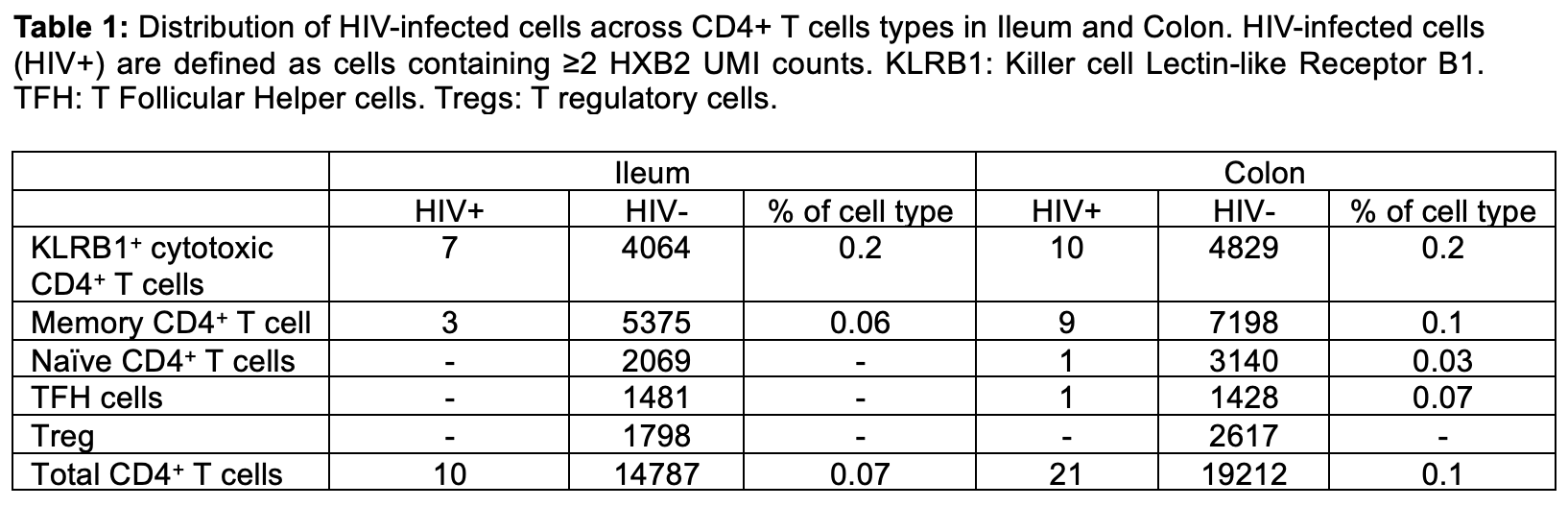
Thirty PWH (33% female, median age 55 [IQR 52–65], median ART suppression 4 [IQR 4–11] years) were enrolled. After quality control, 78,922 ileal and 146,734 colonic cells were analyzed. Among 14,797 ileal CD4+ T cells, 10 (0.07%) were HIV-infected, and among 19,233 colonic CD4+ T cells, 21 (0.1%) were HIV-infected. Across both sites, HIV-infected cells were enriched within cytotoxic and memory CD4+ T cell clusters (Table 1). Differential expression analyses revealed upregulation of genes linked to DNA synthesis and repair (e.g., CAD, ADSSL1, BARD1, CHEK1, XRCC3) in HIV-infected memory CD4+ T cells, and enhanced expression of oxidative stress regulators (GPX2, CYBB, NOX1) in HIV-infected cytotoxic CD4+ T cells.
Conclusions
HIV persists within cytotoxic and memory CD4+ cells in the GALT. Distinct transcriptional programs including DNA repair and oxidative stress pathways, may promote survival of these infected subsets, highlighting potential targets to disrupt intestinal HIV reservoirs.genes related to DNA repair and cell fate might contribute to its persistence in these cell subsets.
Table or Figure