Background
HIV reservoirs persist despite suppressive antiretroviral therapy (ART), highlighting the need for immune-based cure strategies. Various therapeutic vaccine platforms have been evaluated in clinical trials, but they have not demonstrated meaningful benefit in virus control, largely due to suboptimal immune responses directed toward immunodominant non-conserved regions, viral escape, and immune dysfunction during chronic infection. To overcome these barriers, we developed a conserved bivalent HIV T-cell immunogen designed to refocus immunity toward conserved viral regions, with broad quasispecies coverage and functional antiviral activity demonstrated by monocyte-derived dendritic cell (Mo-DC)–PBMC co-culture assays and preclinical models.
Methods
Conserved regions of Gag, Pol, and Nef were assembled into bivalent sequences using a conserved-walking algorithm optimized for intra- and inter-patient epitope coverage. Immunogen processing and immunogenicity were assessed by Mo-DC assays. Mo-DCs from ART-suppressed people with HIV (n = 83) were transduced with Ad5 vectors encoding the immunogen, co-cultured with autologous PBMCs, and assessed by IFN-γ ELISpot on day 10–20 with overlapping peptides. Vaccine-primed CD8+ T cells (n = 52) were tested for cytotoxicity against HIV-1 BaL-infected CD4+ T cells. In vivo immunogenicity was evaluated in mice receiving Ad5 prime–boost.
Results
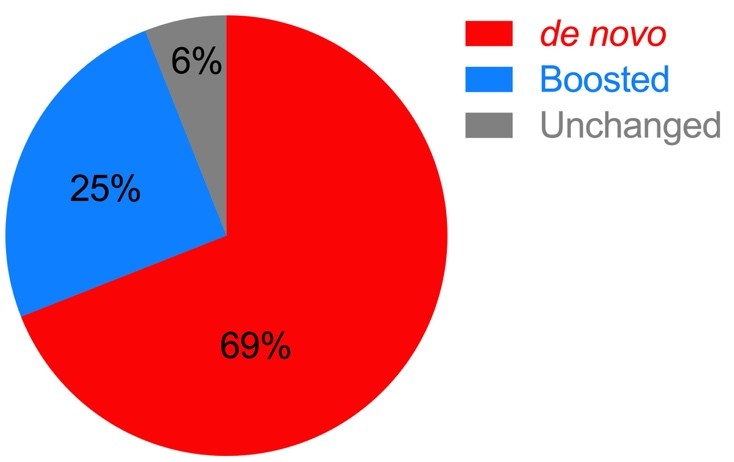
The bivalent design achieved >80% coverage of intra-patient (n = 247) viral quasispecies (HIV-1 B clade) across conserved epitopes. De novo responses were demonstrated in 69% of participants and pre-existing responses were boosted in 25% in Mo-DC–PBMC assays, with most de novo responses targeted Gag and Pol (median breadth: 2 epitopes). Vaccine-primed CD8+ T cells showed enhanced cytotoxicity against HIV-1 BaL–infected CD4+ T cells compared with vector controls (P<0.001, Wilcoxon test). In mice, prime-boost regimens preferentially expanded subdominant Pol responses, and signal sequence modifications further increased immunogenicity.
Conclusions
The conserved bivalent HIV immunogen elicited de novo responses and boosted pre-existing ex vivo T-cell responses in samples from ART-suppressed participants, enhanced CD8+ T-cell antiviral activity in vitro, and expanded Pol-specific responses in mice. These findings demonstrate that conserved immunogen vaccination has potential to induce functional HIV-1–specific T cells and support continued investigation of this approach for HIV cure-directed strategies.
Table or Figure