Background
NLRP3 inflammasome activation leads to IL-1β and IL-18 production and secretion, responsible of long-term chronic inflammation. The significance of NLRP3 inflammasome in the CVDs-related inflammation and other aging diseases has been extensively demonstrated. Moreover, NLRP3 inflammasome signaling has been shown to be one of the links between HIV-1 infection and atherosclerotic cardiovascular disease. Certain drugs used in medicine have, in addition to their main mechanism of action, an anti-NLRP3 effect and, others conversely, a pro-inflammatory effect. The objective of this study was to evaluate the potential intrinsic inhibitory or activating effects on the NLPR3 inflammasome of the main antiretroviral drugs currently used.
Methods
Antiretrovirals were tested on macrophages at the mean Cmax concentrations observed in clinical practice: Tenofovir (TDF 298ng/ml), Lamivudine (3TC 3461ng/ml), Emtricitabine (FTC 1800ng/ml), Abacavir (ABC 3850ng/ml), Rilpivirine (RPV 150ng/ml), Cabotegravir (CAB 4400ng/ml), Dolutegravir (DTG 3670ng/ml), Bictegravir (BIC 6150ng/ml), Raltegravir (RAL 2876ng/ml), Doravirine (DOR 962ng/ml), Lenacapavir (LEN 97.2ng/ml), Islatravir (ISL 165ng/ml). THP-1 monocyte cells were differentiated in macrophage cells with 10nM of PMA for 24h. Macrophages were first primed with 1µg/ml LPS for 2h and incubated with antiretrovirals for 2h. Nigericin NLRP3 inflammasome activator was added for 1h, and IL-1β (which is the central product of inflammasome activation) secretion was measured by luminescence in the supernatant
Results
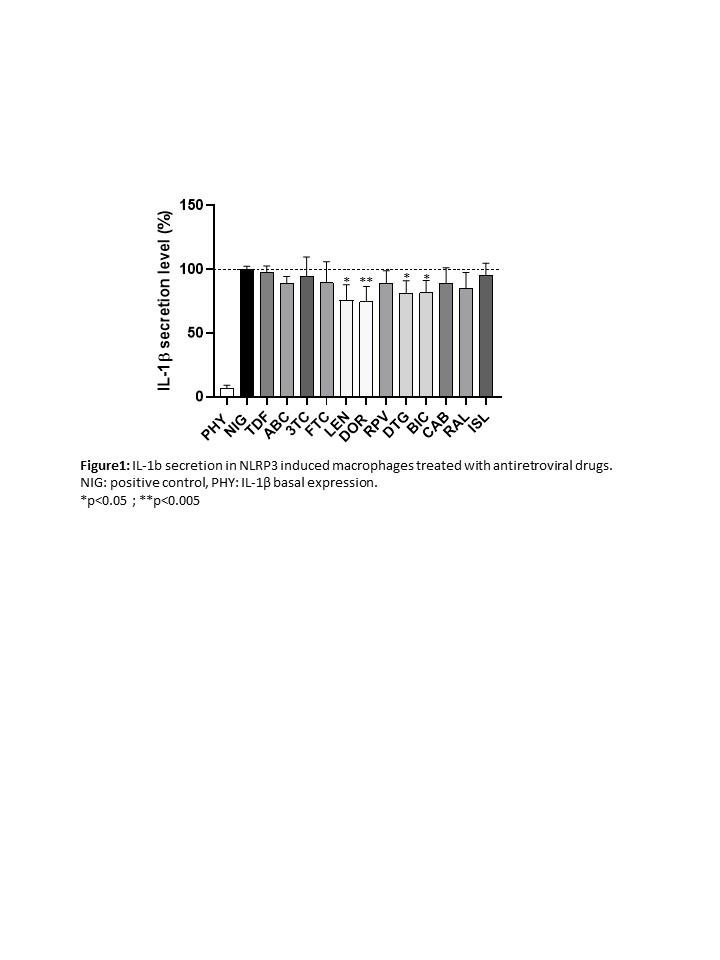
None of the antiretrovirals tested had inflammasome-activating properties that could have promoted some pathologies. However, some of them have a marked, reproducible and statistically significant anti-NLRP3 inflammasome effect, such as, DOR (-25.5%), LEN (-24.5%) followed by BIC (-19.5%) and DTG (-19%), even when using nigericin that is a highly potent NLRP3-mediated inflammasome inductor (figure#1).
Conclusions
Some antiretrovirals recommended for HIV infection treatment have been shown in vitro to have a beneficial anti-inflammatory effect on NLRP3-mediated inflammasome this could potentially have a beneficial effect in the long term. These findings should now also be investigated in treated patients. This phenomenon can be compared to other drugs used in medicine which, despite their initial main claimed properties, then have been shown to have anti-inflammatory effects, such as statins, for example.
Table or Figure