Background
The Ending the HIV Epidemic plan (EHE) aims to reduce HIV incidence by 90% from 2017 to 2030 via improved testing, treatment, and use of pre-exposure prophylaxis (PrEP). Challenges with PrEP uptake and adherence among populations with the greatest need have limited EHE progress to date. New PrEP products, such as twice-yearly injectable lenacapavir (LEN), have the potential to address these barriers. Here we project the estimated impact of introducing LEN on progress towards EHE goals across US populations over the next five years.
Methods
We projected PrEP coverage and new HIV diagnoses stratified by county, race, age, gender, sexual behavior, injection drug use and insurance status from 2026 to 2030. We used a static cohort model calibrated to HIV prevalence and incidence in 2022 and trends in annual PrEP prescriptions from 2012–2023. LEN use was assumed to be limited to non-emtricitabine/tenofovir disoproxil fumarate (F/TDF) options, reaching 37% of all PrEP users by 2030. We evaluated disparities in PrEP use and HIV incidence using three metrics calculated both overall and within population strata: 1) percent reduction of new annual diagnoses since 2017; 2) number of annual PrEP prescriptions necessary to prevent one infection (NNP); 3) ratio of PrEP users to new HIV diagnoses (PrEP-to-need ratio [PNR]). We identified under-served populations to be those with both a below-average NNP and below-average PNR.
Results
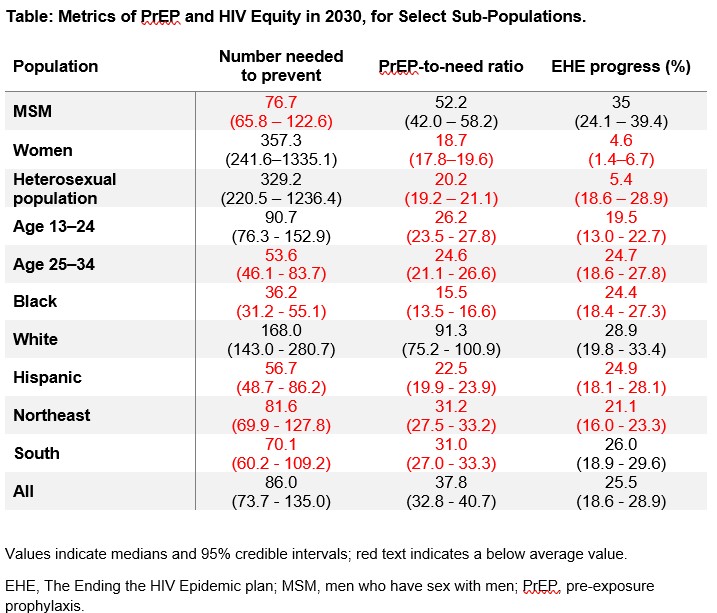
In 2030, NNP is projected to be 86.0 (73.7–135.0). Between 2025 and 2030, PNR will rise from 19.0 (16.6–20.1) to 37.8 (32.8–40.7), and progress towards achieving EHE goals will rise from 15.6% (8.5–18.3) to 25.5% (18.6–28.9). Projecting metrics of PrEP use in 2030 show persistent disparities by key population, age, and race (Table), with heterosexual, non-white, younger populations tending to have lower PNR than the wider population. The largest under-served populations in the US are projected to be 1) by total population: insured heterosexual Black women, aged 25-34 living in the South (population of 1.5 million), and 2) by PrEP indications: insured Hispanic MSM age 25-34 living in the West (24K PrEP indications).
Conclusions
LEN has the potential to narrow the gap expected as the US will likely achieve less than one-third of the EHE 2030 incidence reduction goal and disparities in HIV burden by age, race, and gender will persist. For maximal impact of LEN uptake, it should be prioritized in MSM, heterosexual women, and younger, Black and Hispanic populations.
Table or Figure