Background
Syphilis remains a significant global public health challenge, especially among people living with HIV (PLWH), who face a high risk of acquisition and reinfection. While worldwide and regional data show increasing trends, there is limited longitudinal data from Latin American HIV cohorts. This study describes the trajectory of syphilis infection and reinfection by year in a Mexican cohortof PLWH.
Methods
A retrospective observational study was conducted at the Instituto Nacional de Ciencias Médicas y Nutrición Salvador Zubirán from March 2021 to November 2024. Each year, we assessed the active population, the proportion undergoing VDRL testing, and the positive result rate. Confirmed episodes were classified as primary infection or reinfection (defined as ≥4-fold VDRL rise or a new diagnosis ≥6 months post-treatment). Trends in prevalence and reinfection rates were analyzed using Poisson regression models adjusted for the number of tests.
Results
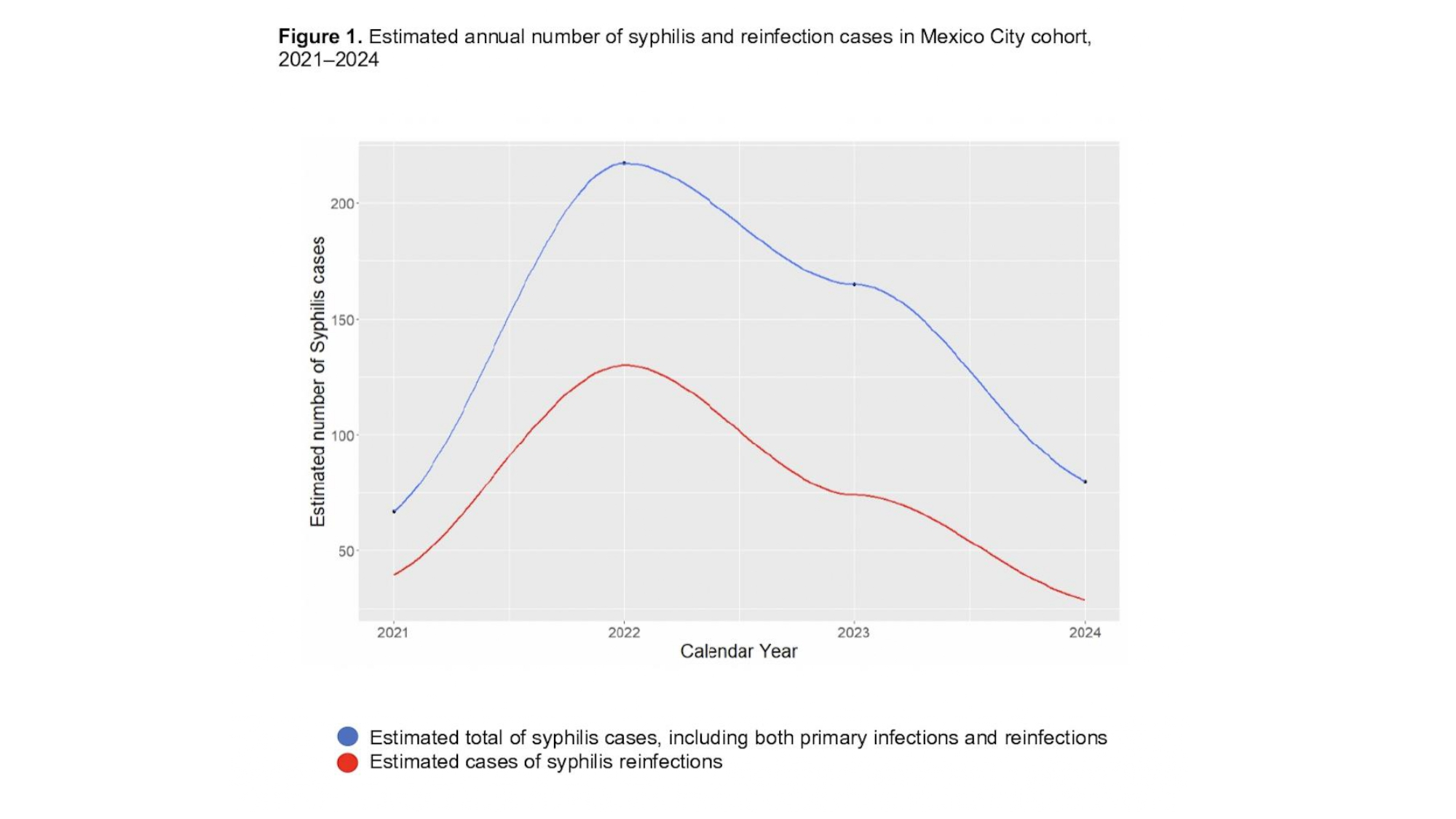
The active population was 1917 in 2021, 1682 in 2022, 1756 in 2023, and 1770 in 2024. Screening coverage increased from 4.1% in 2021 to 20% in 2022, 26.1% in 2023, and 23.7% in 2024. Positivity rates declined from 85.9% in 2021 to 19.0% in 2024. Syphilis prevalence was 3.5% in 2021, peaked at 12.9% in 2022, then declined to 9.4% in 2023 and 4.5% in 2024. Among 529 episodes registered during the study period, 256 (48%) were primary infections and 273 (52%) reinfections. Reinfections outnumbered primary infections in 2021–2022 (>59%) but fell in 2023–2024 (36-45%). Regression models confirmed a significant peak in 2022, followed by a consistent decline in subsequent years, with reinfections decreasing more sharply.
Conclusions
Syphilis prevalence was higher in 2022 and decreased afterward, coinciding with expanded testing and lower positivity. Adjusted models suggest the 2022 peak was partly due to increased testing, and both infections and reinfections significantly declined later, especially reinfections. The decline indicates that expanded screening and early detection may help reduce cases and reinfection, but ongoing research and improved diagnosis, treatment, and follow-up are essential.
Table or Figure