Background
Lung cancer is the leading cause of malignancy-related death among PWH in the US, is diagnosed at younger ages, and with fewer pack-years (p-y), and is associated with shorter survival compared to those without HIV. Lung cancer screening (LCS) with low-dose chest CT in PWH may reduce lung cancer mortality by 19%. We evaluated LCS eligibility among PWH in the Southeastern US from 2014-2023 and contrasted annual prevalence of screening by patient characteristics.
Methods
We identified PWH with ≥1 HIV clinic visit from 01/01/2014-12/31/2023 in the University of North Carolina CFAR HIV Clinical Cohort. For years 2014-21, we applied the 2013 USPSTF guidelines (age 55-80, ³30 p-y, active smoking, or quit £15 years). For years 2022-23, we applied the revised 2021 guidelines (ages 50-80, ³20 p-y, active smoking or quit £15 years). We estimated annual prevalence differences (PD) and 95% confidence intervals (CI), by patient characteristics.
Results
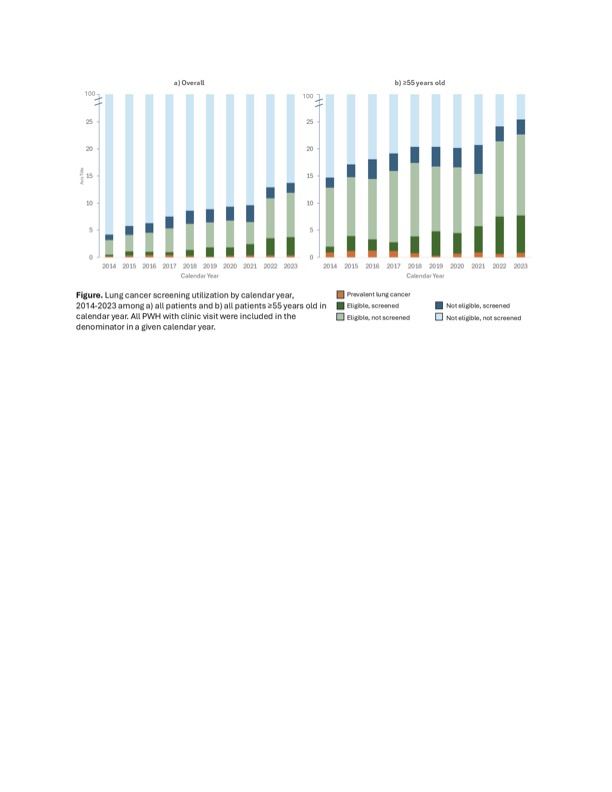
Among 3,461 PWH, the median age at most recent clinic visit was 49 (IQR 36-59), with 64% reporting a smoking history with a median of 12.5 p-y (IQR: 5-25). From 2014-2021, LCS eligibility rose from 3 to 6% (p-trend <0.001, Figure), further rising to 11% in 2022 and 12% 2023, following updating of USPSTF guidelines. Of the 2,215 ever-smokers, 15% (N=342) were eligible for LCS in at least one calendar year during the study period. The median age of eligible PWH was 62 years (IQR: 57-66), with median p-y of 40 (IQR 27-50), and 51% (N=173) received ≥1 CT during follow-up. Annual screening rates increased from 9 to 33% between 2014 and 2021 (p-trend <0.001), and decreased from 30% to 29% between 2022 and 2023. In 2023, for every 5-year increase in age, the likelihood of screening increased by 6% (95% CI: 1.4, 10.1), and for every 5 p-y increase in smoking, by 2% (95% CI: 0.2, 3.3). Screening was not associated with patient HIV characteristics, including HIV RNA <200 copies/mL and CD4 <200 cells/mm³.
Conclusions
From 2014 to 2023, the proportion of PWH eligible for LCS has risen steadily, alongside increased screening for those at risk. Despite this growth, fewer than one-third of eligible PWH are receiving LCS. Alarmingly, the gap in screening has widened since the introduction of the 2021 USPSTF guidelines, likely due to delayed adoption. As PWH continue to age and face heightened comorbidity risk, early and consistent screening for lung cancer is vital to reducing mortality in this vulnerable population.
Table or Figure