Background
Bile acids (BAs) are produced from cholesterol in the liver as primary BAs and modified by gut microbiota becoming secondary BAs. Besides their primary role in solubilizing fats, these metabolites have been shown to modulate innate and adaptive immune function, making BAs a link between host metabolism and immune response. BAs regulation of immunity is increased by the multiple modifications that BAs can undergo, like sulfation.
Methods
In this study, we used a multi-omic approach to identify mechanisms of pathogenesis during acute SARS-CoV-2 in a subset of 270 COVID-19 volunteers from the IMPACC cohort. To understand how BAs, and their modifications, modulate antiviral immune responses, untargeted global metabolomics using mass spectrometry was performed on plasma. We also stimulated full PBMC and purified monocytes with a panel of sulfated and non-sulfated BAs to measure cytokine production in supernatant and intracellularly with flow cytometry, and we tested the activation of surface (TGR5) and nuclear BAs receptors (FXR and VDR) with sulfated and non-sulfated BAs with a luciferase assay.
Results
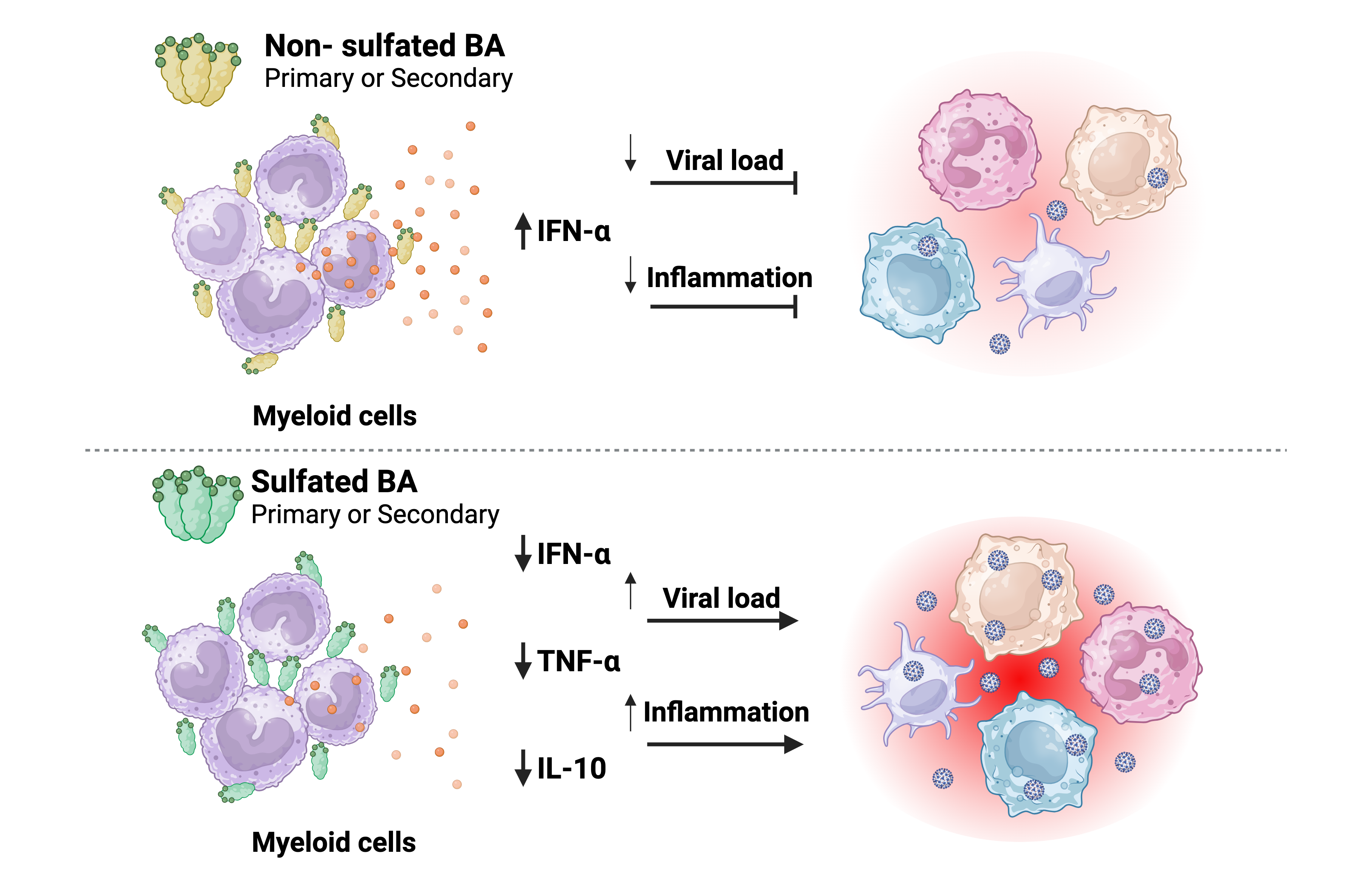
From the earliest hospitalization time point, levels of non-sulfated BAs were higher in mild COVID-19 individuals while high levels of sulfated BAs were associated with increased viral load (VL), aberrant pro-inflammatory milieu and severe COVID-19, including mortality. We observed that full PBMC treated with non-sulfated BAs triggered significantly higher levels of IFN-a2a and immune regulators as TGF, compared to their sulfated version. Purified monocytes showed the same response in addition to higher levels of IL-10 and TNF-a. Notably, sulfated BAs didn’t activate any BAs receptors, which is relevant, since FXR is known to trigger type 1 IFN production. This was seen for primary and secondary BAs, suggesting a global role for sulfation, consistently with the findings at IMPACC. We made similar observations in flu infection where severe flu was characterized by heightened levels of Sulfated BAs.
Conclusions
Our results confirm the importance of BAs and their homeostasis during a viral infection. Myeloid cells are the main population expressing BAs receptors. Therefore, the main producers of type 1 IFN and modulate the antiviral innate immune response. Since sulfated BAs do not interact with BAs receptors in a way that enhances the anti-viral response, as non-sulfated bile acids do, the imbalance between these metabolites could potentially impact on the clinical progression of COVID-19.
Table or Figure