Background:
HIV transmitted through cosmetic injection services via contaminated blood has not been previously documented in the United States. In summer 2018, the New Mexico Department of Health (NMDOH) was notified of a diagnosis of HIV infection in a female with no known HIV risk factors who reported exposure to needles from cosmetic platelet-rich plasma micro-needling (vampire facial) received at a spa in spring 2018.
Methods:
This report led NMDOH and CDC to investigate possible transmission of HIV through cosmetic injection services. The period of interest for active case finding was from spring 2018, when the initial case received a vampire facial, to fall 2018 when the spa closed, and on-site inspection of the spa was conducted. Names and phone numbers were compiled and cross-referenced from spa client consent forms, handwritten appointment records, and cell phone contacts to form a list of potentially affected clients who were directly contacted to encourage testing for bloodborne pathogens. From 2018-2023, suspected cases were reported to NMDOH from clinical providers throughout the state, and blood specimens were submitted to CDC for nucleotide sequence analysis (NSA) to determine cluster association.
Results:
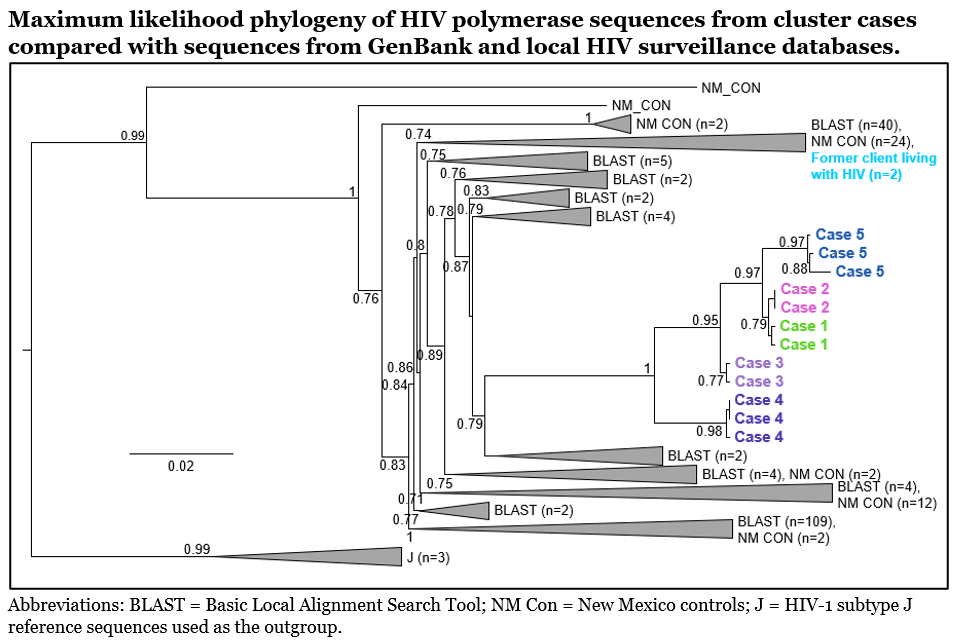
Active case finding identified one client with a previous diagnosis of HIV in 2012, 20 clients who received vampire facials, and 59 clients who received other injection services (e.g., Botox) during spring-fall 2018. Among the 198 former spa clients and their sexual partners tested during 2018-2023, no new HIV, Hepatitis B, or Hepatitis C infections were identified. The on-site inspection revealed several unsafe infection control practices including storage of unlabeled tubes of blood on the kitchen counter. Five suspect cases, four former spa clients plus one sexual partner of a spa client, were reported to NMDOH all of whom had HIV diagnosed during 2018–2023 and no known HIV risk factors. NSA revealed highly similar HIV strains among all cases indicating vampire facials as the likely transmission route of HIV for three cases in this cluster. The other two cases, who had previous HIV infections, were likely attributed to sexual contact. Sequences from the former client living with HIV did not cluster with any sequences from cases.
Conclusions:
This investigation underscores the importance of assessing novel sources of HIV transmission among persons with no known HIV risk factors, and adequate infection control practices at spa facilities offering cosmetic injection services.