Background:
Thirty-day readmission is a prominent US hospital quality metric. However, there are limited data to compare readmission trends among people with HIV (PWH) to people without HIV (PWoH) in the era of universal antiretroviral therapy in the US.
Methods:
We used data from the 2010 to 2020 Nationwide Readmission Database (NRD), the largest readmission database in the US that includes ~18 million unweighted hospitalizations each year and represents ~60% of all US hospitalizations. Following Centers for Medicare & Medicaid Services methodology, we excluded those age<18 years; discharged dead, against medical advice or without 30-day post-discharge follow up window, and admissions for primary psychiatric diagnoses, rehabilitation, cancer treatment or COVID-19. The outcome was the probability of 30-day all-cause unplanned readmission since discharge from a prior (index) admission. A readmission could also be an index admission. ICD-9/ICD-10 codes were used to identify PWH. Crude readmission probability was estimated for PWH and PWoH each year. Subgroup analyses were stratified by age, sex, and median ZIP code household income. Survey weights were applied to all analyses to generate nationally representative estimates.
Results:
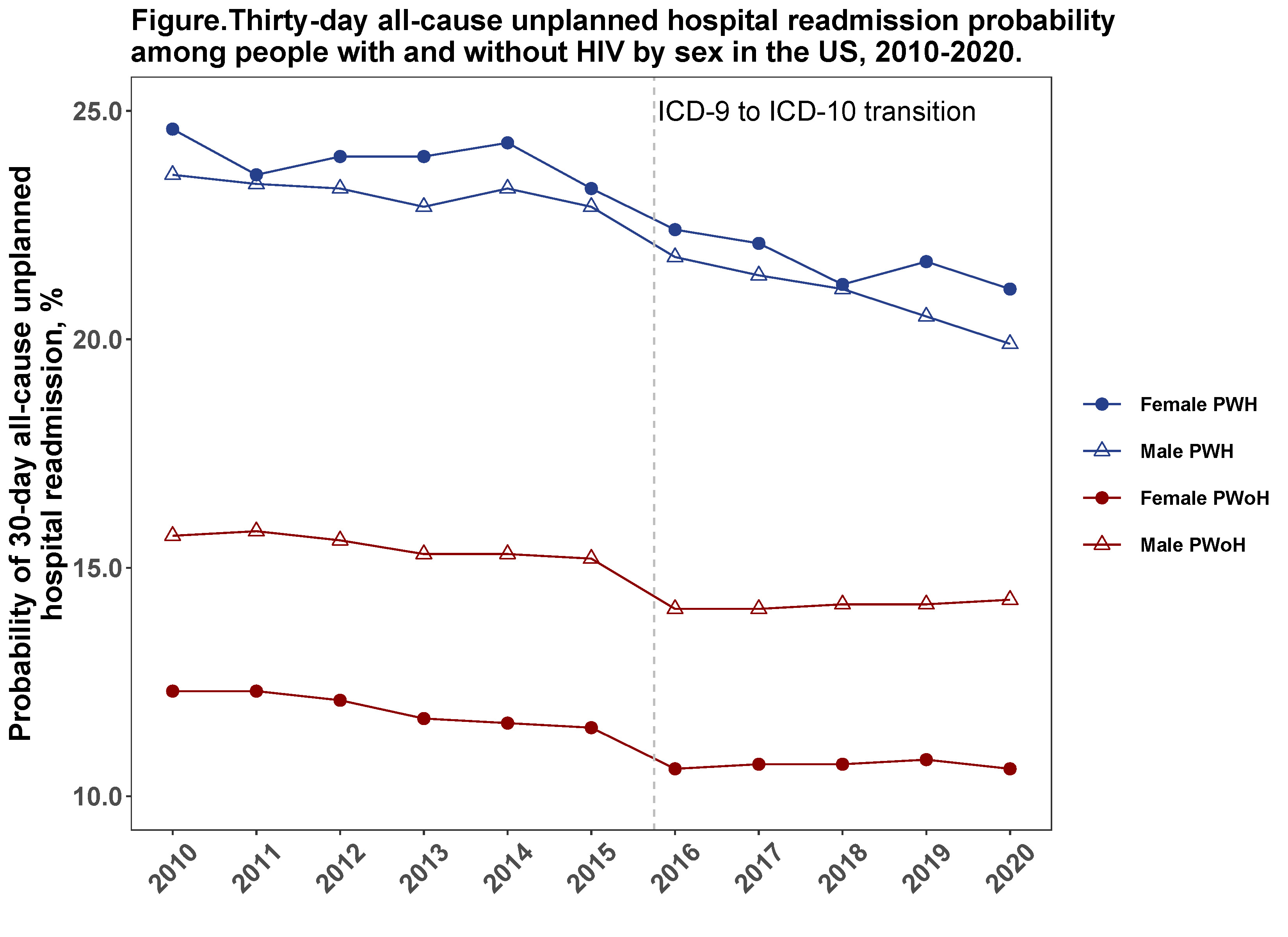
The study population included 25,205,538 (weighted) index admissions in 2010, 24,338,782 in 2019, and 21,258,399 in 2020. In 2010 and 2020, PWH contributed 140,014 (0.56%) and 126,029 (0.59%) index admissions, respectively. Overall, PWH had higher readmission risk than PWoH. The readmission probability for PWH decreased gradually from 23.9% in 2010 to 20.3% in 2020. For PWoH, the readmission probability was stable except during 2015, the year of transition from ICD-9 to ICD-10. Stratified by sex, female PWH had slightly higher readmission probability than male PWH and the difference fluctuated over time. However, female PWoH continued to have similar lower readmission probability than male PWoH (Figure). Older PWoH consistently had higher readmission probability than younger PWoH. In contrast, different age groups of PWH had similar readmission risk over time. PWH residing in areas with the lowest median household incomes had the highest readmission risk for all the years.
Conclusions:
The quality of hospital care for adult PWH in the US has improved in the past decade, but there is still a significant gap in readmission risk between PWH and PWoH, especially among women.