Background:
Late HIV diagnosis is a barrier to ending the epidemic as it may be associated with prolonged transmission risk and worse HIV-related outcomes. The CDC defines late HIV diagnosis as a CD4+ T-cell count<200 cells/mm3 at diagnosis. It is unclear if an expanded clinically relevant definition of CD4<350 would better represent those in need of resources to prevent poor outcomes. We aimed to examine trends in the annual proportion of different definitions (late/delayed) of late HIV diagnosis between 2015-2021 in Florida, characteristics associated with late/delayed diagnosis, and the association between diagnosis status and mortality.
Methods:
Data included laboratory results for HIV care recipients, diagnosed 2015-2021, in the Enhanced HIV/AIDS Reporting System. Diagnosis status was categorized as late (CD4<200), delayed (200≤CD4<350), and timely (CD4≥350). Characteristics of interest were age, gender, race/ethnicity, birth region, and diagnosis facility. Multivariable multinomial logistic regression models examined characteristics by diagnosis status. Logistic regression, adjusting for characteristics, estimated risk of death during the study period.
Results:
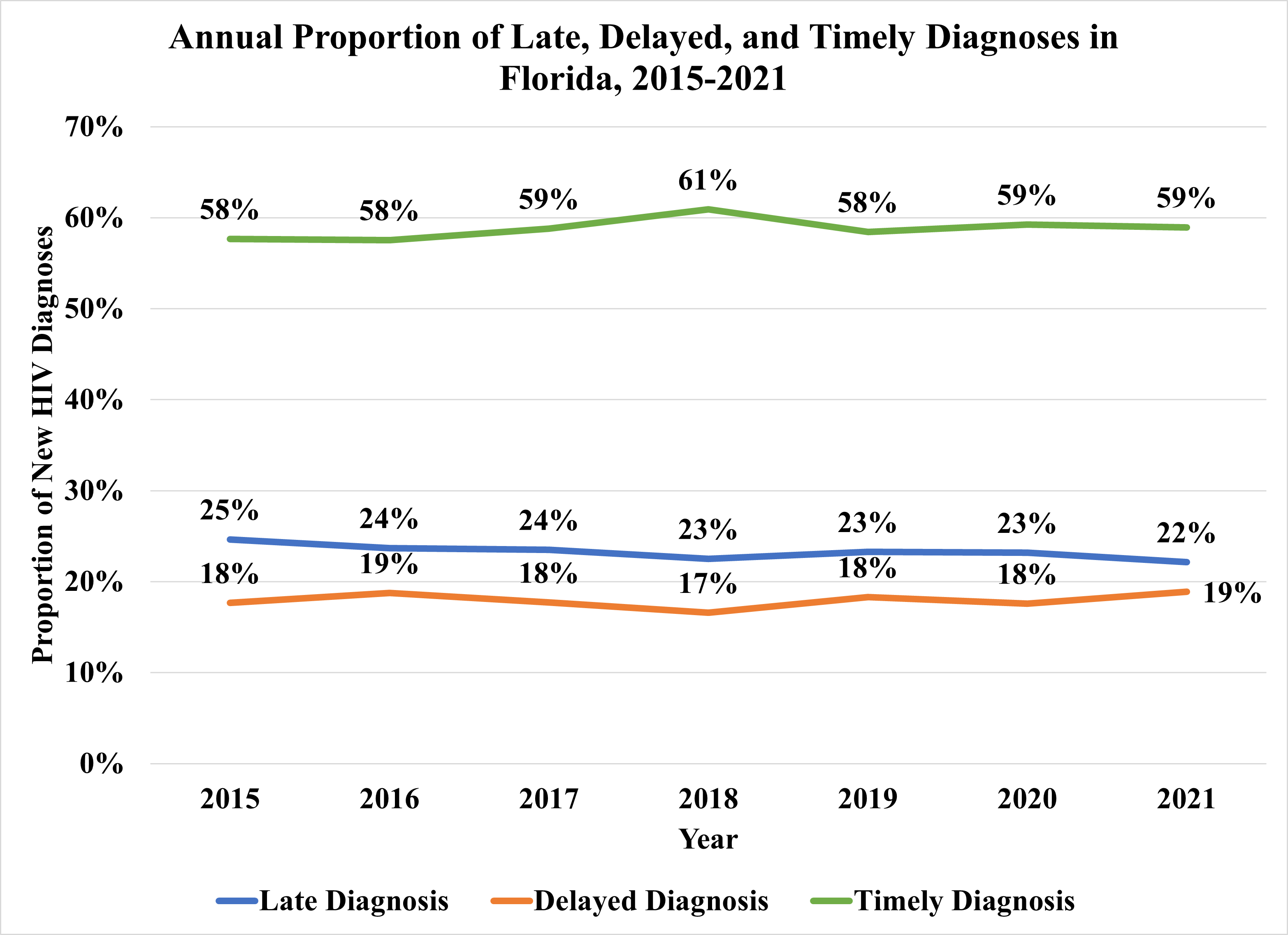
Of 27,460 individuals (21% female, 39% non-Hispanic [NH] Black, 35% Hispanic, 2% NH Other, mean age 38.3 years [SD 12.9]), 23% had a late and 18% had a delayed diagnosis overall, and this proportion was consistent annually. Older adults (ref=18-24; 25-34 [OR 1.6, 95% CI 1.4-1.8], 35-49 [2.4, 2.1-2.7], 50+ [2.7, 2.3-3.0]) and those of Caribbean birth region (ref=North America; 1.1, 1.0-1.3) were more likely to have a late diagnosis. Late and delayed diagnosis were similarly associated with female (ref=male; delayed: 0.9, 0.8-0.96, late: 0.8, 0.7-0.9), NH Black (ref=NH White; delayed: 1.6, 1.4-1.7, late: 1.5, 1.4-1.6) Hispanic (delayed: 1.4, 1.2-1.5, late: 1.1, 1.0-1.2), and inpatient diagnosis (ref=outpatient; delayed: 1.6, 1.4-1.7, late: 5.4, 5.0-5.9) characteristics. There were 1,176 deaths and delayed (1.3, 1.04-1.5) and late (1.9, 1.6-2.2) diagnosis were associated with death.
Conclusions:
Expanding the late diagnosis definition captured an additional 18% of HIV diagnoses that may be at greater risk of poor outcomes such as death. Characteristics associated with late/delayed diagnoses were consistent and both were associated with greater mortality risk. Those with late/delayed diagnosis would benefit from enhanced intervention. Future research can target other late/delayed diagnosis factors to address missed HIV testing opportunities.