Background:
The major barrier to an HIV cure is the HIV reservoir: latently-infected cells that persist despite effective antiretroviral therapy (ART). Most prior studies of host genetic predictors of HIV control have focused on ‘elite controllers,’ rare individuals able to control virus in the absence of ART. However, there have been few genetic studies among ART-suppressed non-controllers, who make up the majority of people with HIV (PWH).
Methods:
We performed a large cross-sectional study of 191 PWH on ART and measured host gene expression (RNA-seq) and HIV reservoir from peripheral blood CD4+ T cells. HIV reservoir was quantified as total DNA (tDNA), unspliced RNA (usRNA), and intact DNA.
Results:
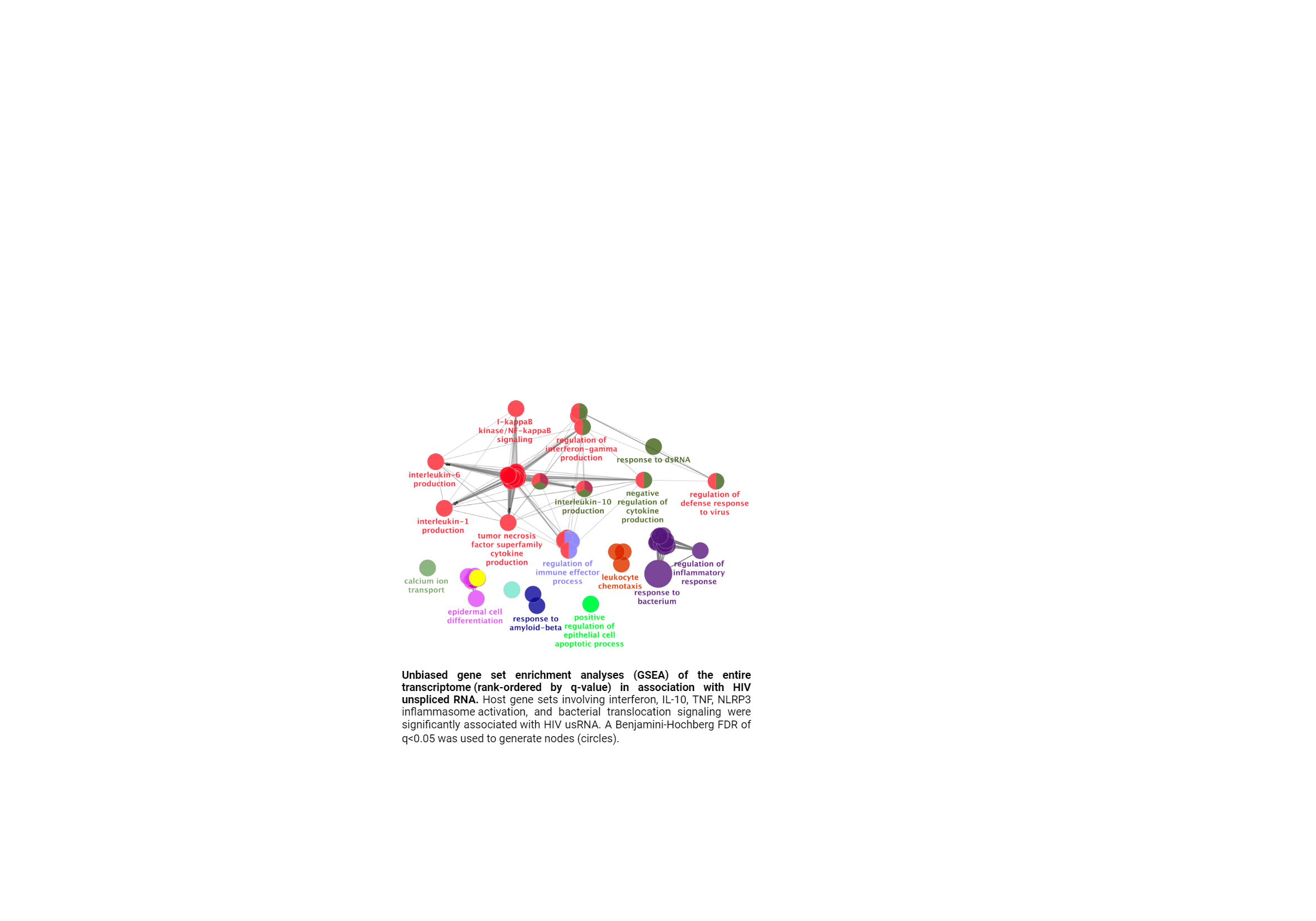
After adjusting for nadir CD4+ count, timing of ART initiation, and genetic ancestry, we identified two host genes for which higher expression was significantly associated with smaller total DNA viral reservoir size, P3H3 and NBL1, both known tumor suppressor genes. We then identified 17 host genes for which lower expression was associated with higher residual transcription (HIV usRNA). These included novel associations with membrane channel (KCNJ2, GJB2), inflammasome (IL1A, CSF3, TNFAIP5, TNFAIP6, TNFAIP9, CXCL3, CXCL10), and innate immunity (TLR7) genes (FDR-adjusted q<0.05). Gene set enrichment analyses further identified significant associations of HIV usRNA with TLR4/microbial translocation (q=0.006), IL-1/NRLP3 inflammasome (q=0.008), and IL-10 (q=0.037) signaling. Protein validation assays using ELISA and multiplex cytokine assays supported these observed inverse host gene correlations, with P3H3, IL-10, and TNF-α protein associations achieving statistical significance (p<0.05). Of note plasma IL-10 was also significantly inversely associated with HIV DNA (p=0.016). HIV intact DNA was not associated with differential host gene expression, although this may have been due to a large number of undetectable values in our study.
Conclusions:
To our knowledge, this is the largest cohort-based transcriptomic study of host genetic predictors of the HIV reservoir. Further studies are needed to validate these findings, ideally with dedicated functional genomic and intracellular protein assays using longitudinal samples to demonstrate causality of these observed associations. Our findings add important clinical and immunologic data to the limited host genomic HIV reservoir studies to date.