Background:
To date, TDF/FTC for pre-exposure prophylaxis (PrEP) safety in pregnancy has been based on self-reported adherence or study allocation with no safety studies using objective exposure measures.
Methods:
The PrEP in pregnancy and postpartum (PrEP-PP) study in Cape Town enrolled pregnant women =>16 years without HIV at their first antenatal care visit followed-up through 12-months postpartum; all women were counselled on HIV risk including oral PrEP (TDF/FTC). In women who reported taking PrEP in the last month, we quantified tenofovir diphosphate (TFV-DP) levels in dried blood spots (DBS). Here we compare pregnancy outcomes in those: (1) self-reporting PrEP use in pregnancy, (2) with objective levels of PrEP use (any TFV-DP detected), (3) missing PrEP exposure data (received prescription but never confirmed PrEP use) using multivariable logistic regression adjusting for maternal age and gestational age at baseline.
Results:
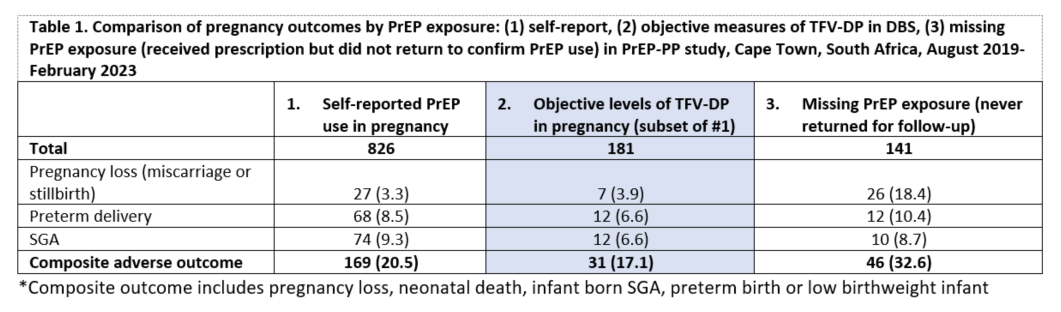
In 826 women who reported PrEP use during pregnancy with pregnancy outcome data, the median age was 27 years (IQR:23-31), baseline gestation age (GA) was 22 weeks (IQR:14:30); 32% were primigravid. In pregnant women reporting PrEP use in the last 30 days, 181 of 471 (39%) pregnant women had objective levels of PrEP use (any TFV-DP in DBS). Women with TFV-DP present were older age, >20 weeks GA (vs <20 weeks) at PrEP start, had a partner living with HIV (or unknown serostatus), had higher sex frequency in past month (>5 times vs <5 times or no sex) (p<0.05). Women with missing PrEP exposures had the highest rates of adverse pregnancy outcomes during the study period at 32.6% (18.4% pregnancy loss, 10.4% preterm delivery, 8.7% infant born SGA). In women with TFV-DP in their DBS (n=181), adverse outcomes were significantly lower at overall composite outcome at 17%, including 3.9% had pregnancy loss, 6.6% had preterm delivery, 6.6% had an infant born SGA (Table 1). Correlation between self-reported PrEP use and TFV-DP was –0.07 in pregnancy.
Conclusions:
The proportion of ‘PrEP-exposed’ pregnant women with adverse pregnancy outcomes differed significantly based on how PrEP exposure was defined in the study, highlighting the importance of objective monitoring in pregnancy safety studies as self-reported PrEP use did not correlate with objective levels. Pregnant women who discontinued PrEP had poorest pregnancy outcomes and may require additional interventions for PrEP and pregnancy health. Rapid, cost-effective methods for measuring objective PrEP use are urgently needed.