Background:
Morbidity and mortality of COVID-19 is higher in immunocompromised people including kidney transplant recipients (KTR). Nirmatrelvir/ritonavir (NRMr) interacts with many medications, in particular calcineurin inhibitors (CNI). Limited evidence exists for reinitiating CNIs post-NRMr. We created a protocol to manage the NRMr-cyclosporine (CsA) interaction. This study aims to describe the application of the protocol and deviations, evaluate its impact on cyclosporine levels, and analyze safety outcomes.
Methods:
This is a retrospective study between May 2022 and Nov 2023. As per protocol, CsA dose was reduced by 80% at NRMr start and up to 2 days post-NRMr. CsA levels were drawn 2 days post-NRMr. If the 1st level was sub/therapeutic, CsA was resumed at 100% and level repeated 1 week later. If supratherapeutic, the dose reduction was maintained for another 2 days, then reinitiated at 100% pre-NRMr dose. Acute kidney injury (AKI), hospitalization and death were collected through 30-days post-NRMr therapy.
Results:
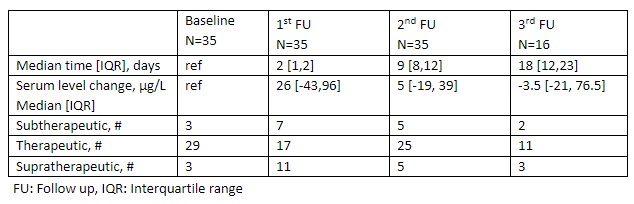
Forty-two KTR were identified, of which 35 started NRMr and met eligibility criteria and were analyzed. Nine KTR did not follow the protocol instructions. At baseline, 83% of patients were in therapeutic range, with a mean CsA level of 258 µg/L. Median dose reduction at initiation of NRMr was 80% [IQR 76-83]. At the first follow-up (FU) 2 days post-NRMr, the average CsA level was higher by 23 µg/L (P=0.51). There was a greater proportion of patients with sub and supratherapeutic levels compared to baseline (20% vs 9% and 31% vs 9%). Nonadherence to the protocol was observed in 5/18 levels outside therapeutic range. At the second FU, there was a correction of sub and supratherapeutic levels (14% and 14%) as patients shifted to therapeutic range. Of the 16 patients requiring additional monitoring, levels returned to baseline values within 30 days. Two KTR experienced AKI for unrelated reasons to COVID-19 treatment (unstable atrial flutter, gastroenteritis) and one that resolved with increased fluid intake. There were 4 hospitalizations, but none related to the initial COVID-19 treatment management. There was no graft rejection or death 30 days post-NRMr.
Conclusions:
Though CsA levels outside therapeutic range were common immediately post-NRMr treatment, levels were restored rapidly. No clinically relevant safety events related to NRMr treatment occurred within the 30-days. Adherence to the protocol is crucial.