Background:
Even though 94% of people living with HIV in South Africa knew their status in 2021, only 74% were actually on antiretroviral therapy (ART) and 67% were virologically suppressed: undermining the potential of ART programmes to improve individual and public health outcomes. Understanding which populations drive this poor treatment success could focus efforts to improve outcomes.
Methods:
This retrospective study describes the incidence and impact of ART treatment interruptions using routine health data from the Provincial Health Data Centre, South Africa. The cohort includes individuals ≥15 years old who initiated ART under universal test-and-treat (≥01-Sep-2016), sought care in Khayelitsha or Gugulethu (low-resource, high HIV burden settings) and had ≥1 year follow-up. Treatment interruptions were defined as >90 days late for an expected visit (based on duration of treatment dispensed) or being lost to follow-up (no visit within 180 days of database closure on 30-Sep-2022). One-year retention was defined as a visit 9-15 months after ART initiation or restart, and suppression as a viral load (VL) ≤50 copies/mL.
Results:
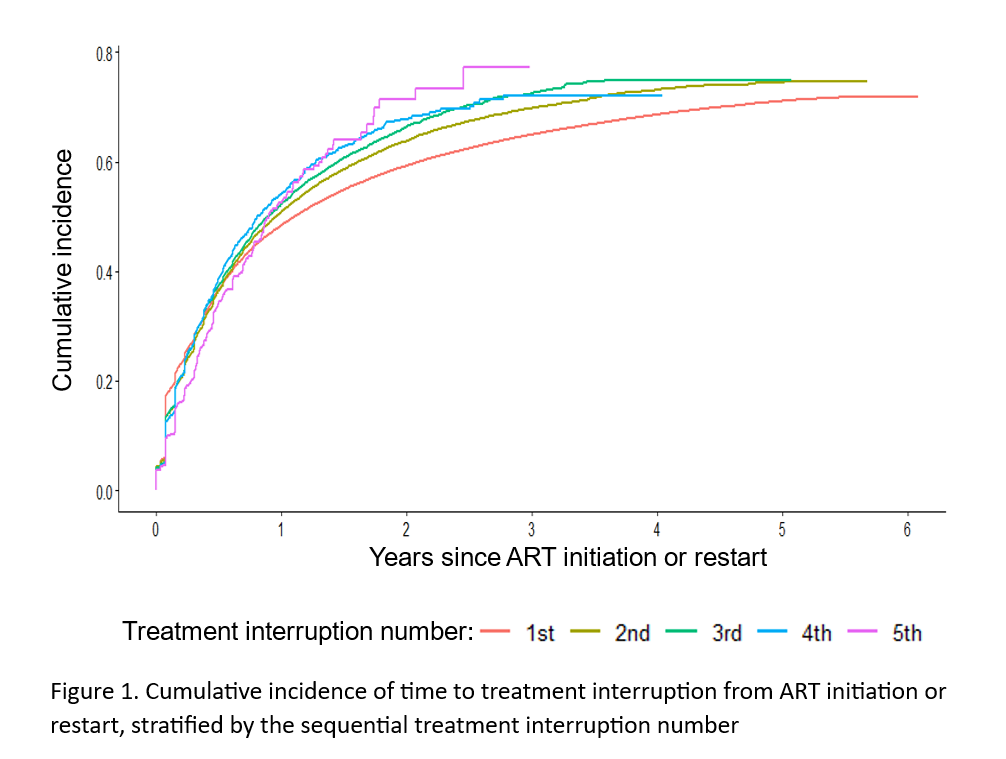
The cohort included 68888 individuals, with 69% (47631/68888) female, 25% (17078/68888) under 25 years and a median follow-up time of 4 years (Interquartile Range [IQR] 3-5). The cumulative incidence of interruptions was 71% (95% Confidence Interval [CI] 71-72) by 5 years after initiation, with a median of one interruption (IQR 1-2) and a median of 4 months (IQR 1-9) to interruption after initiation or restart (Figure 1). Most returned to care (cumulative incidence of return: 73% [95% CI 72-73] by 5 years), after a median of 7 months (IQR 4-15). Of the 40384 individual interruptions, there was sufficient follow-up time to evaluate outcomes a year after re-engagement for 29967 (74%): 67% (20030/29967) were retained and 29% (8578/29967) had a VL that was suppressed year after return. In the 34% (23578/68888) who never had a treatment interruption, 73% (17201/23578) had a suppressed VL a year after ART initiation.
Conclusions:
Treatment interruptions are common. Even after reengagement, those with interruptions have poor treatment outcomes. Health services need to improve care after return to better support retention and adherence, particularly in the first six months after ART restart. People returning to care should be a priority population for the development of differentiated service options, if we are to improve retention and VL suppression for the whole population on ART.