Background:
FTC-TDF-based PrEP is recommended for pregnant people in settings of high HIV transmission. However, few have evaluated uptake, maternal safety, and pregnancy outcomes in the context of a clinical trial.
Methods:
The PrEP Comparison Component of IMPAACT 2009 enrolled pregnant participants aged 16-24 years at <32 weeks gestation in Malawi, South Africa, Uganda, and Zimbabwe. Participants were enrolled in parallel cohorts based on choice to initiate or decline daily oral FTC-TDF for PrEP at entry. All were followed in pregnancy to 6 months postpartum and could start or stop PrEP at any time. While on PrEP, they received Integrated Next Step Counseling, regular drug level feedback via TFV-DP from dried blood spots, and weekly two-way text messaging. Adverse events (AEs) were graded per DAIDS toxicity tables and assessed for relatedness to PrEP. Proportions (with Clopper-Pearson 95% confidence intervals) were calculated for highest-grade AEs through pregnancy outcome by PrEP use. Adverse pregnancy outcomes included fetal loss, preterm birth, and small-for-gestational-age by INTERGROWTH-21st standards.
Results:
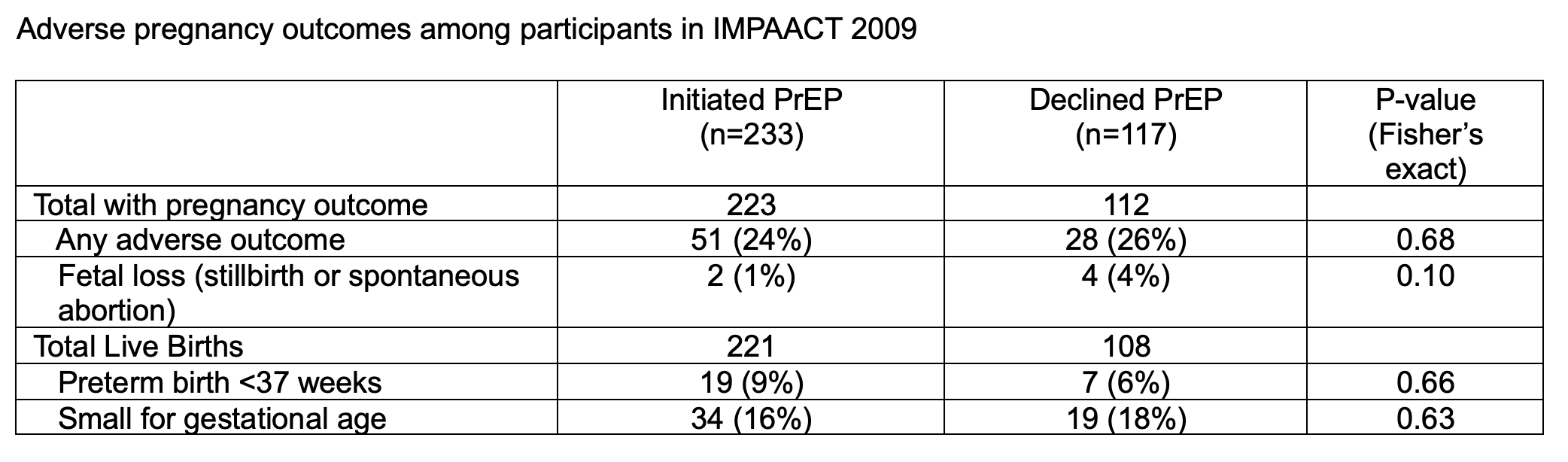
From March to December 2022, 350 eligible participants enrolled (mean age: 21 years; median gestational age: 24 weeks). Among 335 participants with pregnancy outcome information, 233 initiated PrEP in pregnancy (229 at enrollment, 4 later). Another 117 declined at entry and never initiated PrEP during pregnancy. Median duration of antenatal PrEP use was 11 weeks (IQR: 7.7-15). A total of 31 (9%) participants experienced at least one grade ≥3 AE through delivery, with a greater proportion among PrEP initiators (11.2%, 95%CI: 7.4-15.9%) vs. decliners (4.3%, 95%CI:1.4-9.7%). Most frequent grade ≥3 AEs were complications of pregnancy or delivery (9% for initiators vs. 3% for decliners). None were considered related to PrEP use. No participants acquired HIV infections during follow-up. Among those with delivery information, median gestational age was 39.4 weeks (IQR: 38.4-40.4) and median infant birthweight 3095g (IQR: 2800-3350). 79 (24%) participants reported adverse pregnancy outcomes, with no differences between the two groups (table).
Conclusions:
Our findings further support the safety of FTC-TDF in pregnancy. Despite the high occurrence of AEs, none appeared related to PrEP use. While other PrEP modalities undergo evaluation for antenatal populations, daily oral FTC-TDF remains a safe and essential component of HIV prevention in pregnancy.