Background:
Pre-exposure prophylaxis (PrEP) is highly effective to reduce risk of HIV infection, but the population-level impact of PrEP depends on the proportion of people with PrEP indications who use it and how long they stay on it (persistence).
Methods:
We used previously reported methods and commercial pharmacy data to identify PrEP users and the duration of PrEP use calculating by dates of all prescriptions and number of pills dispensed in a year (pill-days per year). PrEP users include all patients who, at any point during the year, filled a prescription for Emtricitabine-Tenofovir Disoproxil Fumarate, Emtricitabine-Tenofovir Alafenamide Fumarate, and/or Cabotegravir, but were not on any other antiretroviral medications. We calculated mean length of PrEP use for the US in 2018 and 2022 overall, by gender, by race/ethnicity, and by age groups. Differences in median days on PrEP per year were assessed by gender, race/ethnicity, and age. To assess the potential impact of 2-1-1 PrEP dosing on median days of PrEP use, we compared data from 2018 (before CDC recommendation of 2-1-1 dosing) to data from 2022.
Results:
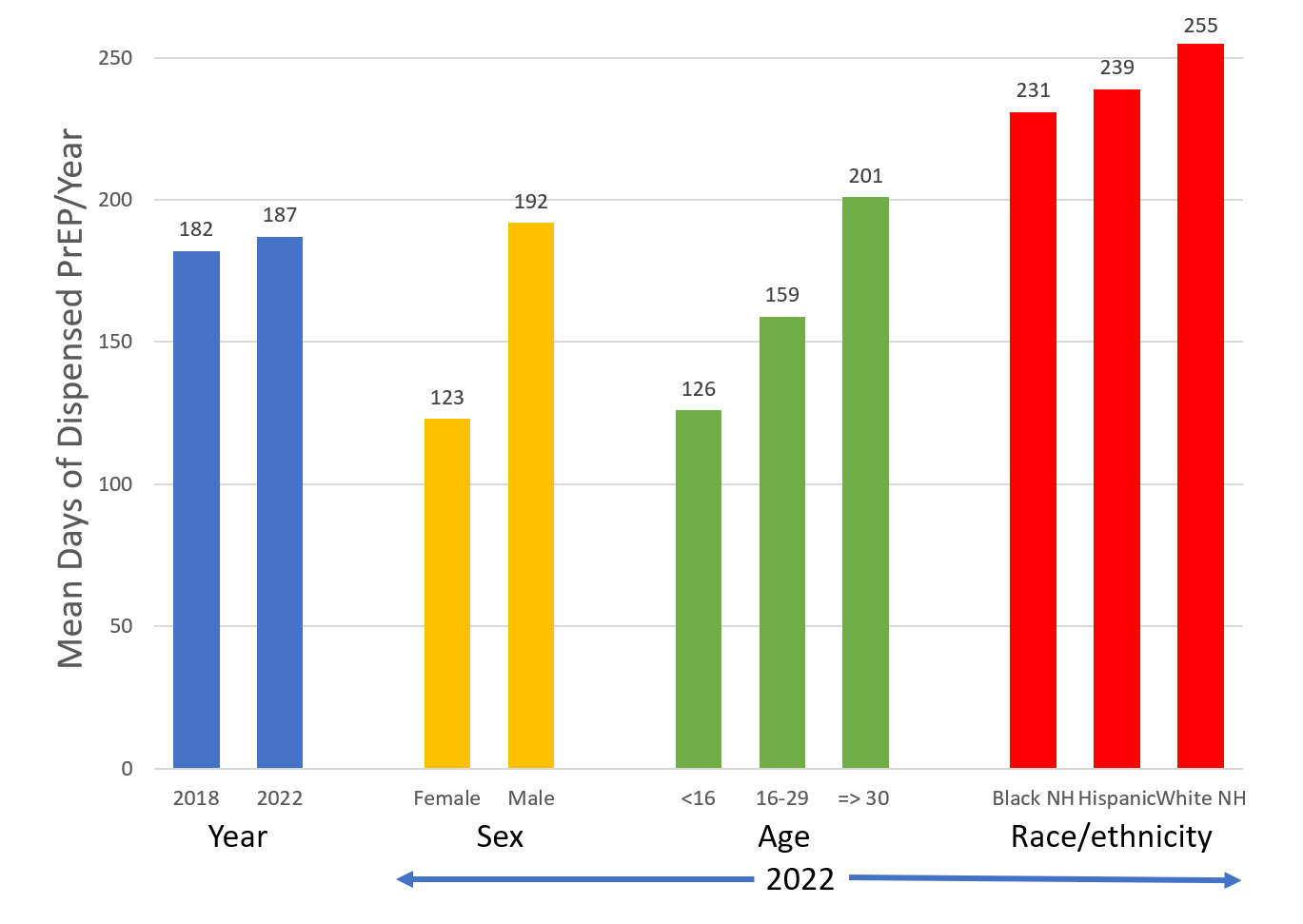
We evaluated data from 225,180 PrEP users in 2018, and 459,984 PrEP users in 2022. In 2022, the mean number of days covered by dispensed PrEP prescriptions among PrEP users was 187 (SD: 129.8; Figure). Mean days was lower among female (median 123 days) than male (median 192 days) users (P<0.01). Among PrEP users with race/ethnicity data, mean days of use were higher for White non-Hispanic (NH) (255 days) than for Hispanic (239 days) or Black NH (231 days) users (p<0.01 for each comparison). Older users had more days covered by PrEP than younger users (<16 years: 126 days; 16-29 years: 159 days; >30 years: 201 days; p<0.01 for comparisons between <16 years and other groups). A comparison of overall data for 2018 (182 days) versus 2022 (187 days) did not suggest that the USPHS 2021 inclusion of 2-1-1 PrEP in PrEP guidelines was associated with fewer days of coverage.
Conclusions:
PrEP programs are often evaluated by enumerating people who used PrEP at any time during a year; our data indicate that there are significant differences in PrEP coverage during a year’s time, and that an annual use indicator might mask inequities in PrEP protection, with women, Black NH and Hispanic people, and younger people having fewer dispensed days of coverage. Assessments of days of PrEP coverage should be included in assessments potential impact of PrEP and to address and monitor PrEP equity.