Background:
HIV infects and activates macrophages, which produce important mediators of inflammation that drive age-related comorbidities. Soluble macrophage activation markers are higher in people with HIV (PWH), even with viral suppression, and have been associated with subclinical cardiovascular disease. Given the close relationship between cardiovascular and kidney disease, we hypothesized these markers would be associated with lower kidney function among PWH.
Methods:
We performed a cross-sectional study nested within two prospective U.S. multicenter cohorts each of persons with and without HIV; the Women’s Interagency HIV Study (WIHS) and for men the Multicenter AIDS Cohort Study (MACS). Serum levels of the macrophage activation markers soluble (s)CD163, sCD14, galectin-3 (Gal-3) and Gal-3 binding protein (Gal-3BP) were measured in 786 (73% PWH) women and 498 (65% PWH) men. Markers were log and Z-score transformed. Multivariable linear regression determined associations of these markers with estimated glomerular filtration rate (eGFR), adjusting for potential confounders including study site, sociodemographics, diabetes, hypertension, hepatitis C, HIV serostatus and tenofovir disoproxil fumarate use.
Results:
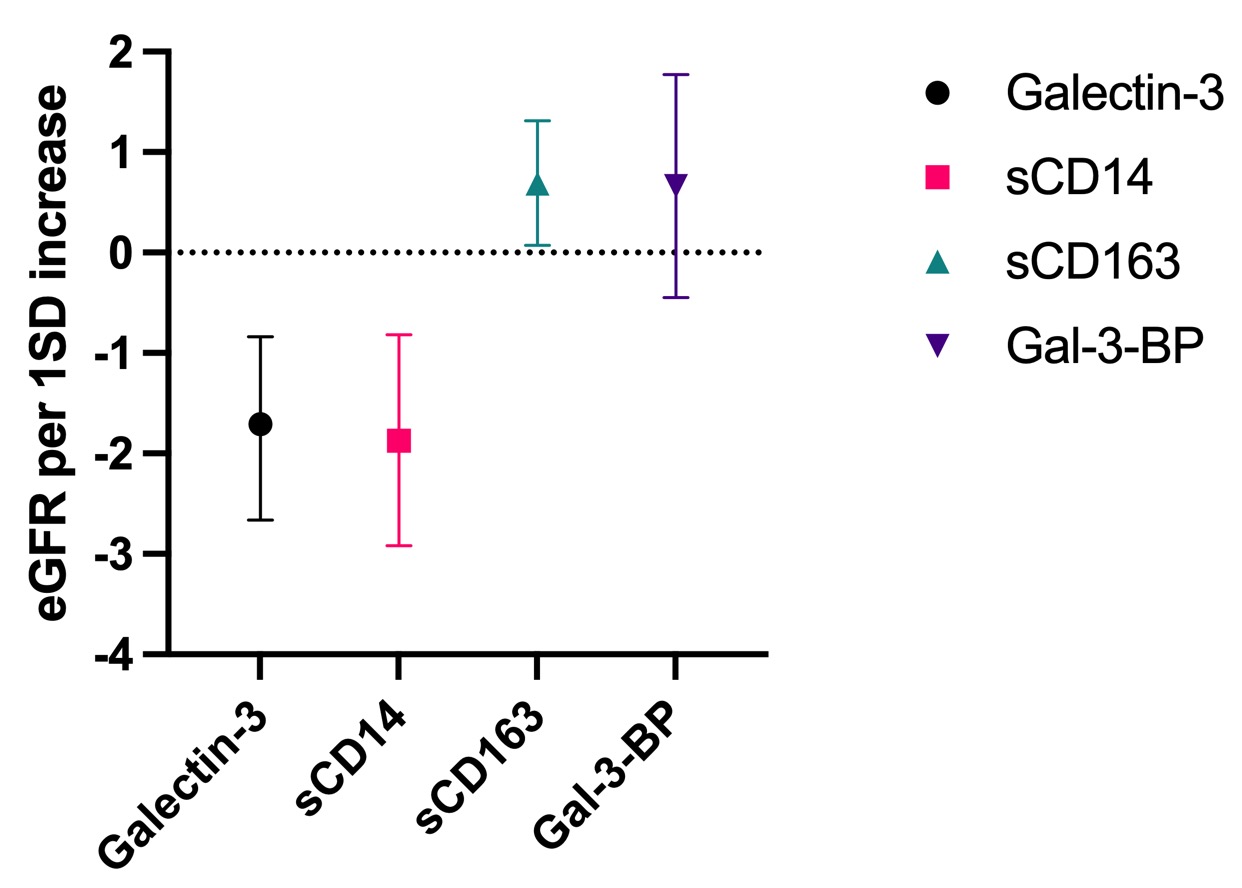
Among 1284 participants, 786 (61%) were women, 902 (70%) were PWH, of whom 486 (54%) were virally suppressed (<50 cp/mL). Median age was lower among women compared to men (40 vs 49 years). sCD14, sCD163 and Gal-3BP levels were significantly higher among PWH versus without HIV (p<0.05). Median eGFR was higher among PWH versus without HIV (95.3 vs 93.6 mL/min in women and 92.7 vs 85.8 mL/min in men). After confounder adjustment, Gal-3 and sCD14 levels were negatively associated with eGFR. Each standard deviation (SD) increase in Gal-3 was associated with a 1.71 mL/min lower GFR (95% confidence interval -2.66, -0.84; p=0.0004) and each SD increase in sCD14 was associated with a 1.87 mL/min lower GFR (-2.92, -0.82; p=0.0005). These associations were more pronounced among PWH (p for interaction 0.08 and 0.06, respectively). A weak positive association existed between sCD163, and eGFR and no association was observed between Gal-3BP and eGFR.
Conclusions:
The macrophage markers Gal-3 and sCD14 may have a role in subclinical kidney injury among PWH. Future work will examine macrophage associations with longitudinal kidney outcomes to identify whether they may play a causative role and/or have predictive value for kidney disease risk.