Background:
Rapid linkage to HIV care and antiretroviral therapy (ART) initiation is now the standard of care for treating people with HIV (PWH). Understanding and intervening on barriers to rapid enrollment and ART initiation are needed to meet the goals of the Ending the HIV Epidemic in the U.S. initiative.
Methods:
We analyzed 2021 data from the Medical Monitoring Project on characteristics of 514 facilities providing care to a national probability sample of U.S. PWH. Facility data on number of business days to offer new patients an appointment, availability of, and barriers to, rapid intake and ART initiation and Ryan White HIV/AIDS Program (RWHAP) funding were collected. Weighted percentages with 95% confidence intervals of characteristics were reported by barriers, days to appointments, and by RWHAP funding. We assessed significant (p<0.05) differences among facilities using Rao-Scott chi-squared tests.
Results:
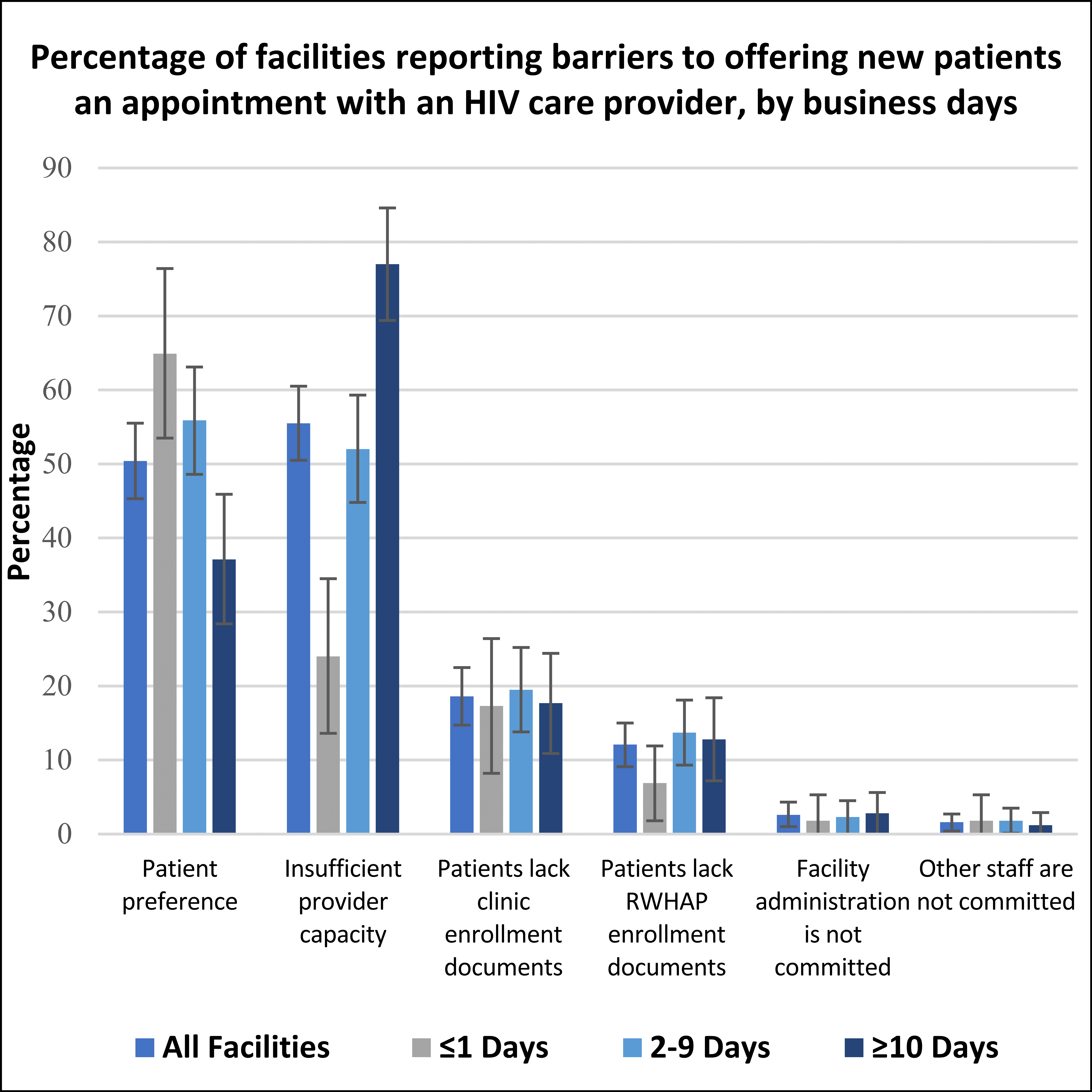
Overall, 20%, 48%, and 32% of HIV facilities could routinely offer a first appointment in <1, 2-9, and ≥10 business days, respectively (median 5 business days). Insufficient provider capacity (56%), patient preference (50%), and patient lacking required documents (19%) were the most reported barriers to offering new patient appointments (Figure). The prevalence of insufficient provider capacity as a barrier to offering an appointment within <1 day was significantly higher for non-RWHAP-funded facilities than funded facilities (62% vs. 48%, p=0.0048). The most reported documents required for scheduling the first appointment were positive HIV antibody or detectable viral load (52%), government-issued identification (36%), proof of residence (24%), proof of income (22%); percentages increased as days to offer an appointment increased and were significantly higher in RWHAP-funded than non-funded facilities (all p-values < 0.05). Most facilities (73%) were routinely able to obtain a 30-day supply of ART during the first HIV care provider visit. The most reported barriers to obtaining a 30-day supply of ART at the first HIV care provider visit included unavailable test results (56%), delays in getting medication paid for (49%), unavailable starter packs (36%), cannot afford copayment (31%), and patient preference (29%).
Conclusions:
Structural, personal, or provider-related barriers may delay rapid clinic enrollment or ART initiation. HIV care programs can benefit from removing barriers to care, easing requirements for clinical enrollment and ART prescriptions, and improving patient readiness.