Background:
The regulatory environment for marijuana and other cannabis products is changing quickly across the United States, and use has increased over the past decade. The contemporary prevalence of use, frequency of use, and uptake of newer cannabis products, such as vape products, is unknown for women with HIV. Because cannabis products can pose health risks and have immunomodulatory effects mediated by cannabinoid receptors, it is important to understand patterns of cannabis use among women with HIV.
Methods:
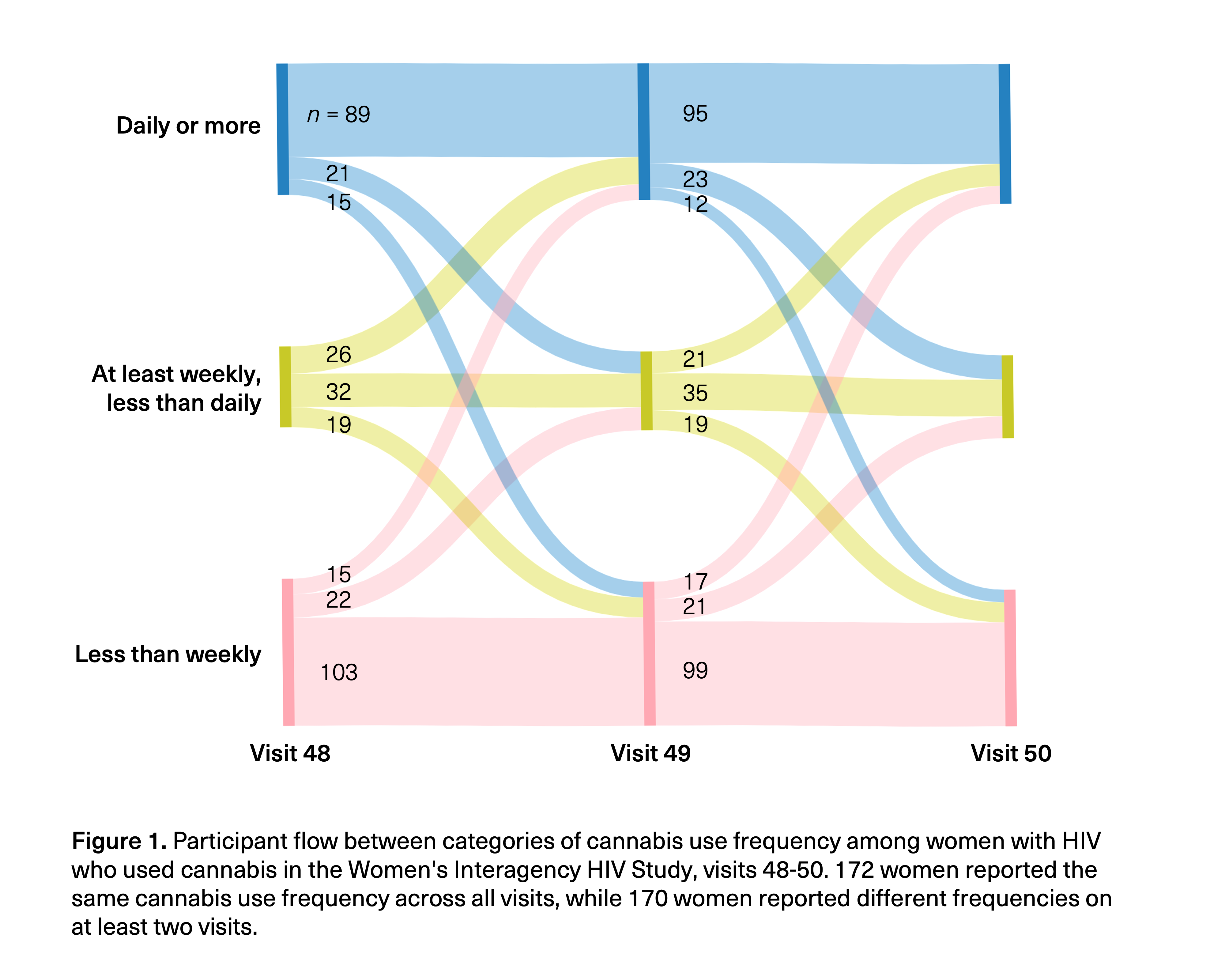
This analysis includes 1,246 women with HIV enrolled in the Women’s Interagency HIV Study (WIHS) who attended three semi-annual study visits between April 2018 and September 2019. Data on cannabis use were collected at each visit. A Sankey diagram illustrates the flow of participants between different categories of use frequency over the follow-up period.
Results:
The period prevalence of cannabis use was 27%. 26% reported smoking marijuana, 8% reported enteric consumption of cannabis products, and 5% reported vaping cannabis products. The prevalence of daily cannabis use was 15%. There was no significant difference in the prevalence of use between sites in states with laws permitting adult or medical use and in states without. Cannabis users were younger, less likely to be employed, and more likely to have used tobacco, alcohol, and other substances. The proportion of users who reported vaping cannabis products increased from 10% in 2018 to 14% in 2019. Compared to cannabis users who did not vape, cannabis users who vaped were more likely to be employed and have a college degree. They were less likely to have smoked cigarettes and more likely to have used e-cigarettes. They were more likely to attend a study site in a permissive jurisdiction. While half of all users reported the same frequency of cannabis use at all three visits, the remaining half of users reported different frequencies of use on at least two visits (Figure 1).
Conclusions:
In a cohort of women who are representative of women with HIV in the United States, we found a high prevalence of cannabis use in the period immediately preceding the COVID pandemic. Our prevalence estimate is higher than in the general US population and higher than for women with HIV in the WIHS a decade prior, which was 14%. From 2018 to 2019, there was a small increase in the proportion of users who vaped cannabis products. It was not uncommon to report different frequencies of cannabis use at different study visits across 18 months of follow-up.