Background:
Substance use disorder is an increasing problem among the population in many states of the US and is a potential risk factor for suboptimal viral suppression among people with HIV (PWH). This study aims to examine the association between substance use disorder and sustained viral suppression among PWH.
Methods:
Electronic health record (EHR) data from the South Carolina Department of Health and Environmental Control (DHEC) was used to identify eligible adult (≥18 years old) PWH who were diagnosed with HIV between 01/01/2007 and 12/31/2019. Sustained viral suppression was defined as consecutive suppressed viral load tests (≤ 200 copies/mL) within one calendar year. Impact of substance use disorder on sustained viral suppression was evaluated by generalized linear mixed model. Potential confounders included age, sex, and chronic diseases history such as cancer, dementia, diabetes, etc.
Results:
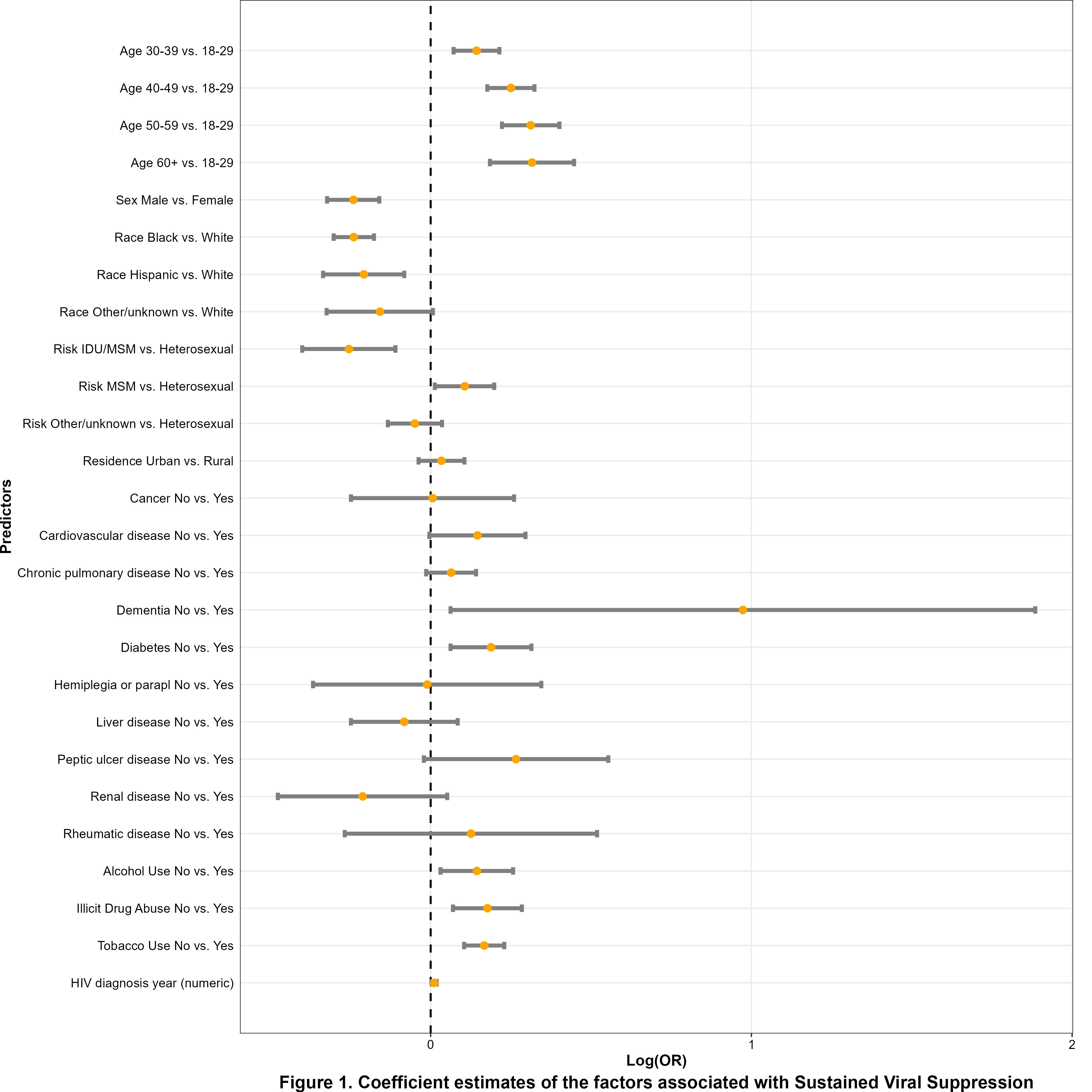
Among 9169 eligible participants, 6376 (69.54%) of them had reached sustained viral suppression status during their follow up periods. Substance use disorders, such as alcohol use (AOR=1.16, 95%CI: 1.03-1.29), illicit drug use (AOR=1.19, 95%CI: 1.07-1.33), and tobacco use (AOR=1.18, 95%CI: 1.11-1.26) were negatively associated with sustained viral suppression. Other significant covariates related to sustained viral suppression were also identified. Participants live without Dementia (AOR=2.65, 95%CI: 1.06-6.59) and Diabetes (AOR=1.21, 95%CI: 1.06-1.37) tend to have higher probability to maintain viral suppression.
Conclusions:
Using a large cohort of PWH with a long follow up time, this study provided a comprehensive evaluation of the association between substance use disorder and sustained viral suppression. Our findings emphasize the negative impact of using alcohol, illicit drug, and tobacco on maintaining sustained viral suppression. Developing long-term problem substance reduction strategies could help HIV patients achieve long-term viral suppression.