Background:
The COVID-19 pandemic has disproportionately impacted vulnerable populations who experience syndemic conditions, including HIV and co-occurring substance use disorder (SUD). We examine here whether there was a significant change in moderate or severe SUD risk among people with HIV (PWH) enrolled in a large multisite clinic-based cohort in the US, before and after the COVID-19 shelter in place (SIP) mandate.
Methods:
Data collected between March 2018 and October 2022, among PWH enrolled in the Centers for AIDS Research (CFAR) Network of Integrated Clinical Systems (CNICS) cohort across eight sites were used for this study. PWH were asked about their use of the following substances: cannabis, cocaine, amphetamines, inhalants, sedatives, hallucinogens, or opioids. Moderate or severe SUD risk was defined as having a score of 4 or greater on the validated ASSIST tool. Using interrupted time series (ITS) analyses, we evaluated whether there was a change in moderate or severe SUD risk over time, comparing trends before and after SIP within a mixed-effects logistic regression model. Analyses were adjusted for age, race/ethnicity, gender, study location, and current HIV viral load.
Results:
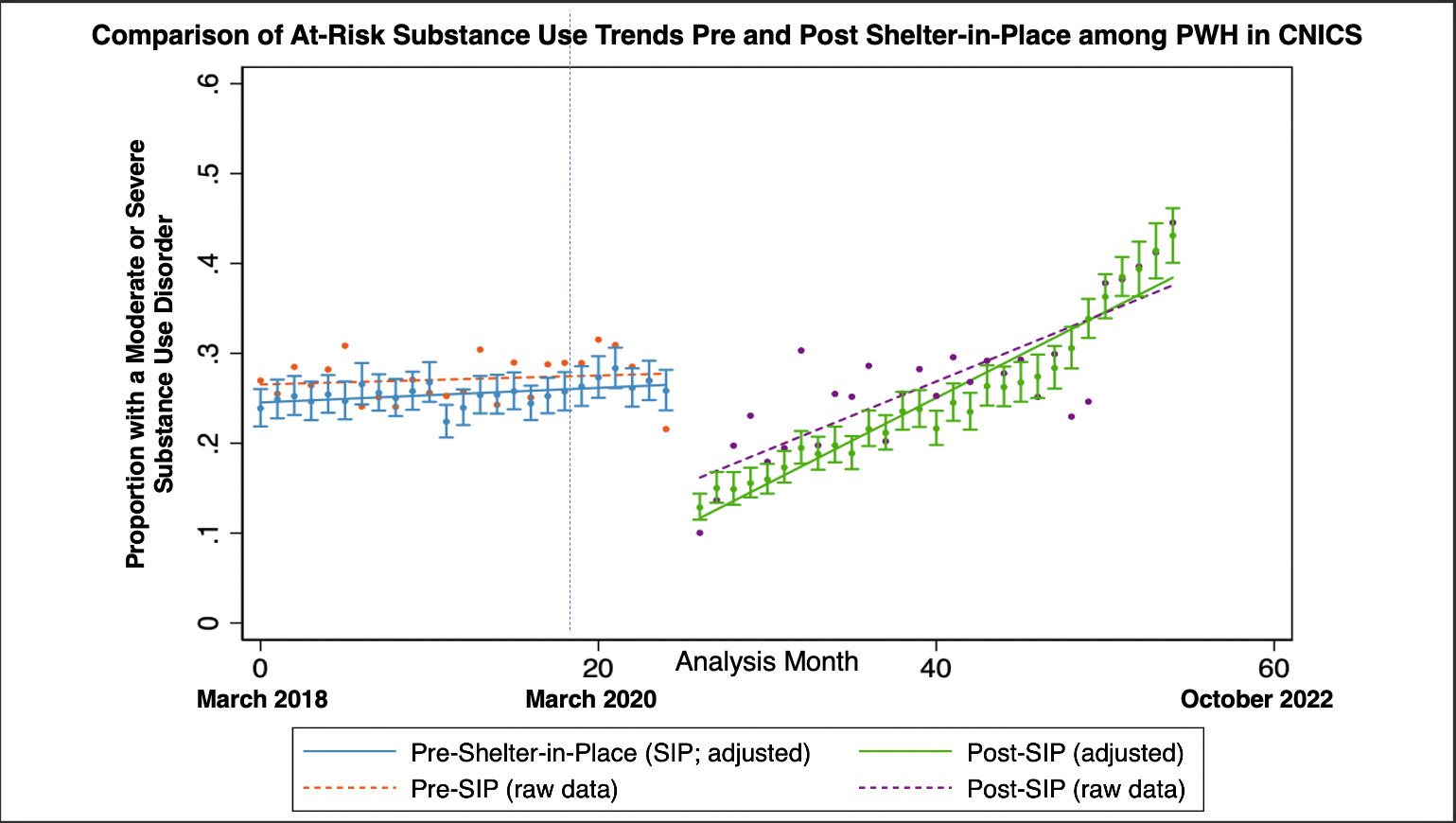
Data from 7,126 participants, including 21,741 SUD assessments, were included. The median age was 51 (IQR 39-58); 47% of the sample identified as Black, 35% White, 13% Hispanic; and 17% were female. Overall, 43% had used marijuana in the last quarter, 34% cocaine, 15% methamphetamine, and 3% opioids. In the ITS analysis, the rate of moderate/severe SUD risk increased markedly during the pandemic with 43% (95% CI=40-46%) compared to 24% (95% CI=22-26%) having moderate/severe SUD risk post-SIP compared to pre-SIP (P<0.001; Figure).
Conclusions:
We found a significant increase in moderate/severe SUD risk among PWH in a large multi-site network of HIV clinics throughout the US. This rising prevalence could be related to an increase in depression, anxiety, and social isolation among PWH during the COVID-19 pandemic. Substance use and misuse are often coping mechanisms for poor mental health conditions, and general life stress. Further, service disruptions due to the pandemic and a transition to telehealth may have caused substantial interruptions in substance use and mental health treatment services among PLWH. To address the combined epidemics of substance use and HIV following the COVID pandemic, a renewed investment in integrated substance use treatment and mental health services is vital.