Background:
Neurologic post-acute sequelae of COVID-19 (PASC) affects a growing population of individuals, with symptoms including myalgic encephalomyelitis chronic fatigue syndrome (ME-CFS), cognitive dysfunction, dysautonomia, and neuropathy. Gut microbiome dysbiosis has been reported in the early convalescent period after SARS-COV-2 infection (<1 year) in hospitalized patients, with lower alpha diversity and decreased abundance of butyrate-producing species. Butyrate has a protective effect in the gut by supporting the mucosal barrier and has systemic anti-inflammatory and immunomodulatory effects. Notably, in long-term ME-CFS patients (symptoms >10 years), metabolic dysfunction persists despite recovery of relative abundance of bacterial species. To date, the longitudinal role of gut dysbiosis in neurologic PASC remains unknown, especially in patients with mild acute COVID-19.
Methods:
The COVID-19 Persistent and Immunology Cohort (C-PIC) is an observational cohort study with over 650 participants, with and without PASC. Rectal swabs or stool samples are collected at 3-6 month intervals, with matched clinical metadata. Neurologic PASC is defined as self-reported fatigue, cognitive dysfunction, or dysautonomia. DNA was extracted using the Zymo MagBead DNA/RNA kit and the MiSeq platform was used to sequence the V3/V4 region of the bacterial16s rRNA gene. DESeq2 was used to assess species-level differential abundance testing and alpha diversity was measured using Chao scores for richness. Differences between participants with and without neurologic PASC were compared in C-PIC participants with mild acute COVID-19 not requiring hospitalization.
Results:
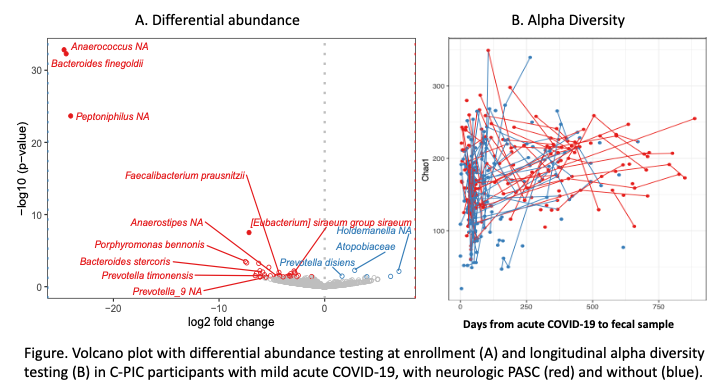
151 C-PIC participants with mild acute COVID-19 were included in the analysis. Fecal samples collected at study enrollment demonstrated lower relative abundance of butyrate-producing species (Faecalibacterium prausnitzii, Eubacterium spp, Bacteroides spp) in participants reporting neurologic PASC (p<0.05). We also report a trend toward increasing alpha diversity (chao) over time across 371 longitudinal samples (figure).
Conclusions:
Our findings of decreased abundance of butyrate-producing bacterial species in patients reporting neurologic PASC and a trend towards improving alpha diversity after recovery from SARS-CoV-2 align with late convalescent findings in ME-CFS. These data provide support for the role of gut microbiome in neurologic PASC. Further research is needed to identify gut microbiome targets for diagnostics and therapeutics.