Background:
Although RNA viruses like SARS-CoV-2 are considered transient, viral components can persist beyond the acute phase due to various virologic and immunologic factors. Recent studies have suggested that SARS-CoV-2 antigens may persist following COVID-19 but were limited by a lack of comparison to true negative control samples.
Methods:
We assessed viral persistence in two ways: (1) Single molecule array (Simoa) assays for SARS-CoV-2 spike, S1, and nucleocapsid antigen in plasma from 171 individuals in the post-acute phase of SARS-CoV-2 infection and 250 pre-pandemic control samples, and (2) RNAscope assessing SARS-CoV-2 spike RNA in situ in rectal tissue obtained via flexible sigmoidoscopy in 5 individuals between 90 and 676 days post-COVID (without reinfection), with H&E and immunohistochemical visualization of CD3 and CD68 to localize viral RNA signals within tissue regions and immune cell types.
Results:
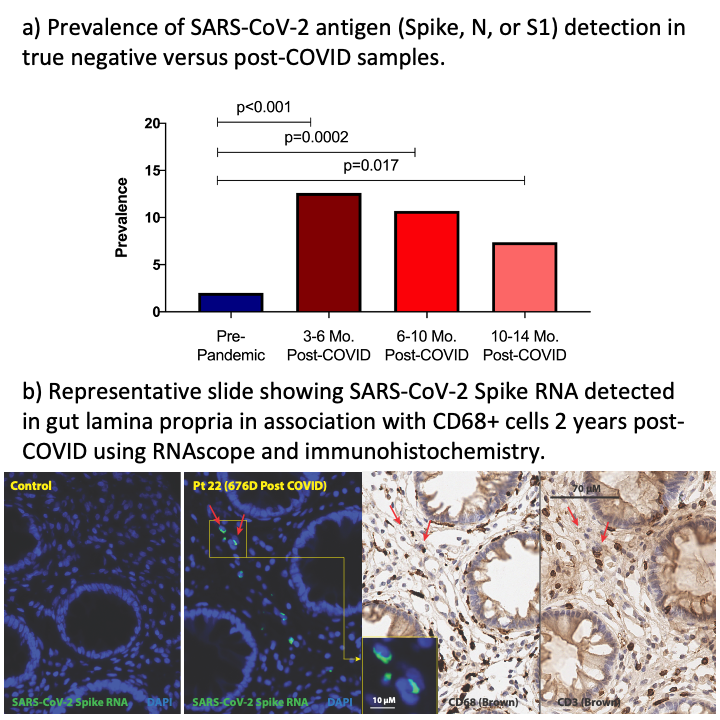
In plasma, compared to the proportion of antigen positivity in pre-pandemic controls (2.0%), detection of any SARS-CoV-2 antigen was more frequent across all post-acute COVID-19 time periods (3-6 months: 12.6%, p<0.001; 6-10 months, 10.7%, p=0.0002; 10-14 months, 7.5%, p=0.017; (a)). These differences were driven by spike for up to 14 months and nucleocapsid in the first 6 months after infection. Hospitalization for acute COVID-19 was associated with detectable antigen in the post-acute phase (OR 2.27, p=0.054) and strongly associated with detectable N antigen (OR 11.82, p=0.001). In gut, RNAscope revealed readily detectable SARS-CoV-2 RNA in multiple cells from all rectal tissue regions surveyed from 4/5 individuals (b), except for one who had rare RNA+ cells detected in 1/3 regions. Nearly all RNA+ cells were detected in the lamina propria, without an epithelial signal. A small percentage of RNA+ cells expressed CD68, a monocyte marker, but many RNA+ cells did not express CD68 and none expressed CD3. In 3/4 samples with readily detected RNA, the signal was associated with macrophage-dense areas.
Conclusions:
Our findings provide strong evidence that SARS-CoV-2 antigens can persist beyond the period of acute illness. The observation that 7-13% of plasma samples for over a year following initial SARS-CoV-2 infection contain detectable viral antigens, which are potentially immunogenic, has significant implications given the sheer number of people infected with SARS-CoV-2 to date. Work to determine if persistent antigen contributes to post-acute sequelae such as Long COVID is needed.