Background:
COVID-19 vaccine effectiveness wanes over time. Natural infection also provides a high level of protection from reinfection and from severe, critical, or fatal disease. While both natural and vaccine induced immunity are highly protective, reinfections after natural infection and breakthrough infections after vaccination have been reported. Our aim was to determine the incidence rate and rate of severe/critical COVID-19 disease among those with breakthrough infection after full vaccination compared with reinfection among unvaccinated persons
Methods:
The study was conducted using the US Department of Veterans Affairs (VA) COVID-19 databases. Individuals with a first confirmed infection >14 days after 2 doses of Pfizer or Moderna vaccine were matched 1:1 to individuals with a second confirmed infection in unvaccinated individuals >14 days after the first infection. Severe/critical disease, defined as admission to an intensive care unit, mechanical ventilation, or death within 28 days of the index test positive date, was compared among the two groups.
Results:
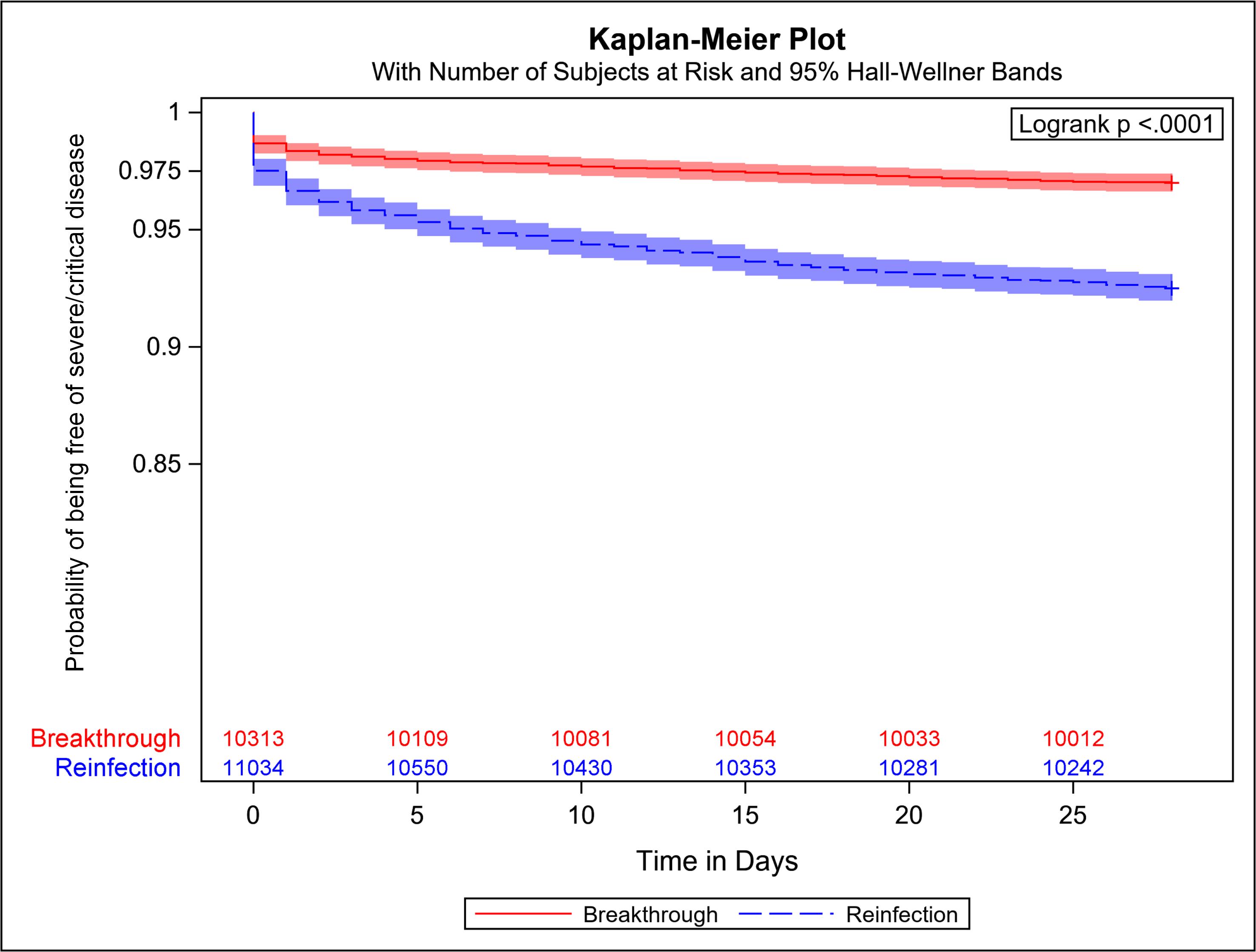
We identified 55,251 matched pairs. Median age was 56 years, 88% were male, 75% were White, median Charlson Comorbidity Index was 1, 31% were symptomatic at baseline. The incidence rate of breakthrough infection among vaccinated individuals was 0.29/1,000 person-years (PY; 95% CI 0.28,0.3) of follow up. Rate of reinfection among unvaccinated was 0.38/1,000 PY (95% CI 0.37,0.39). (P<0.001) The probability of remaining free of severe/critical disease was higher among vaccinated individuals with breakthrough infection compared with individuals with reinfection. (Figure)
Conclusions:
Incidence and severity of breakthrough infection and the risk of severe/critical disease after such infection is lower among vaccinated individuals compared with incidence and severity of reinfection among unvaccinated individuals.