Background:
National recent infection surveillance using the recent infection testing algorithm (RITA) is a tool to provide insights on epidemiological trends of recent HIV infections (i.e., individuals likely infected with HIV within the last year). We sought to compare risk factors for HIV infection diagnosis (i.e. diagnostic algorithm positive) and HIV diagnosis classified as recent (i.e. RITA-recent) amongst individuals tested for HIV infection in Cambodia.
Methods:
Individuals who were tested for HIV from 1 August 2020–11 August 2022 in 68 public facilities across the 25 provinces in Cambodia were included. Those newly diagnosed HIV positive and ≥ 15 years of age who consented were tested for recent HIV infection using the Asanté ™ HIV-1 rapid recency® assay (Sedia Biosciences). Individuals testing recent on the assay were tested for viral load (VL) for final classification (VL ≥ 1000 = RITA-recent). Data was managed in the MySQL database. Risk factors involved in the odds for HIV diagnosis and testing RITA-recent were analyzed using multivariable generalized estimating equations (GEE) logistic regression models in R version 4.1.2. HIV-negative individuals were used as the comparator for both analyses. The GEE method was used to produce logistic regression estimates for clustered data using R geepack 1.3.3.
Results:
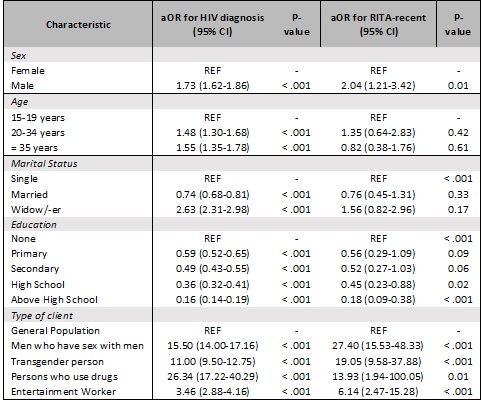
During the first two years of national recent infection surveillance, 53,031 individuals were tested for HIV infection and 6,868 (13%) were diagnosed with HIV. Of these, 6,180 (90%) were tested for recent infection. Of 314 individuals who tested assay-recent, 237 were tested for viral load and 192 tested RITA-recent. We observed differences in odds for HIV diagnosis and testing RITA-recent by HIV testing client type, marital status, and age (Table). Compared with the general population, men who have sex with men, transgender people, and entertainment workers had higher odds for testing RITA-recent than for HIV diagnosis while people who use drugs had lower odds for testing RITA-recent than for HIV diagnosis.
Conclusions:
National recent infection surveillance provides unique insights on HIV acquisition patterns compared to using new HIV diagnosis alone. These data have implications for prevention, testing, and key population programmes.
Multivariable odds ratios for HIV diagnosis and RITA-recent in comparison to testing HIV negative. All variables listed were included in the multivariable analysis.