Background:
Patients with human Mpox infection may have detectable virus in multiple anatomic compartments including skin, mucosal sites, blood, urine and semen. Longitudinal data on viral shedding are scarce.
Methods:
We conducted a prospective cohort study of adults with confirmed or suspected Mpox infection at an academic hospital in Toronto, Canada. Participants underwent swabs of skin lesions (up to three anatomic sites per visit), the nasopharynx (NP), the oropharynx, and the rectum, as well as urine and semen sampling, regardless of symptom status, at weekly (±3 days) visits until one week after complete resolution of the last skin lesion. Refrigerated specimens were transported to the laboratory within 24 hours of collection, frozen at -80C, and batch tested for Mpox virus using quantitative polymerase chain reaction (qPCR) targeting the viral polymerase gene E9L. We report serial cycle threshold (CT) values for specimens taken from participants with confirmed infection.
Results:
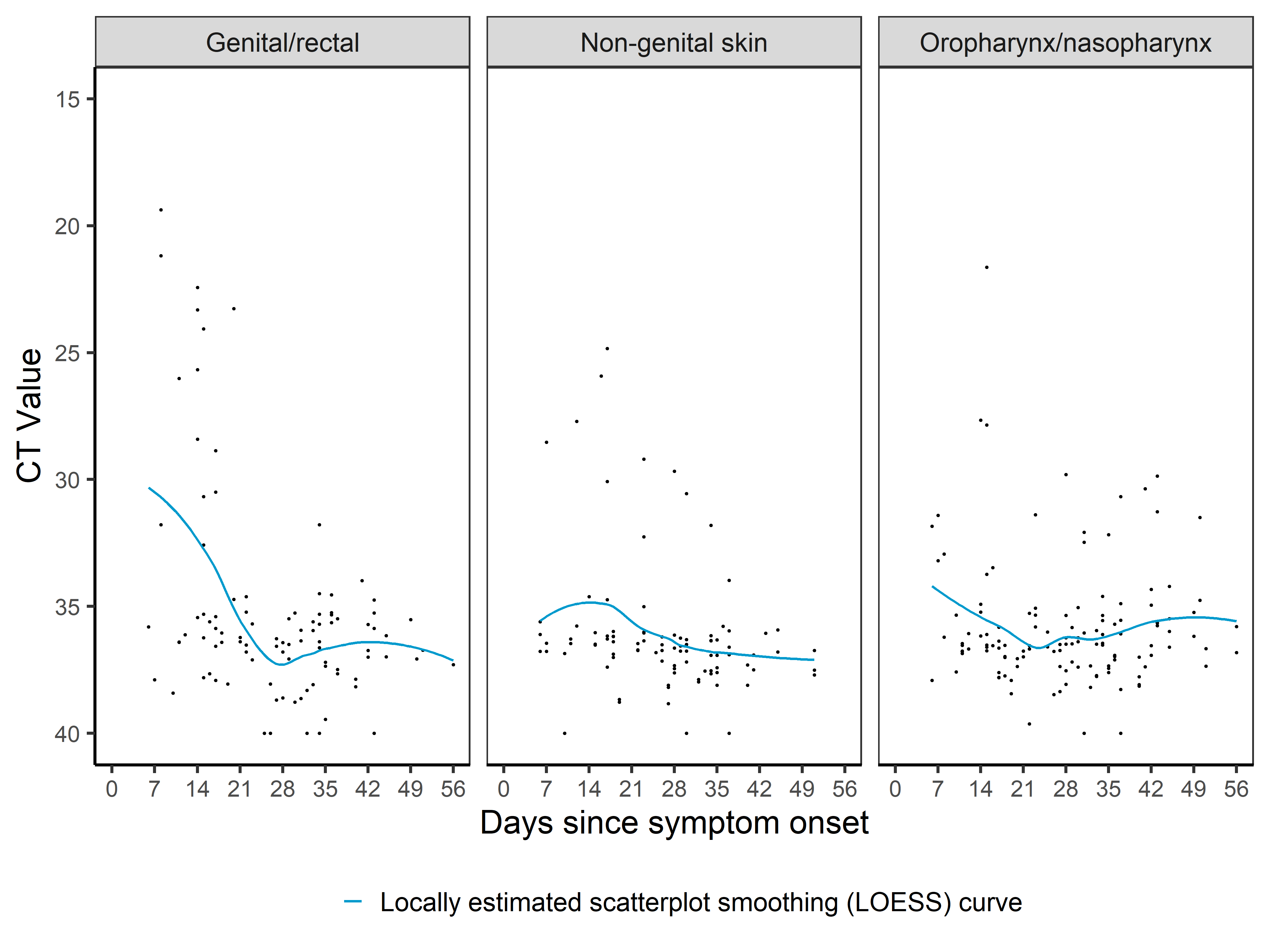
Between 21JUN2022-12OCT2022, we enrolled 28 participants, all of whom were cisgender men who have sex with men. Median (range) age was 38 (29, 60) years, and 12/28 (43%) were HIV-positive, all but one of whom had an undetectable viral load at the time of enrollment. Clinical manifestations ever reported included skin lesions (100%), headache (75%), fatigue (68%), fever (64%), myalgias (54%), rectal pain/discharge (46%) and sore throat (39%). After excluding specimens collected during or after use of tecovirimat, 21 participants provided a median (range) of 3 (1, 7) sampling visits per participant, beginning 14 (7, 35) and ending 34.5 (6, 56) days from symptom onset. The proportion of participants with evidence of viral shedding for at least one timepoint was 100% for skin specimens, NP swabs, rectal swabs and urine, but lower in semen (76%). Shedding was most pronounced in genital skin/rectal specimens, followed by oro/nasopharyngeal swabs and non-genital skin swabs (Figure). Shedding typically declined in the second week of illness in non-cutaneous sites but persisted at the final sampling timepoint in 95% and 76% of participants’ rectal swabs and semen samples, respectively.
Conclusions:
Mpox virus genetic material may remain detectable in multiple anatomic compartments for up to 8 weeks after symptom onset. Correlation with infectivity requires further study.