Background:
The number of persons prescribed HIV preexposure prophylaxis (PrEP) in the United States has been estimated at the national-, state-, and county-levels using a large commercial pharmacy database. These data are used to calculate a quarterly PrEP coverage indicator to monitor progress towards the goals of the Ending the HIV Epidemic in the U.S. (EHE) initiative. This pharmacy database includes prescriptions from >90% of the U.S. retail pharmacies, but PrEP prescriptions from the Veteran Health Administration (VHA) system were not included. To address this gap, we analyzed VHA data to examine the trends in PrEP use among veterans receiving health services in the VHA system.
Methods:
We analyzed 2017-2021 PrEP prescription data extracted from the VHA system. We reported the total annual number of persons aged ≥18 years prescribed PrEP each year, stratified by sex, age, race/ethnicity, and region. We assessed trends in the number of persons prescribed PrEP by calculating estimated annual percent change (EAPC) and 95% confidence intervals (CIs) using Poisson models.
Results:
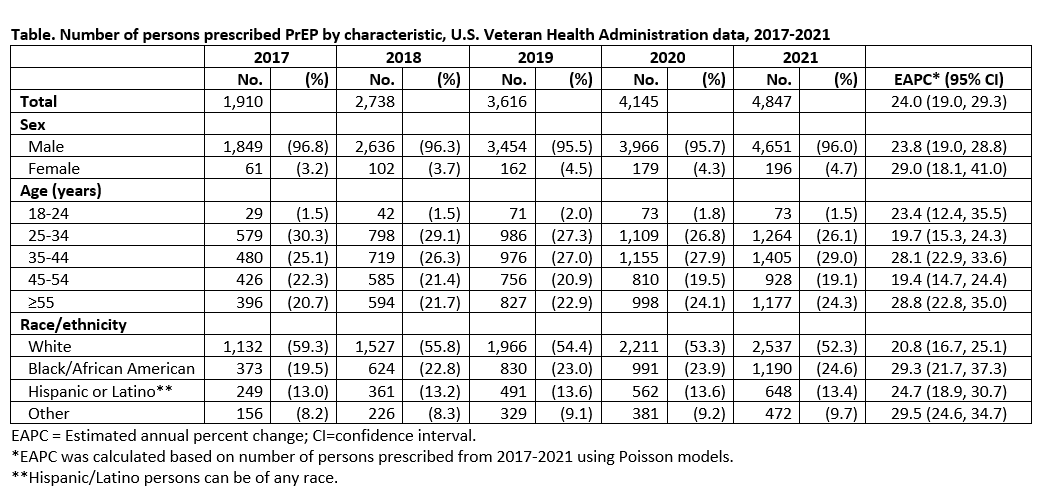
The number of veterans prescribed PrEP increased from 1,910 in 2017 to 4,847 in 2021 (EAPC: 24.0% [95% CI, 19.0–29.3]). In 2021, 4,847 veterans had PrEP prescriptions and 96.0% were men, 54.1% were aged 25─44 years, 52.3% were white, 24.6% Black/African American (Black) and 13.4% Hispanic or Latino. Majority of the 2021 PrEP prescriptions were in the South 2,050 (42.5%), 1,676 (34.7%) in the West, 620 (12.8%) in the Midwest, and 486 (10.1%) in the Northeast. The number of female veterans prescribed PrEP increased during 2017-2021 with an EAPC of 29.0% and the proportion of women who comprised PrEP users increased from 3.2% in 2017 to 4.7% in 2021. Similarly, the number of Black veterans prescribed PrEP increased with an EAPC of 29.3% and the proportion of Black persons who comprised PrEP users increased from 19.5% to 24.6% (Table).
Conclusions:
VHA data fill a gap in monitoring PrEP use in the United States. We observed an increasing trend in the number of veterans prescribed PrEP similar to the trends among persons with commercial or public health insurance. An increasing proportion of Black veterans prescribed PrEP over the study period can help to decrease racial/ethnic disparities in receipt of HIV prevention services. Less than 5% of PrEP users were female veterans although women comprise 9.5% of U.S veterans. Interventions that support more equitable PrEP service implementation for women is needed.