Background:
As HIV treatment access in sub-Saharan Africa has expanded, it has become increasingly important to follow people living with HIV (PLWH) across multiple healthcare facilities to fully describe their HIV care journey. In Zambia, following PLWH across HIV care sites may be complicated by silent transfer. As part of a parent study on recent HIV infection, we measured viral load at baseline among PLWH newly presenting to care at two high-volume clinics in Lusaka, Zambia, and assessed predictors of potential silent transfer.
Methods:
We conducted this sub-study using socio-demographic, clinical, and behavioral data from a cohort enrolled in the parent study from 2 June 2021–24 February 2022. We measured baseline HIV viral load as part of the national recent infection testing algorithm, and, for this analysis, used results to identify and describe PLWH newly presenting to care with viral suppression (i.e., potential silent transfers). We used mixed effects Poisson regression models to estimate prevalence ratios for viral suppression (at ≤1,000 copies/ml and ≤60 copies/ml) at presentation to care, and to construct marginal probability estimates by age category and sex.
Results:
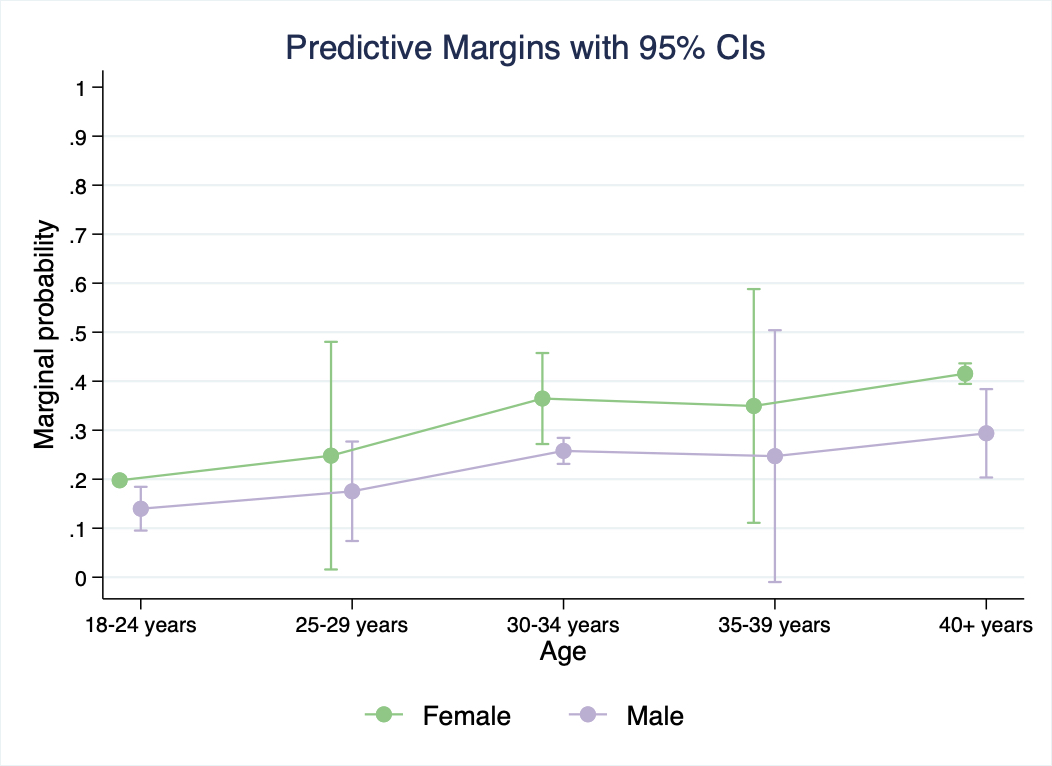
We included 248 individuals among whom 66 (27% [66/248]) had viral suppression defined at ≤1,000 copies (c)/ml and 53 (21% [53/248]) at ≤60 c/ml thresholds, respectively. Participants reporting widowed marital status had a significantly lower adjusted prevalence of baseline viral suppression (adjusted prevalence ratio [aPR]:0.28; 95% confidence interval [CI]:0.10, 0.83) compared to married participants, while participants age 40+ years had a significantly higher adjusted prevalence of suppression (aPR:2.10; 95% CI:2.08, 2.13) compared to participants aged 18-24 years. Participants reporting no formal education had a significantly higher adjusted prevalence of baseline viral load ≤1000 c/mL (aPR:1.63; 95% CI:1.52, 1.75). Finally, adjusted marginal probability for potential silent transfer was highest among older (40+ years) females (41.8%, 95% CI:39.3, 43.3%).
Conclusions:
With a high proportion of PLWH newly presenting to care with baseline viral suppression, silent transfer is potentially a major issue in routine HIV programs. Our observations suggest characteristics of patients who may engage in silent transfer, allowing for program improvement to better identify and support these PLWH.
Figure 1: Marginal probability of new client being suppressed at presentation to HIV care by sex. Note: estimates based on model adjusted for marital status, educational attainment, month of testing, and facility; CI – confidence interval