Background:
KSHV inflammatory cytokine syndrome (KICS), caused by Kaposi sarcoma herpesvirus (KSHV), is characterized by severe inflammatory signs (elevated C-reactive protein, elevated KSHV viral load) and symptoms without evidence of multicentric Castleman disease (MCD). KICS, predominantly occurs among people with HIV (PWH) and Kaposi sarcoma (KS), and has overlapping clinical features of MCD and primary effusion lymphoma (PEL). We present findings from the largest prospective study of KICS.
Methods:
The primary objective was to evaluate KICS natural history. There were broad eligibility criteria to allow thorough diagnostic evaluation for KICS and exclusion of other inflammatory disorders. Participants (pts) with confirmed KICS (without PEL, MCD or other causes of inflammation) were assigned to either an observation arm to treat KS with standard therapy or to a KICS treatment arm to receive rituximab-based regimens, high-dose zidovudine and valganciclovir (AZT/VGC) or other rational therapies, such as tocilizumab.
Results:
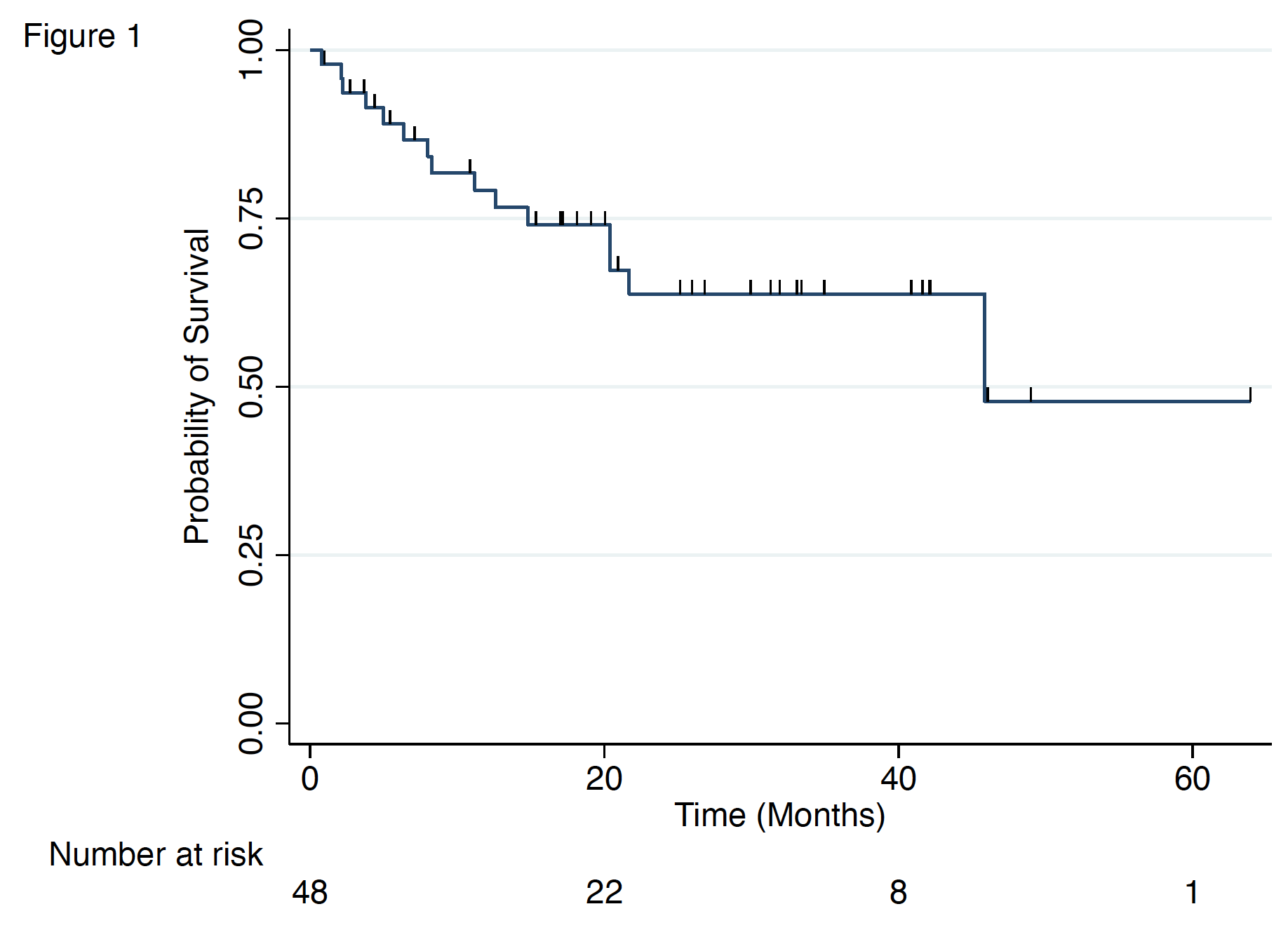
Seventy-six pts were enrolled from 2011 to 2022. Twenty-eight pts did not meet further KICS criteria, as inflammatory symptoms were associated with PEL (20 pts), MCD (2 pts), HIV infection alone (5 pts), or paraganglioma (1 pt). Therefore, following initial evaluation, 48 pts (47 PWH) had confirmed KICS, and all but 1 had concurrent KS. In 47 pts with confirmed KICS and HIV infection, 43 pts (91%) were on antiretroviral therapy at baseline, median duration of HIV infection was 8.1 years (interquartile range (IQR): 0.7-15.8), median HIV viral load was 76 copies/mL (IQR: 23-4631), and median CD4+ T cell count was 86 cells/µL (IQR: 32-155). Among all pts with confirmed KICS, 27 pts (56%) received KS-focused therapy alone, 18 pts (35%) received rituximab-based therapy [with liposomal doxorubicin (15 pts) or paclitaxel (2 pts) or without chemotherapy (1 pt)], 1 pt received AZT/VGC, 1 pt received tocilizumab. Ten of 18 pts (55%) who received rituximab-based therapies had clinical benefit with improvement of KICS signs and symptoms within 8 weeks of treatment. For pts with confirmed KICS, the median overall survival was 45.8 months (95% confidence interval: 20.3 – not reached) (Figure 1).
Conclusions:
KICS is a distinct diagnosis of exclusion that often occurs with KS and carries a relatively poor survival. Pts should have MCD and PEL ruled out prior to KICS diagnosis. Rituximab-based therapies may have a role in treatment of a subset of pts with KICS.
Figure 1: Kaplan-Meier curve of overall survival in 48 participants with confirmed KICS