Background:
HBV vaccination and tenofovir-based PrEP prevent acute HBV hepatitis. However, there is little data on prophylactic effect of these HBV prophylaxes against asymptomatic HBV infection. We investigated acute HBV infection and its serological characteristics according to the HBV prophylaxes among an HIV-negative MSM cohort, at sexual health clinic (SHC) in Tokyo, Japan.
Methods:
HIV-negative MSM aged 16 years and older were included in SHC. Participants were examined with HBs antigen (HBsAg)/antibody and HBc antibody (HBcAb), HIV infection, syphilis, Chlamydia trachomatis and Neisseria gonorrhoeae infections every 3 months. Those who were diagnosed with acute HBV infection between January 2018 and March 2022 in SHC were subjects for this study. The definition of acute HBV infection was as followed; 1) for those with positive HBsAg at the enrollment of SHC, clearance of HBsAg within 6 months from the first HBsAg positivity, and 2) for those with HBsAg and HBc Ab negativity at the enrollment of SHC, HBsAg or HBcAb seroconversion during the study period. The cases of acute HBV infection were categorized into A) positive HBsAg, B) negative HBsAg and continuous HBcAb positivity, and C) negative HBsAg and transient HBcAb positivity. B) and C) were analyzed by HBV prophylaxes including prior HBV vaccination and tenofovir-based PrEP with t-test or chi-square test. HBV DNA was measured among C) if available serum samples were stocked.
Results:
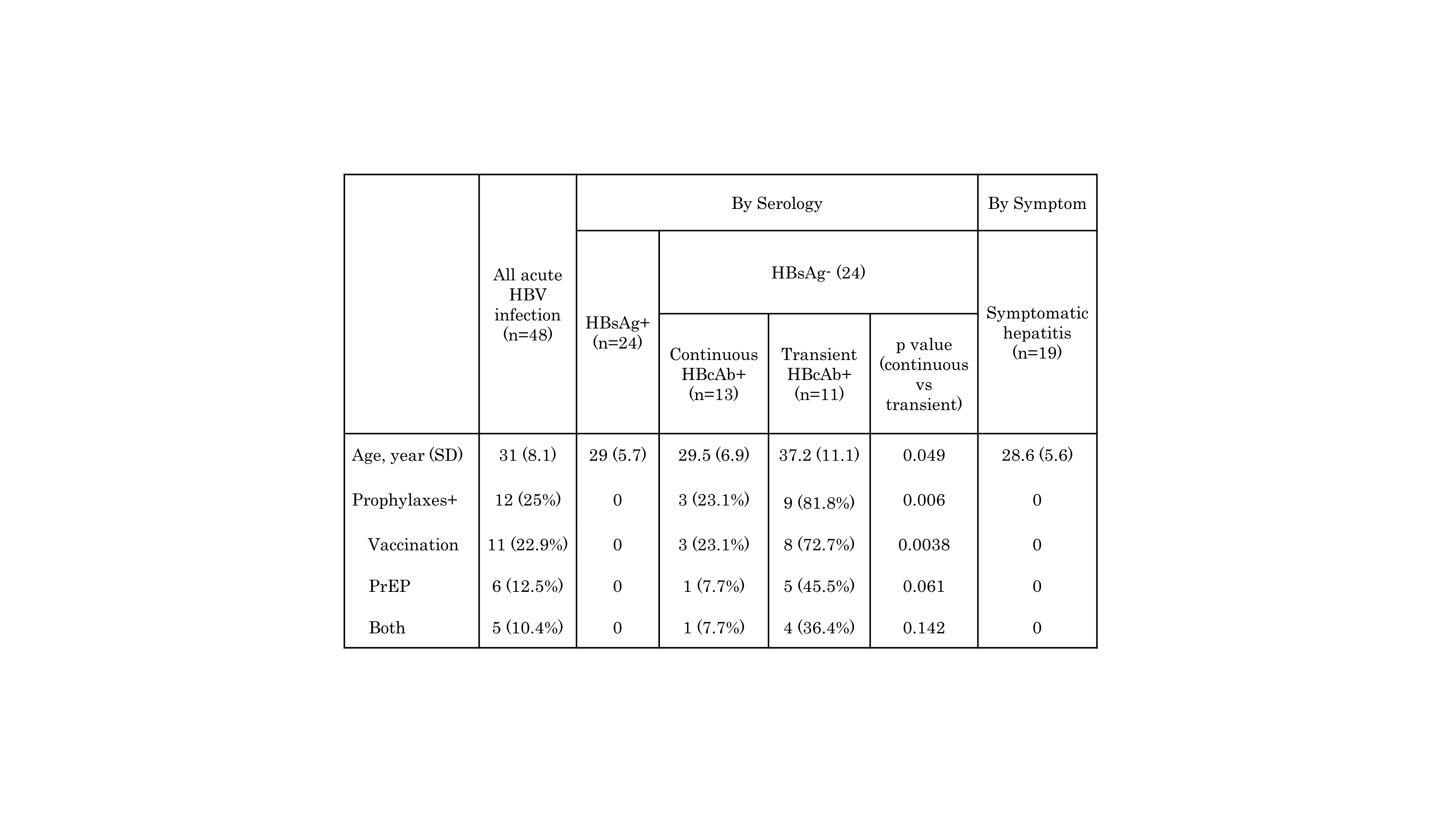
A total of 1972 MSM were included in SHC as of March 2022. Among them, 48 (mean age 31 years) were diagnosed with acute HBV infection. As shown in the table, MSM with transient HBcAb positivity were significantly more likely to have HBV prophylaxes, while MSM with symptomatic hepatitis and HBsAg positivity were not observed among those who had HBV prophylaxes. MSM with transient HBcAb positivity was older than MSM with continuous HBcAb positivity, which may be reflected by the fact that MSM with the HBV prophylaxes were significantly older (39.3 vs 28.3 years, p < 0.001). Of 11 MSM with transient HBcAb positivity, 3 cases were tested for HBV DNA and it was detected in one case. The average time to disappearance of HBcAb was 174 days.
Conclusions:
While HBV prophylaxes prevented symptomatic hepatitis, the infection without serological trace occurred. Clinical significance of this “micro-infection” should be investigated in further studies.
Detail of acute HBV infection according to serology and prophylaxes