Background:
COVID-19 may be more severe in persons with HIV (PWH). However, underlying biological mechanisms associated with the development of COVID-19 and its clinical severity among antiretroviral therapy (ART) treated PWH are largely unknown. Therefore, we wished to evaluate temporal changes in plasma proteins following SARS-CoV-2 infection and identify pre-infection proteomic markers associated with future COVID-19.
Methods:
We analyzed the data of clinical, antibody-confirmed COVID-19 ART-treated PWH from the global Randomized Trial to Prevent Vascular Events in HIV (REPRIEVE). Individuals were matched on geographic region, age, and sample timing to antibody-negative controls. For cases and controls, pre-COVID-19 pandemic specimens were obtained prior to January 2020 to assess temporal changes and baseline differences in protein expression in relationship to COVID-19 severity, using mixed effects models adjusted for false-discovery rate.
Results:
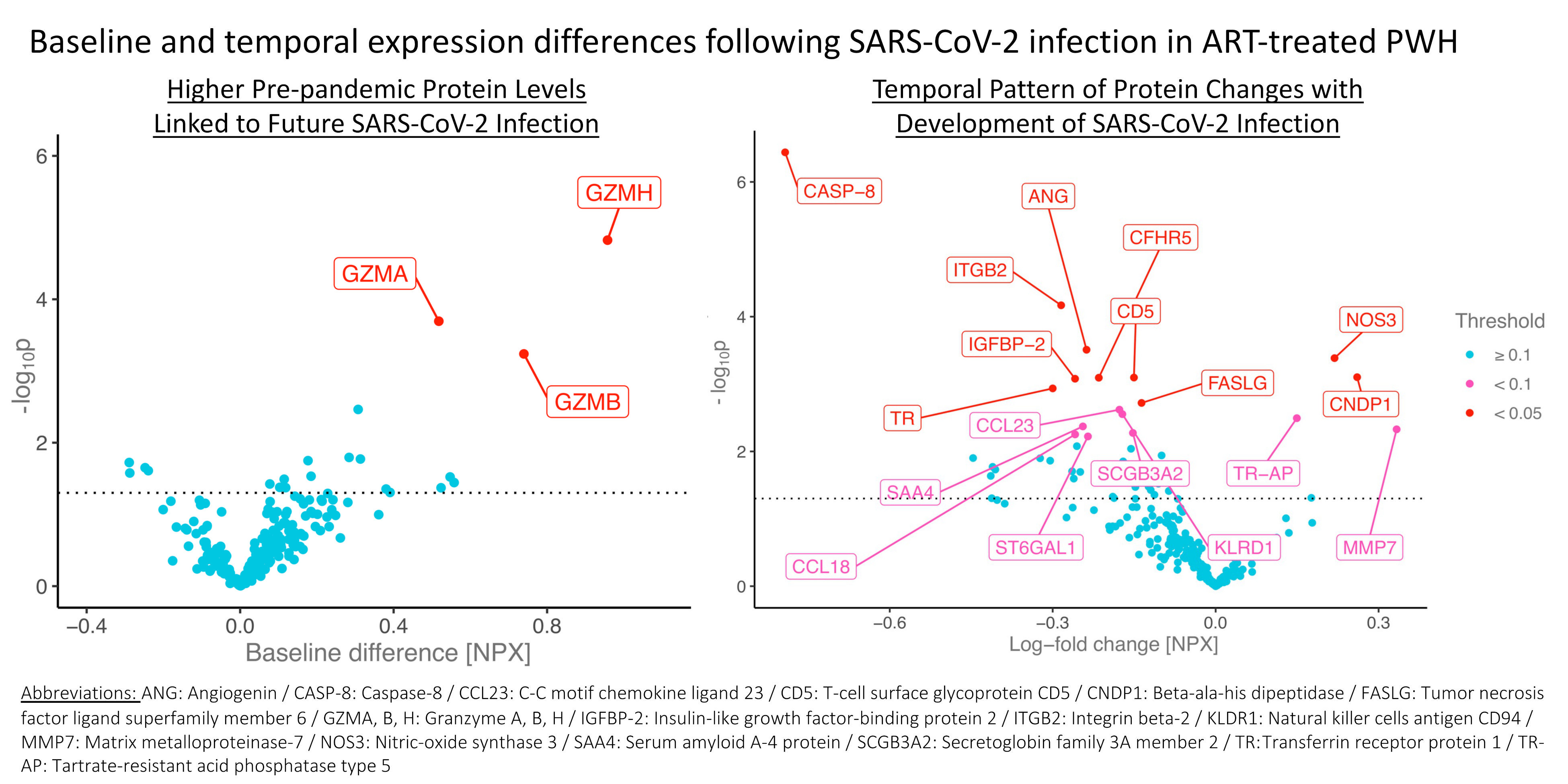
We compared 257 unique plasma proteins (Olink Proteomics) in 94 COVID-19 antibody-confirmed clinical cases and 113 matched antibody-negative controls, excluding COVID-19 vaccinated participants (median age 50 years, 73% male). 40% of cases were characterized as mild; 60% moderate to severe. Median time from COVID-19 infection to follow-up sampling was 4 months. Temporal changes in protein expression differed based on COVID-19 disease severity. Among moderate to severe cases vs. controls, NOS3 increased, whereas ANG, CASP-8, CD5, GZMH, GZMB, ITGB2, and KLRD1 decreased. Higher baseline circulating concentrations of granzymes A, B and H (GZMA, GZMB and GZMH) were associated with the future development of moderate-severe COVID-19 in PWH and were related to immune function, including CD4, CD8 and the CD4/CD8 ratio.
Conclusions:
We identified temporal changes in novel proteins in closely linked inflammatory, immune, and fibrotic pathways which may relate to COVID-19-related morbidity among ART-treated PWH. Further, we identified key granzyme proteins, serine proteases expressed by cytotoxic T lymphocytes and NK cells in response to foreign antigens, associated with future COVID-19 in PWH. Our results provide unique insights into the biological susceptibility and responses to COVID-19 infection in PWH.
Baseline and temporal expression differences following SARS-CoV-2 infection in ART-treated PWH