Background:
Confirmed COVID-19 case counts underestimate SARS-CoV-2 infections, particularly in countries with limited testing capacity. Pregnant women attending antenatal care (ANC) clinics have served as healthy population surrogates to monitor diseases like HIV and malaria. We measured SARS-CoV-2 seroprevalence among women attending ANC clinics to assess infection trends over time in Zambia.
Methods:
We conducted repeated cross-sectional surveys among pregnant women aged 15-49 years attending their first ANC visits in 3 districts of Zambia during September 2021-September 2022. Up to 200 women per district were enrolled each month, completing a standardized questionnaire. Dried blood spot samples were collected for serologic testing for prior infection using the Tetracore® FlexImmArrayTM SARS-CoV-2 Human IgG Antibody Test and HIV testing according to national guidelines. We calculated odds ratios (ORs) for SARS-CoV-2 seroprevalence by demographic characteristics, adjusting for the district.
Results:
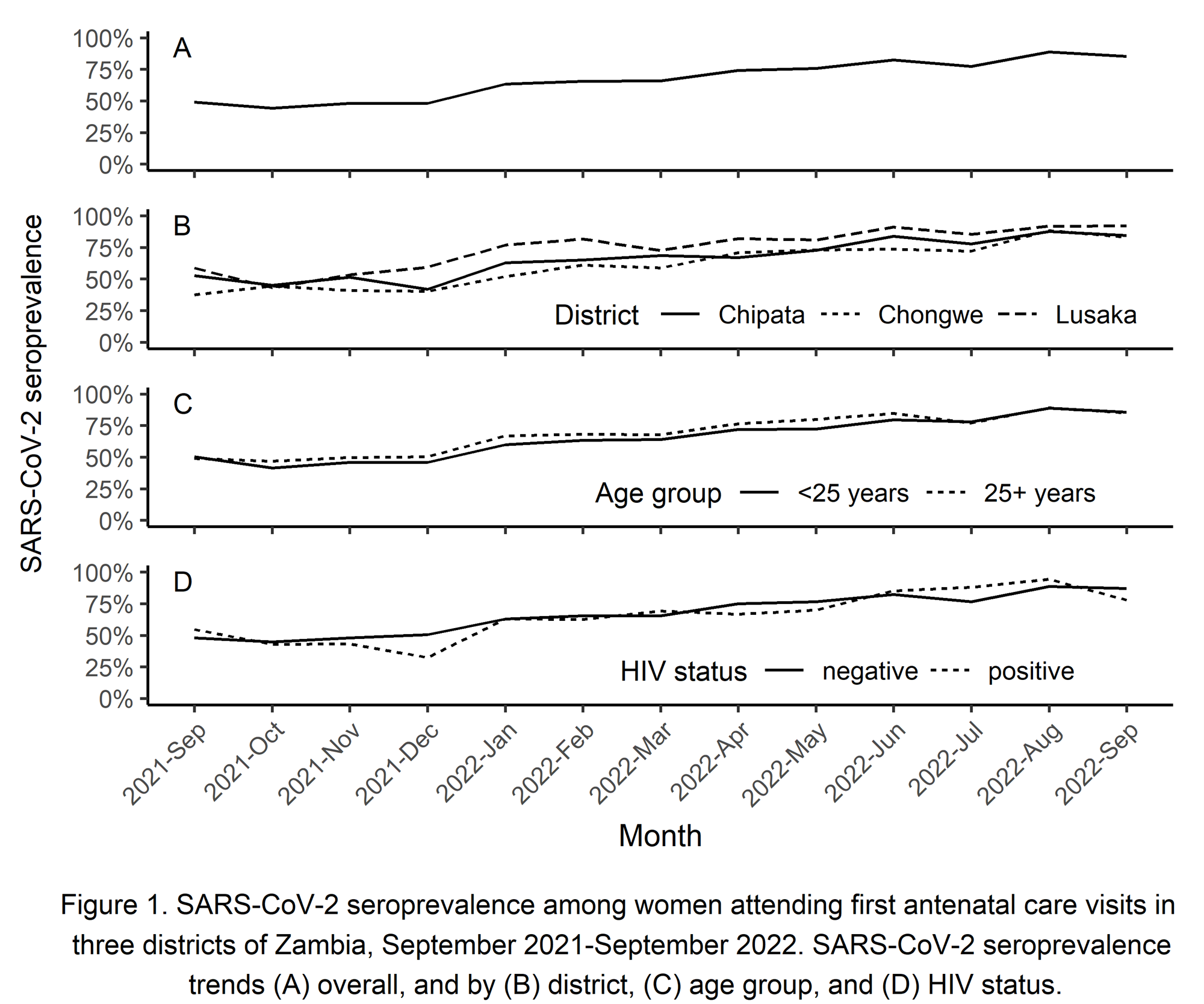
A total of 5,351 women were enrolled at 29 study sites between September 2021 and September 2022. Participants’ median age was 25 years (interquartile range: 21-30), 530 (9.9%) tested positive for HIV, and 101 (1.9%) reported a prior positive COVID-19 test. Overall, SARS-CoV-2 seroprevalence was 67%, and rose from 49% in September 2021 to 85% in September 2022 (Figure 1). The greatest increase in seroprevalence occurred during the 4th wave caused by the Omicron variant (48% in December 2021 to 63% in January 2022). Seroprevalence was significantly higher among women living in urban districts (Chipata and Lusaka) compared to rural Chongwe District (Chipata OR: 1.2, 95% confidence interval [CI]: 1.1-1.4; Lusaka OR: 1.7, 95% CI: 1.5-2.0). The age group was not significantly associated with seroprevalence after adjusting for the district (aOR: 1.1, 95% CI: 1.0-1.2). Seroprevalence was significantly lower among women living with HIV than women living without HIV (aOR: 0.8, 95% CI: 0.6-0.9).
Conclusions:
Overall, two-thirds of women in the three surveyed districts in Zambia had evidence of SARS-CoV-2 exposure, rising to 85% after the Omicron variant spread throughout the country. ANC clinics have a potential role in ongoing SARS-CoV-2 serosurveillance and can continue to provide insights into SARS-CoV-2 infection dynamics. Furthermore, they provide a platform for focused SARS-CoV-2 prevention messaging and COVID-19 management in pregnant women at higher risk of severe disease.
Figure 1: SARS-CoV-2 seroprevalence among pregnant women attending antenatal care clinics in Zambia by district, age group, and HIV status, September 2021-September 2022.