Background:
Recent epidemiological analyses showed that the Rwandan HIV epidemic is mixed, with pockets of high HIV prevalence in specific high-risk populations such as Female sex workers, contributing to up to 46% of all new HIV infections. WHO Guidelines in 2015, recommend the use of tenofovir-based Pre-Exposure Prophylaxis (PrEP) in individuals at substantial risk of HIV, such as FSWs, as part of prevention programs. We aimed to evaluate the effects of the provision of PrEP to FSWs within a health program in urban settings of Rwanda.
Methods:
This is a retrospective cohort study of HIV negative female sex workers who were exposed or not exposed to PrEP in 22 out of 59 health facilities of the city of Kigali. We included eligible HIV negative FSWs aged 18 years and older who consented to taking PrEP for life (exposed) and compare them to those who did not consent to taking PrEP (unexposed). Data were extracted in a csv format for analysis from an anonymized electronic database. We built logistic regression model the risk of HIV seroconversion at twelve months of follow-up after weighting the inverse probability treatment using a propensity score to control for confounding and reduce imbalance across different treatments.
Results:
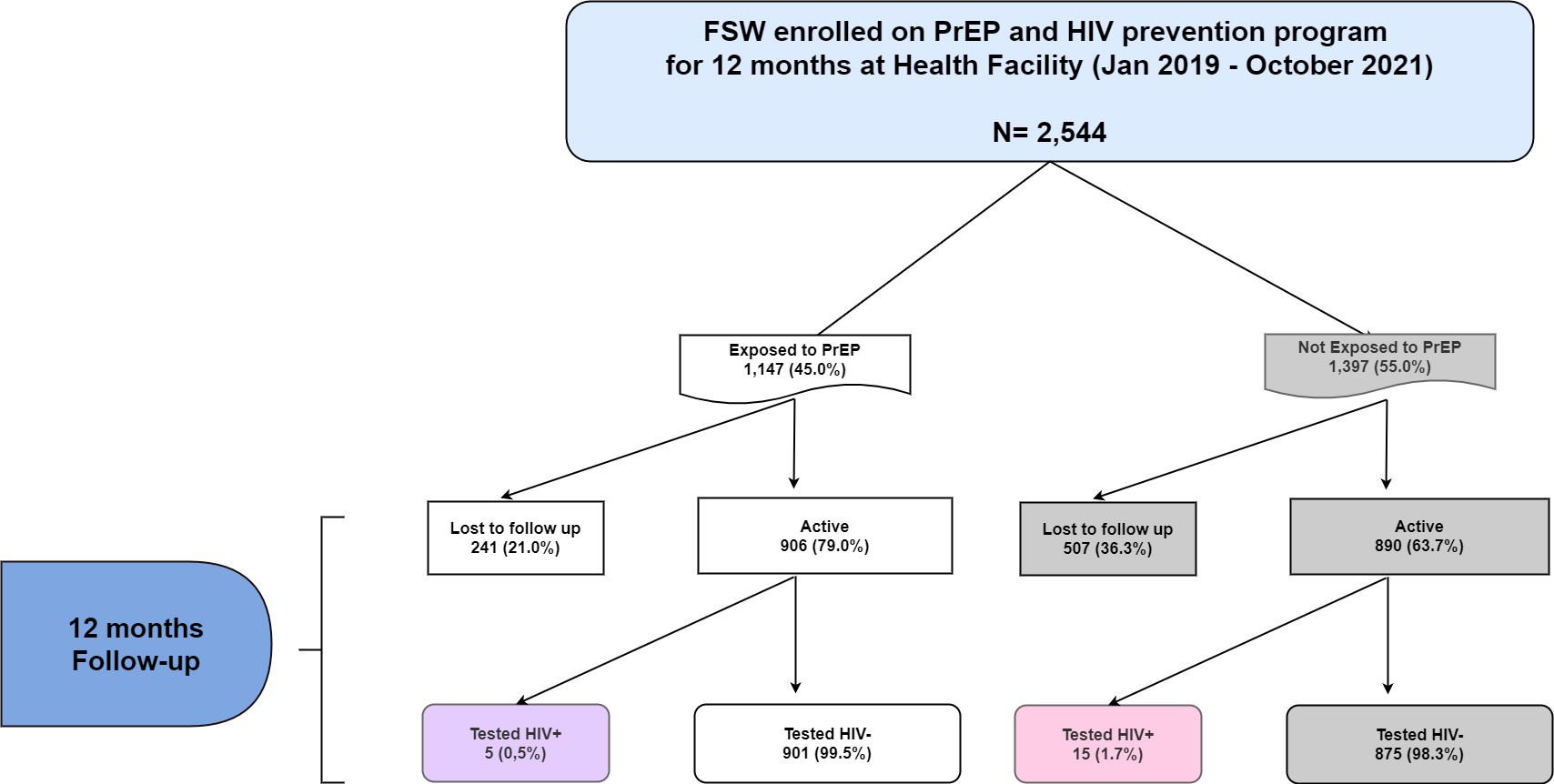
From January 2019 to October 2021; 2,544 HIV-negative FSW were followed-up in PrEP providing facilities. The majority of FSW 51.9% (1,322/2,544) was aged 18-29 years, 63.0% (1,604/2,544) lived alone and 73% (1,856/2,544) had only attended basic school. In total, 45.1% (1,147/2,544) of FSW participated in the PrEP program while 54.9% (1,397/2,544) were not.At 12 months of follow-up 78.9% (906/1,147) and 63.7% (890/1,397) of FSW were retained in PrEP and in the HIV prevention program, respectively. At 12 months’ follow-up, 0.56% (5/906) of FSW in the PrEP program and 1.69% (15/890) of FSW in program without PrEP became HIV-positive. We estimated 69% lower risk of HIV infection among FSW actively followed-up at 12 months’ participation in the PrEP program compared to participation in the pre-existing prevention program (adjusted odds ratio 0.31, 95% confidence interval :0.11-0.87)
Conclusions:
In this pilot study incidence of HIV infection at 12 months was lower in FSW who were retained in the PrEP program compared to FSW who were ineligible or did not consent to participate. We recommend further longitudinal studies to estimate patient’s long-term outcomes and scale-up to other high risk groups.
Figure 1: Participants’ care continuum on Pre-Exposure Prophylaxis