Background:
Long term evolution of Multisystem Inflammatory Syndrome in children (MIS-C) is poorly understood. In this report, we described the frequency of persistent symptoms and sequels after one-year monitoring in a cohort of MIS-C patients.
Methods:
This is a prospective observational study in under-18-aged patients diagnosed with MIS-C between October 2020 and April 2021 in a tertiary hospital. Data from initial episode was obtained from the Spanish national database and the medical history. A standardized phone questionnaire was done one year after the acute episode. As patients pared by age and sex were included with i) history of acute COVID-19, from the same national database, and ii) with peritonitis diagnosis in the electronic medical record. Data was collected using REDCap and analysed with R. Ethics committee approval was obtained.
Results:
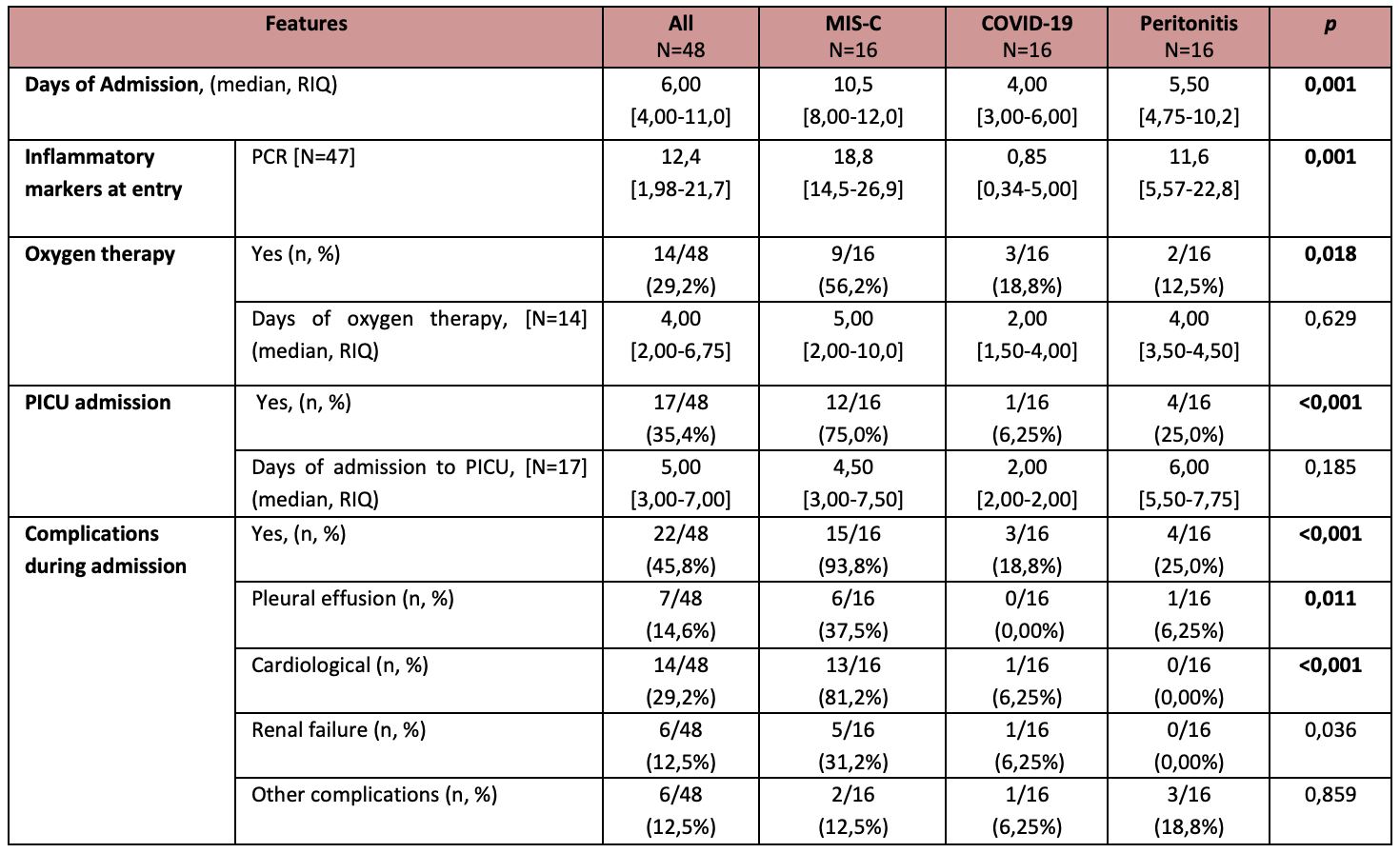
A total of 48 patients were included in the study, 16 in each group. Average age at hospitalization was 11,2 years old [IQR: 6,6-14,4] and 52% (23/48) were male. MIS-C patients presented high frequently 94% (15/16) cardiological complications during hospitalization, in contrast with 19% (3/16) of acute COVID-19 patients and 25% (4/16) of peritonitis group (p< 0.01). All of them resolved after a year except the ones associated to hypoxic ischemic encephalopathy in a patient with MIS-C that need ECMO assistance. Summary characteristics during acute episode are shown in Table 1.After one-year follow-up, 88% MIS-C patients suffered one or more symptoms, more frequently: headache (44%), fatigue (38%), insomnia (38%) and concentration problems (38%). A total of 56% of COVID-19 patients presented persisted symptoms, mainly fatigue and concentration problems (19%), and 31% in peritonitis group (19% loss of appetite and abdominal pain), (p< 0.001). MIS-C patients visited more frequently the medical professionals due to emotional change, behaviour or interpersonal relationships after the disease [4/16 (25%) in MIS-C vs. 0/16 (0%) in both control groups, p= 0.028].
Conclusions:
Majority of MIS-C patients have persistent symptoms one year after acute episode, even with the resolution of cardiological complications. Frequency of long term symptoms in MIS-C patients is significantly higher than in COVID-19 hospitalized and than in a control group of surgical peritonitis patients.
Summary characteristics during acute episode