Background:
The human endogenous β-galactoside-binding protein Galectin-9 (Gal-9) reactivates latently HIV-infected cells, which may allow for immune-mediated clearance of these cells. However, Gal-9 also activates T cell Receptor (TCR) signaling pathways, which could negatively affect HIV persistence by promoting T cell expansion and chronic immune activation and exhaustion. This potential “immunomodulatory” effect of Gal-9 during HIV infection raises the question of the overall impact of Gal-9 on HIV persistence in vivo.
Methods:
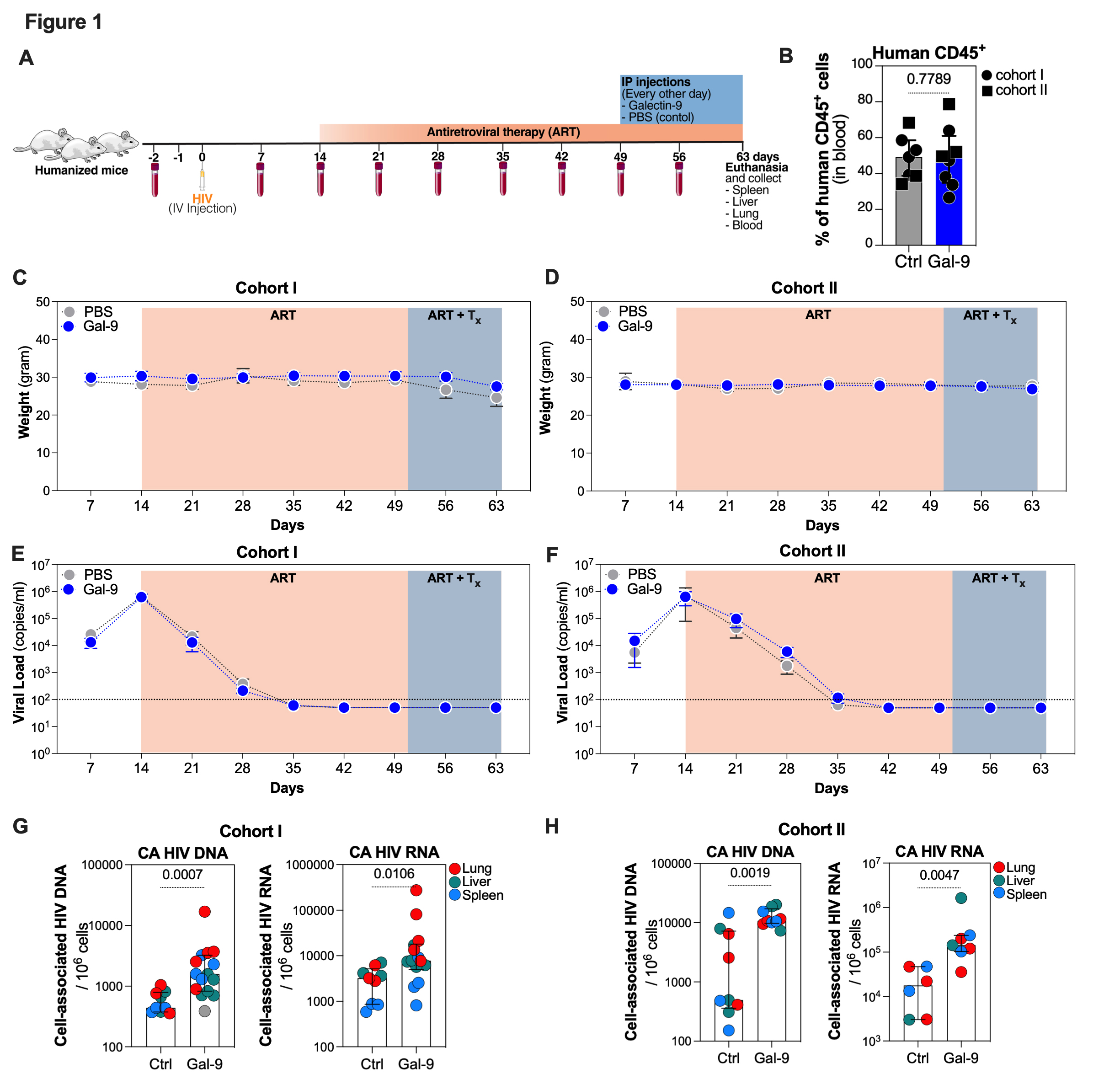
We used the BLT (bone marrow, liver, thymus) humanized mouse model to evaluate the overall impact of Gal-9 on HIV persistence in vivo during antiretroviral therapy (ART). Two independent cohorts of BLT mice with high human immune reconstitution were infected with HIV, placed on ART, and then treated with either recombinant human Gal-9 or PBS during ART suppression. Plasma viral loads and levels of tissue-associated HIV DNA and RNA were measured by qPCR. Markers of T cell activation/exhaustion were measured by flow cytometry, and plasma markers of inflammation were measured by multiplex cytokine arrays.
Results:
Gal-9 treatment was tolerable in ART-suppressed humanized mice and did not significantly induce plasma markers of inflammation or T cell markers of activation or exhaustion. However, Gal-9 treatment during ART significantly increased levels of tissue-associated HIV DNA and RNA compared to controls (P=0.0007 and P=0.011, respectively, for cohort I and P=0.002 and P=0.005, respectively, for cohort II).
Conclusions:
Our study reveals a detrimental effect of Gal-9 on HIV persistence in vivo, suggesting instead for blockade of Gal-9 interactions as a strategy for reservoir reduction in PLWH.
Figure: Gal-9 treatment is tolerable in vivo but increased levels of tissue-associated HIV DNA and RNA during ART-suppressed HIV infection in Hu-mice.