Background:
Frailty is associated with adverse health events including mortality among older adults with HIV (OAWH). A multicomponent exercise program (MEP) reverses frailty to pre-frailty and improves physical performance in the older population overall but there is no data in OAWH. Our aim is to analyze the effects of a personalized MEP (PEMP) on frailty, physical function, and quality of life in OAWH.
Methods:
A prospective longitudinal study was performed. Sedentary adults 50 or over with and without HIV were included. The intervention was a 12-week PEMP (resistance, endurance, balance, and flexibility training) at home. Sociodemographic characteristics, comorbidity, medications, HIV-related data, and physical activity (IPAQ) were recorded. The dependent variables were frailty (Frailty Phenotype), physical function (Senior Fitness Test (SFT), hand grip strength, SPPB), mood (HADS, GDS-SF), and quality of life (WHOQOL-HIV-BREF).
Results:
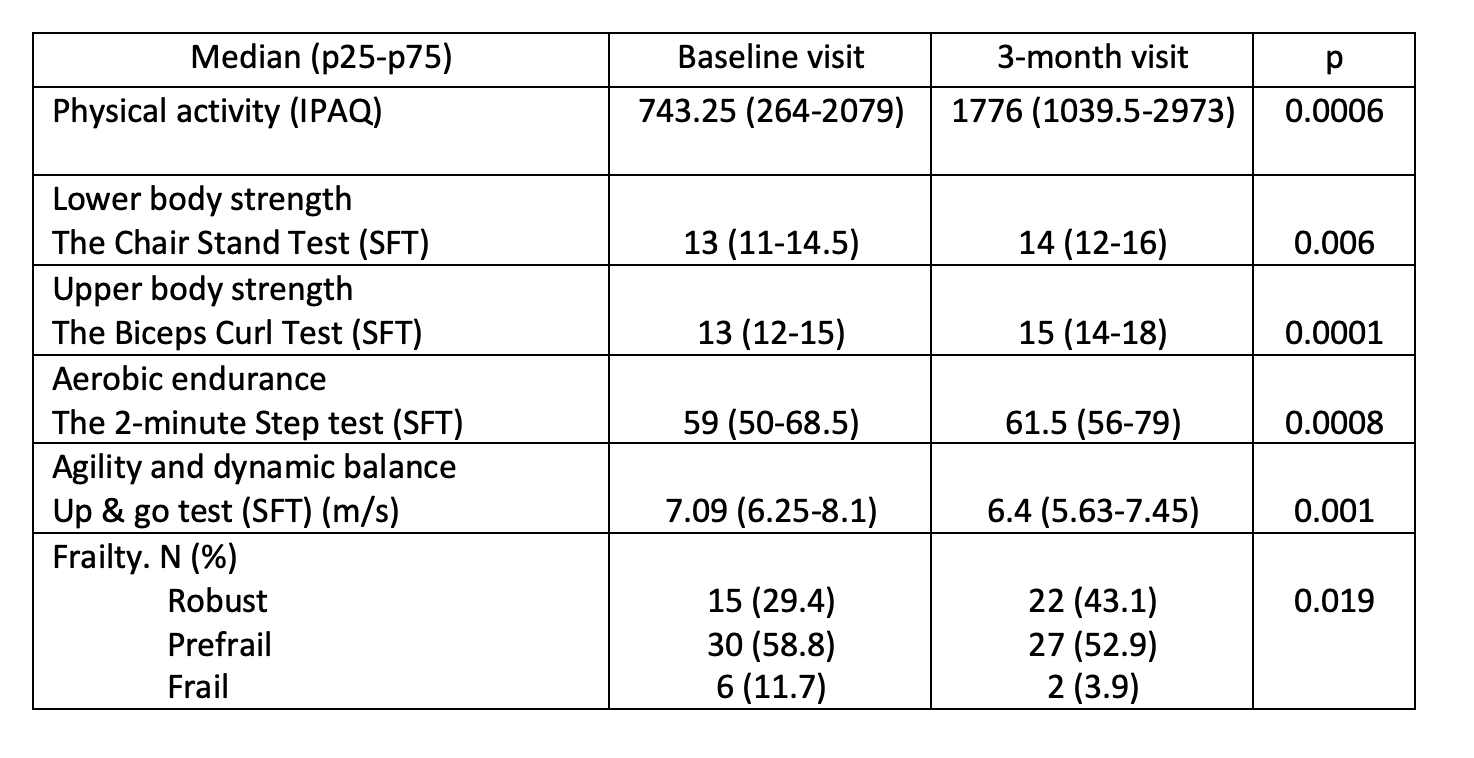
51 participants were included (31 HIV+, 20 HIV-). Median age was 57 (53-63) years. 25% were women. 100% of the HIV+ participants were virologically controlled. The significant effects of the PEMP on frailty, physical function and physical activity are shown in Table 1. Significant improvement in quality of life was also found in physical health and level of independence (WHOQOL-HIV-BREF). No differences were found between HIV+ and HIV- participants.
Conclusions:
Our results demonstrate that a 12-week PEMP reverses frailty and improves the physical function (lower body strength, upper body strength, aerobic endurance and balance), and the quality of life of older adults with or without HIV.
Table 1. The significant effects of the PEMP on frailty, physical function and physical activity.