Background:
Neurofilament light (NfL) has been identified as a potential biomarker of neuronal injury and cognitive impairment in people with HIV (PWH). In people without HIV (PWoH), NfL levels have been reported to correlate with lifestyle factors, such as exercise, and measures of metabolic health, such glucose and diabetes. These relationships have not yet been analyzed in PWH, who are often more sedentary and at a higher risk for diabetes or poorer metabolic health compared to PWoH.
Methods:
64 PWH (age ≥50 years; male n=51, female n=13; 16% diagnosed with diabetes) with undetectable viral load (< 50 copies/mL) completed cardiorespiratory and physical fitness testing, including a stationary bike graded exercise test to measure VO2 maximum (VO2 max; ml/kg/min), a six-minute walk test (SMWT), and wore a wrist Actigraph activity monitor for one week. Additionally, participants completed a comprehensive neuropsychological battery and a blood draw (NfL; glucose, HbA1c, triglycerides, cholesterols). Regression analyses (adjusted for sex) examined relationships between log-transformed plasma NfL and VO2 max, time to complete SMWT, average time spent in moderate-to-vigorous physical activity (MVPA), metabolic blood markers, cognitive domain Z-scores, or HIV variables (CD4 t-cell count, CD8 t-cell count, CD4:CD8 ratio).
Results:
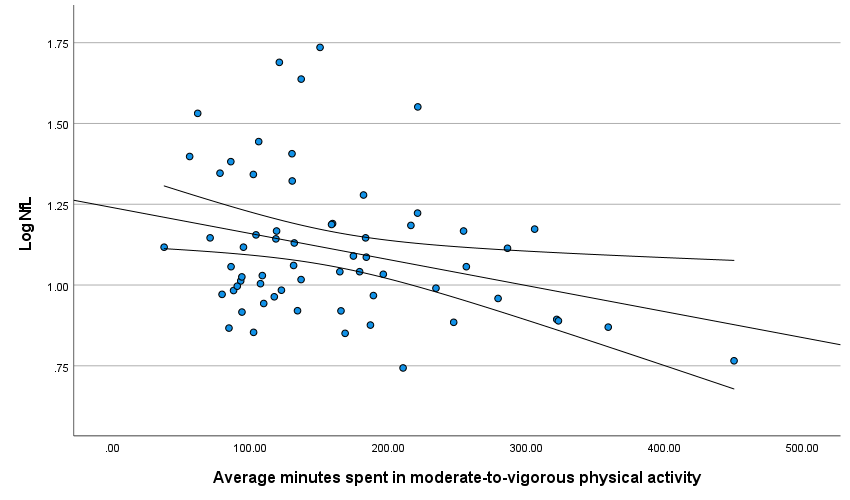
Lower concentrations of plasma NfL were significantly associated with a higher VO2 max (r=-0.34, p=.003), more time spent in MVPA (r=-0.30, p=.009; Figure 1), and greater distance walked during the SMWT (r=-0.30, p=.01). Although diabetes diagnosis did not associate with NfL, lower NfL values significantly related to higher glucose (r=.21, p=.04), higher triglycerides (r=.21, p=.04), and higher HbA1c (r=0.26, p=.02) values. There were no significant relationships between plasma NfL and any cognitive or HIV variables.
Conclusions:
Better cardiorespiratory, physical and metabolic health, but not markers of HIV disease, were linked to lower levels of a biomarker that may reflect neuronal damage (NfL) in older PWH. Longitudinal and interventional studies are needed to examine how changes to these factors may improve NfL levels and brain integrity in PWH.
Greater time spent in moderate-to-vigorous physical activity was associated with lower levels of NfL in older PWH.