Background:
In the general population, host glycomic alterations – including loss of galactose (agalactosylation; measured as high levels of G-terminal ratio and G0 glycan groups) – on circulating IgGs drive inflammation and precede the onset of premature aging-associated diseases. However, the impact of antiretroviral therapy (ART)-suppressed HIV infection on these glycomic biomarkers of biological aging is unknown.
Methods:
Using capillary electrophoresis, we analyzed the IgG glycomes of 988 samples from participants of the MACS/WIHS Combined Cohort Study: 237 HIV-negative men and 254 HIV+ ART+ men (age/race matched); 254 HIV-negative women and 243 HIV+ ART+ women (age/race matched). HIV+ individuals were ART suppressed for ≥5 years with undetectable viral load and CD4 count of ≥ 350 cells/mm3. We also analyzed the IgG glycomes of 112 samples from HIV- and HIV+ ART+ male cases and controls; cases had coronary stenosis ≥50% in ≥1 coronary segments and controls had no coronary plaque (by CT angiography). Soluble markers of inflammatory aging (based on PMID:34888528) were measured using multiplex cytokine arrays on a subset of 400 samples. Comparisons between women and men were performed using multivariate models adjusting for age, race, and body mass index.
Results:
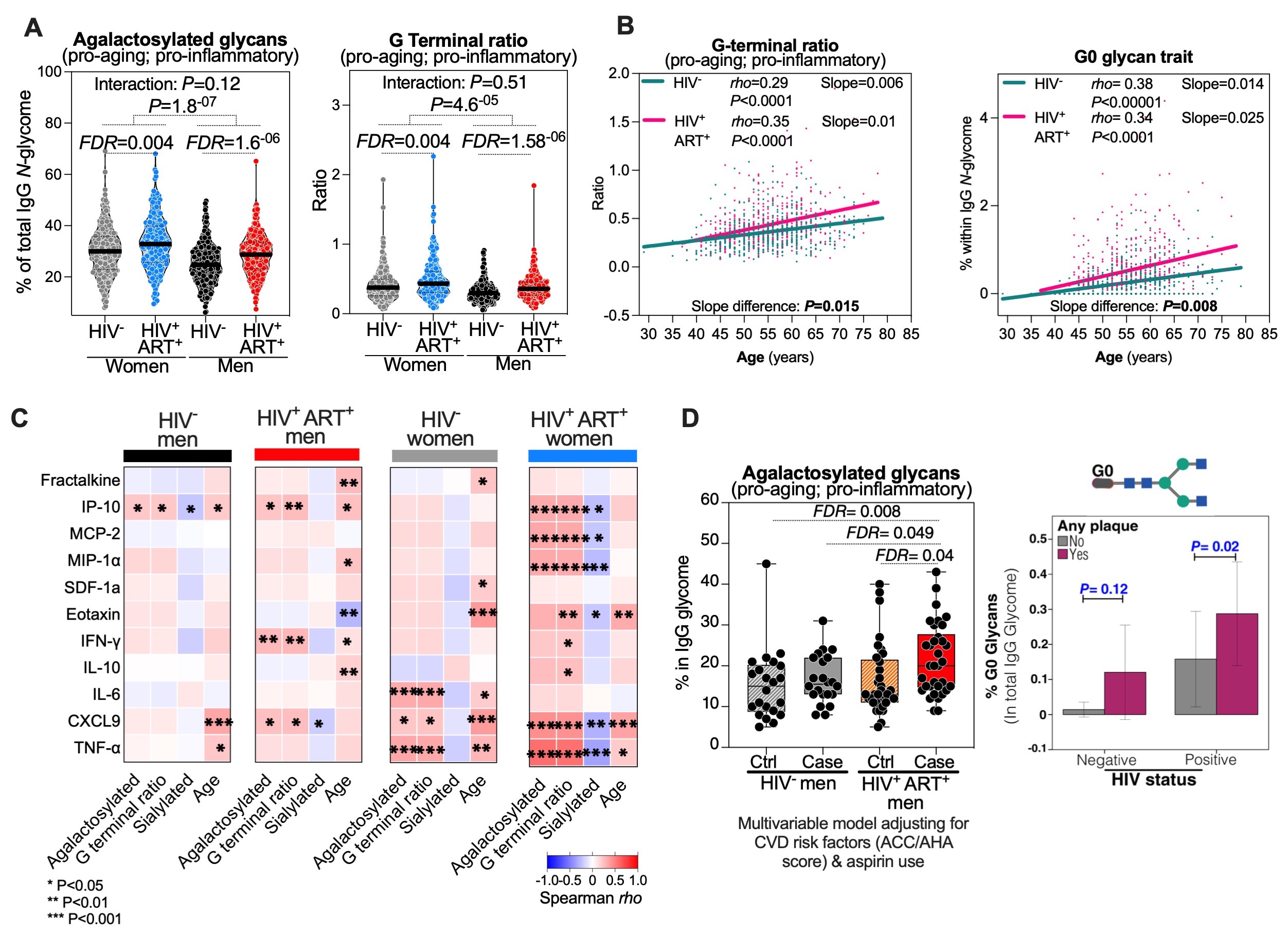
Treated HIV infection was associated with pro-biological aging glycomic alterations; induction of the pro-inflammatory agalactosylated (false discovery rate (FDR)< 0.05; Fig.1A) and bisected GlcNAc glycans in both women and men, and a reduction of the anti-inflammatory sialylated glycans in men. Compared to men, women exhibited higher levels of the pro-inflammatory agalactosylated glycans (FDR< 0.05; Fig. 1A) and lower levels of the anti-inflammatory sialylated glycans. HIV infection accelerated the pace of age-associated agalactosylation compared to HIV- controls (P< 0.02, Fig.1B). HIV-associated IgG agalactosylation correlated with higher inflammatory markers of aging (including CXCL9 and IP-10), especially in HIV+ ART+ women (P< 0.05; Fig.1C). Finally, agalactosylated glycans were higher in HIV+ men with coronary stenosis compared to controls (FDR< 0.05; Fig.1D).
Conclusions:
Sex-dependent premature-aging-associated glycomic dysregulation is accelerated during ART+ HIV infection and is associated with inflammatory aging (inflammaging) and subclinical atherosclerosis. These HIV and/or ART-promoted inflammaging-associated glycomic alterations warrant further investigation to examine their potential prognostic and functional significance.
Figure 1: Sex-dependent IgG glycomic dysregulations are accelerated during ART-suppressed HIV infection