Background:
Adherence to antiretroviral therapy (ART) is the principal determinant for achieving and sustaining viral suppression, which decreases progression to AIDS, and reduces mortality and transmission risk. Whilst burden of HIV is increasing in adolescents and youth, adherence to medications, retention in care and self-management is still a challenge. It is important to evaluate if the emerging capacity in mHealth technology could support youth living with HIV. We evaluated whether Call for life-interactive voice response (CFL-IVR; Johnson & Johnson) mHealth tool improves ART adherence and retention in care among youth receiving ART at a rural district in Uganda.
Methods:
This was a randomized trial in a rural Ugandan district, 225 KM away from the capital. Recruitment was from three ART clinics, youth living with HIV 15-24 years, initiating or on ART for ≤ 6 months were eligible for randomization at a ratio of 1:1 to either Standard of Care (SoC) which is usual care or the intervention “CFL-IVR plus SoC”. Participants were seen at baseline, month 06, and month 12.Data collection included socio-demographics, medical history, HIV basic Knowledge, and sexual behaviors. Blood for viral load testing was drawn at all 3 clinic visits. Data was entered in REDCap and exported to stata 15. The CFL-IVR tool offered; individualized pill reminders, clinic visit reminders, health tips messages, and functionality to support self-reported symptoms. Descriptive and regression analysis were done to identify factors related to ART adherence, viral suppression and retention in care.
Results:
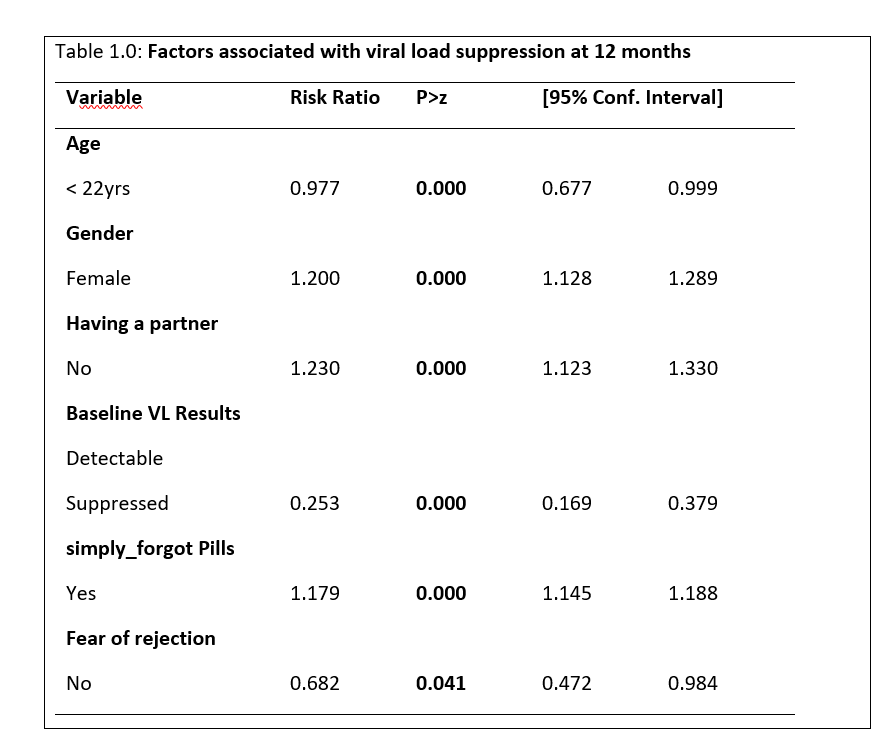
We randomized 206 participants in a ratio 1:1 to either CFL-IVR intervention or SoC. Participants mean age were 22.3yrs, 167 (81%) were females, 183 (88%) had a sexual partner, 174 (84%) were working, 63 (30%) had monthly household income of at least 26 USD and 52 (25%) had secondary level of education.Retention in care at month 6 was 93.2% in intervention vs 84.3% in SoC (p=0.046) and at 12 months 94.8% in intervention vs 89.5% in SoC (p=0.122).Viral suppression: At 12 months, 67.4% (60) of those on intervention had a suppressed VL compared to 54.7% (41) SoC, which was statistically significant P=0.009. Factors related to viral suppression were age above 22yrs, being female, and having a partner (Table 1: Factors associated with VLS).
Conclusions:
mHealth has demonstrated significant potential to improve medication adherence and retention in care.
Table of factors associated with viral load suppression at 12 months