An increasing proportion of women living with HIV (WLWH) are now experiencing the menopause. We describe the clustering of menopausal symptoms in a large, representative sample of WLWH in England to understand the burden and inform care pathways.
We included 709 women aged 45-60 from PRIME, an observational study of WLWH. The Menopause Rating Scale was used to capture the severity of each of 11 menopausal symptoms (0: None/little to 4: Very severe). Hierarchical agglomerative cluster analysis was used to describe the clustering of symptoms by menopausal status (pre-, peri- and post-).
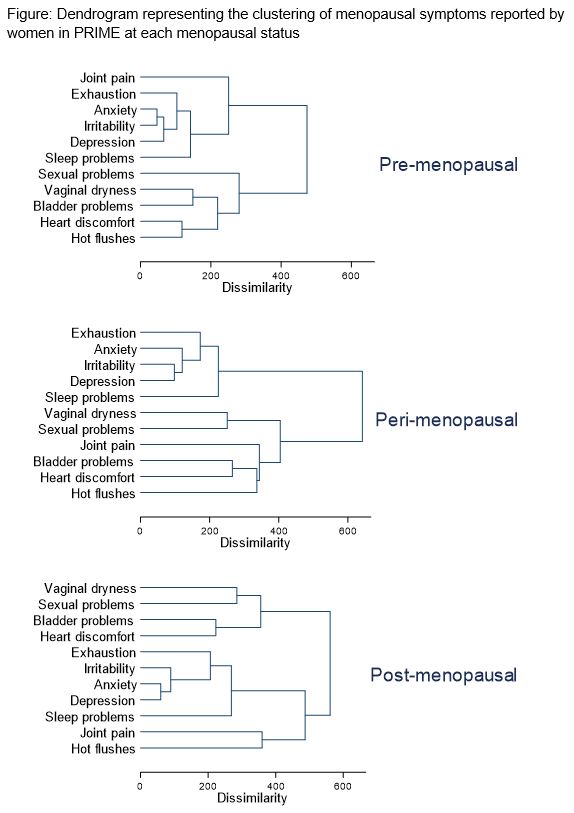
Median age was 49 years (interquartile range: 47-52). The majority were Black African (71.7%), had completed at least secondary education (89.4%), were currently employed (68.9%) and in a relationship (57.1%). Overall, 211 (29.8%), 117 (16.5%), 182 (25.7%) and 199 (28.1%) women reported no/little, mild, moderate or severe symptoms/complaints, respectively. Joint pain (66.4%) was the most commonly reported symptom, followed by hot flushes (63.0%), exhaustion (61.6%) and sleep problems (61.4%). All symptoms were more common among peri- and post-menopausal women. Amongst pre-menopausal women, joint pain, exhaustion, anxiety, irritability, depression and sleep problems clustered together (Figure). The remaining symptoms (sexual problems, vaginal dryness, bladder problems, heart discomfort and hot flushes) formed a second cluster. Amongst peri-menopausal women, joint pain clustered more closely with bladder problems, heart discomfort and hot flushes, and there was apparent clustering between vaginal dryness and sexual problems in this group. Among post-menopausal women, the cluster of anxiety, exhaustion, irritability and depression seen in peri-menopausal women remained, with bladder problems and heart discomfort now clustering with vaginal dryness and sexual problems, and joint pain and hot flushes forming a third cluster.
In the first study to explore the clustering of menopausal symptoms among WLWH, we report a high proportion of menopausal symptoms. Whilst exhaustion, anxiety, depression, irritability and sleep problems remained closely related across all menopausal stages, urogenital and somatic symptom clusters become more distinct in the peri- and post-menopause. These data allow a nuanced understanding of symptoms and potential aetiologies in women aging with HIV, facilitating the most appropriate and effective support.