Rapid detection and isolation of SARS-CoV-2 infections is critical to mitigate the pandemic; however, testing access across the US has been uneven and data on barriers to testing are limited.
We conducted serial cross-sectional assessments of experiences around SARS-CoV-2 PCR testing in Florida, Illinois, and Maryland. We sampled ~1000/state using an online survey from Jul 15–31 and Sep 16–Oct 15, 2020, with additional waves planned at 6-8 week intervals. At the time of surveys, there were no systematic differences in testing availability (public, private and free testing options) across these states. Participants were recruited using on online panel; demographic targets were provided to match age, sex, race/ethnicity and income distributions of each state. Participants were ?18 years, provided consent, and resided in the study state. The survey covered demographics, symptoms, and PCR testing in the prior 2 weeks.
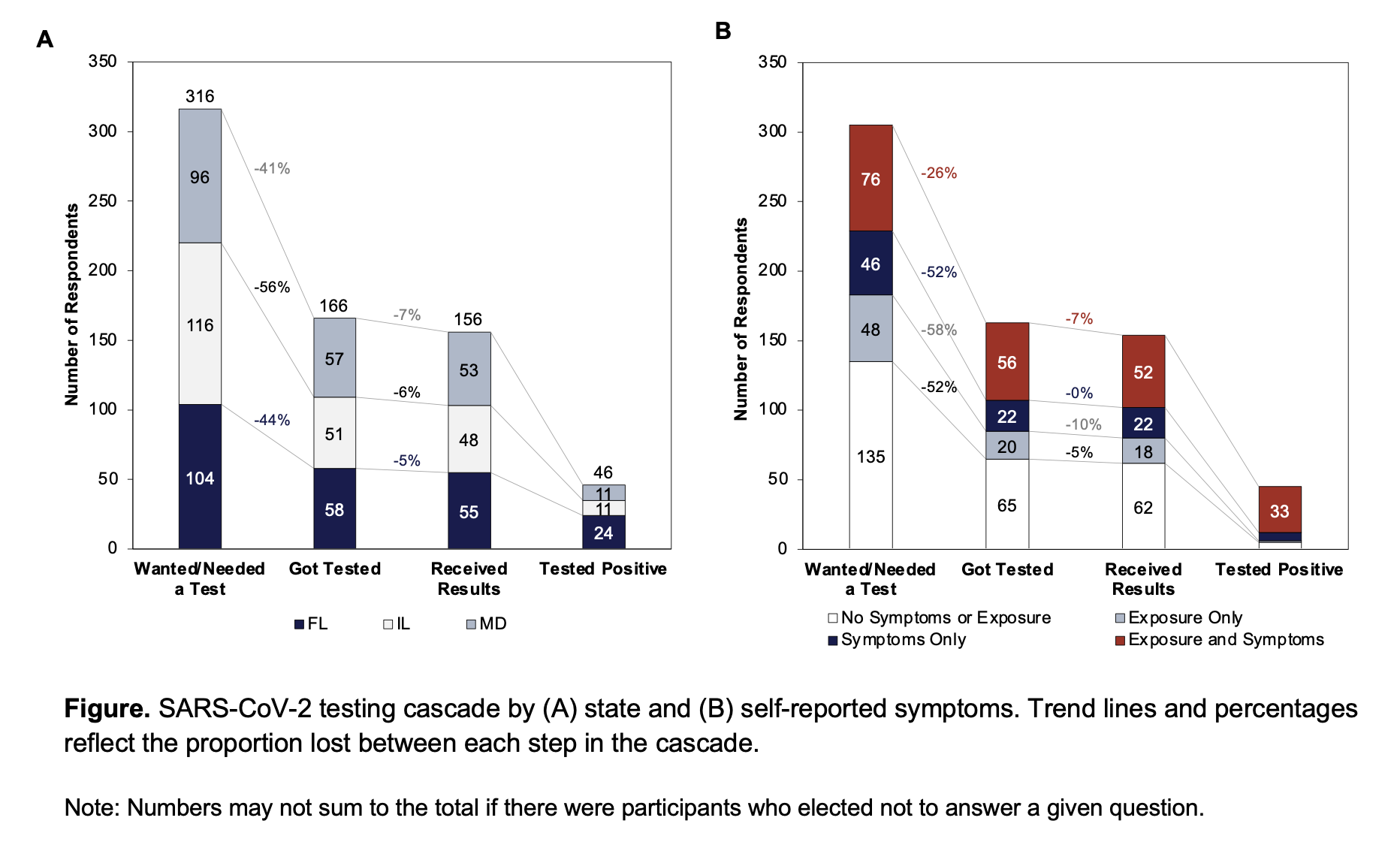
Of 3,058 persons surveyed most recently (Sep 16–Oct 15), 316 (10%) reported wanting/needing a test in the prior two weeks. Median age of participants wanting/needing a test was 36 years and 46% were female; 47% self-identified as White and 57% reported working outside home. Of 316 who wanted/needed a test in the prior 2 weeks, 53% were able to get tested, of whom, 94% received results, with no significant differences by state (Figure); this was not substantially different from the proportion able to get tested in July (51%). Among those wanting/needing a test, getting tested was significantly less common among men (aOR: 0.46) and those reporting black race (aOR: 0.53) and more common in those reporting recent travel (aOR: 3.35; all p<0.05). The primary reasons for testing were desire to know status (35%) and symptoms (28%). Among those tested, 53% had to wait ?8 days to get a result from the time they wanted/needed a test. Of those tested, 71% reported quarantining while awaiting results. An additional 146 who wanted/needed a test did not get tested; the main reasons for not testing in this group were not knowing where to go (36%) and distance/waiting time (33%); an additional 21% reported fear of being tested.
These data reflecting similar testing barriers across three US states underscore the importance of a unified national strategy with clear messaging on who, where, when, and how to get a test, as well as improved turn-around-times. As demand rises borrowing strategies from HIV such as self-testing could help overcome logistical barriers.