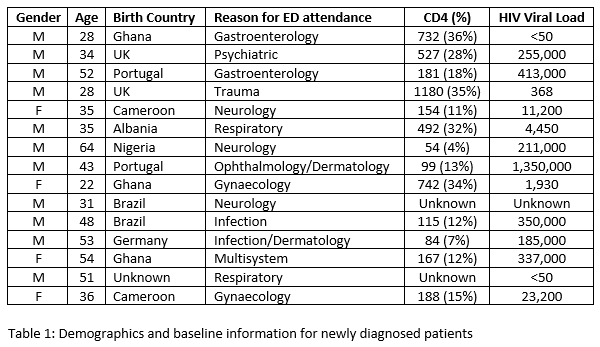
UK 2020 HIV guidelines recommend opt-out HIV testing in Emergency Departments (ED) in areas of high prevalence (>2/1000). Our area has a very high HIV prevalence (>5/1000) with a 46% late diagnosis rate. We implemented opt-out testing in our ED in May 2020, sustaining testing rates of 97%.
All patients aged ?16 undergoing venesection in ED have an HIV test automatically added. A separate blood sample is tested using Roche 4th generation HIV 1/2 antigen-antibody combination test. Posters and leaflets are prominently displayed in ED, signposting how to opt-out. IT blocks duplicate testing and those opted-out within the past 6 months. The HIV team receives an automated daily report of all non-negative HIV results. Patients not engaged in care are contacted. Those with new reactive tests are invited to attend for full sexual health screening including point of care test (POCT); if positive, patients are counselled pending confirmatory results and linked to HIV care that day with baseline bloods taken.
24,621/25,336 (97%) eligible patients were tested. This data excludes 21 days when Covid-19 reagent shortages halted testing. 244 patients had non-negative results. 161 were already engaged in care. 14 had defaulted care; nine have now re-engaged. 15 patients were confirmed new HIV diagnoses; 13 are now engaged in care and receiving antiretrovirals and two have declined care. 8/14 (57%) new patients and 5/9 (56%) defaulters had a CD4 count <200. 9/13 (69%) new patients had missed diagnostic opportunities. 42/244 (17%) patients with reactive tests were verified as false positives. 12 patients are awaiting repeat testing. Seven regular partners of newly diagnosed patients were verified HIV negative and managed with post- or pre-exposure prophylaxis, condoms and/or treatment as prevention. In the same period, ED diagnosed 15 patients compared to 12 non-ED (eight sexual health, one antenatal, two haematology, one medical). Our tested ED HIV prevalence is 7.72/1000 compared to a local recorded prevalence of 5.84/1000 (p<0.0002).
Collaborative working between ED, pathology, IT and HIV can sustain 97% testing rates using opt-out testing. The prevalence of HIV in ED attendees is statistically significantly higher than the local prevalence underlining the importance of HIV testing in ED. Wider benefits include earlier HIV diagnosis, reduced morbidity, mortality, investigations and healthcare costs, reduced length of stay, and reduced onward transmission.