Epidemiologic risk factors for SARS-CoV-2 infection are best characterized via prospective cohort studies, complementing case-based surveillance and cross-sectional seroprevalence studies.
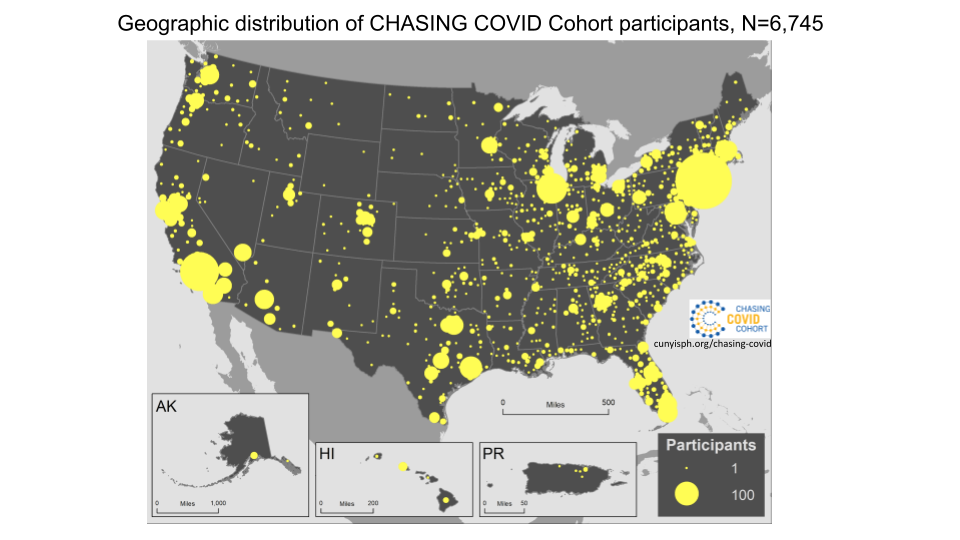
We estimated the cumulative incidence of SARS-CoV-2 infection and incidence rates of seroconversion in a national prospective online cohort of 6745 US adults, enrolled during March-July 2020. A subset (n=4459) underwent serologic testing (Bio-Rad Platelia Total Ab, IgA/IgM/IgG), offered initially during May-Sept. 2020 and again in Nov. 2020-Jan. 2021.
A total of 303 of 4459 individuals showed serologic evidence of past SARS-CoV-2 infection (6.8%, 95%CI 6.1-7.6%). Among 3280 initially seronegative participants who had a subsequent serologic test, there were 145 seroconversions over 1562 person years of follow-up (incidence rate=9.3 per 100 person-years [95%CI 7.9-11.0]). Racial/ethnic disparities in crude incidence rates were apparent through Jan. 2021 (rate ratio [RRHispanic v White]=2.1, 95%CI 1.4-3.1; RRnon-Hispanic Black v White=1.8, 95%CI 0.96-3.1). Incidence was higher in the southern (RRSouth v Northeast=1.7, 95%CI 1.1-2.8) and midwest (RRmidwest v Northeast=1.6, 95%CI 0.98-2.7) regions, in rural v urban areas (RR=1.5, 95%CI 1.0-2.2), and among essential workers (RR=1.7, 95%CI 1.1-2.5). Household crowding (RR=1.6, 95%CI 1.1-2.3), indoor restaurant dining (RR=2.0, 95%CI 1.4-2.8), visiting places of worship (RR=2.0, 95%CI 1.3-2.9), wearing masks sometimes (v always) while grocery shopping (RR=2.5, 95%CI 1.3-4.4), not wearing masks when visiting people outside the household (RRsometimes v always=1.3, 95%CI 0.88-2.1; RRnever v always=2.0, 95%CI 1.2-3.2), gathering in groups of >10 (RRindoors v never=1.74, 95%CI 1.2-2.5;RRoutdoors v never=1.8, 95%CI 1.3-4.3), and recent air travel (RR=1.7, 95%CI 1.1-2.6) were associated with higher incidence. Among 303 seropositive persons, 27.4% had asymptomatic infections and 32% reported a positive SARS-CoV-2 PCR test or provider diagnosis. There were major gaps in the uptake of public health interventions aimed at isolation (31%) and contact tracing (asked about contacts [18%]; told about exposure to a case [7.6%]).
Modifiable risk factors and low uptake of public health strategies drive SARS-CoV-2 transmission across the US. It is critical to address inequities in incidence, reduce risk factors, and improve the reach of public health strategies.