COVID-19 first reported in the US on 1/2020 is a global pandemic. In PLWH, COVID-19 outcomes have been reported to be similar or worse compared to the general population; however, the seroprevalence in this group has not been identified. As of 6/2020, 2.7% of the 960 PLWH in our Ryan-White (RW) clinic have tested PCR+ for COVID-19. Yet, these likely represent only a fraction of COVID-19 infections, as an unknown proportion of cases are mild or asymptomatic and not diagnosed. Our goal was to estimate the seroprevalence in our RW patients (pts), irrespective of known past COVID-19 infection. The RW program funds HIV care for a diverse group impacted by a number of social determinants of health, including low socioeconomic status.
We conducted a seroprevalence study, which recruited pts in the RW program at Henry Ford Hospital. All RW pts were offered participation during clinic visits. After informed consent, pts completed a survey and had blood sampled for COVID-19 antibody using the Beckman Coulter Access SARS-CoV-2 IgG assay. Pts’ electronic medical records were reviewed for demographic clinical features, including previous COVID-19 testing. The study was IRB approved.
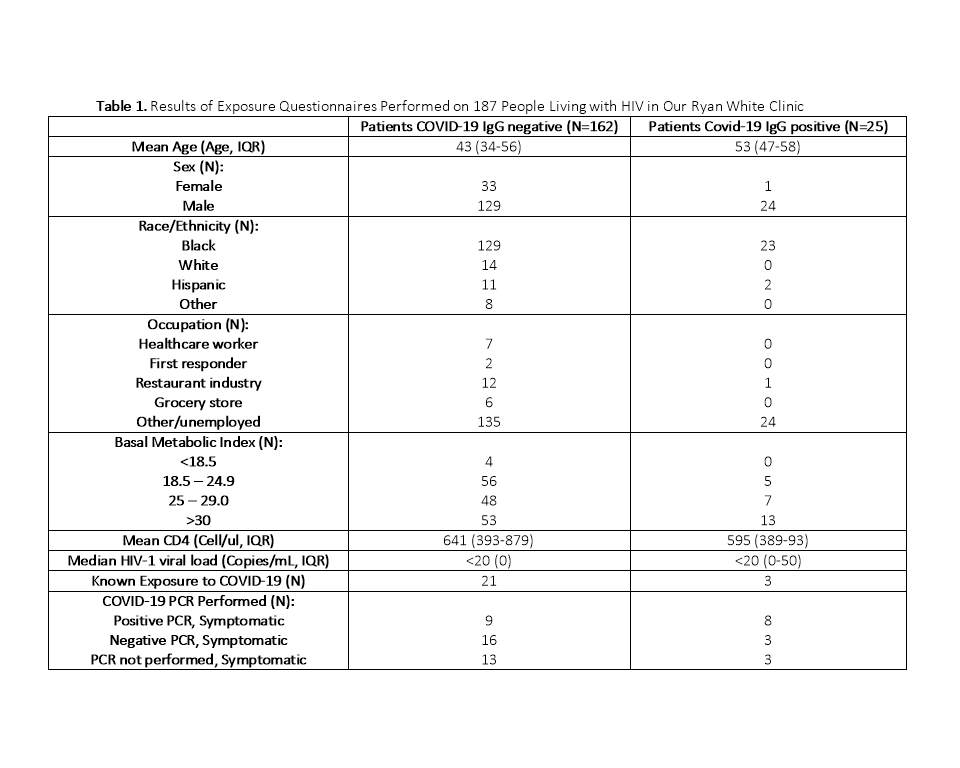
187 PLWH were enrolled from 9/2020-11/2020 (Table 1). Median age: 46 (IQR: 34-57); 153 males; 152 black; 24 reported a previous COVID-19 exposure; 66 had a BMI of >/= 30. Mean CD4 count was 629.5 (IQR: 390-859), and 129 pts were HIV suppressed. 17 had PCR-confirmed COVID-19, and 16 reported symptoms consistent with COVID-19 but with unconfirmed diagnoses. Of 187 PLWH, 25 (13%) were COVID-19 IgG+ of whom 8 were previously PCR+. 9/17 PLWH who were PCR+ for COVID-19 were COVID-19 IgG negative at a mean of 7 months from the initial PCR test.
The COVID-19 seroprevalence of 13% reported in this study of PLWH in our clinic was about 5-fold greater than the number of reported cases by PCR+ in the same population. This estimate of past infection is also an underestimate given the absence of antibody at the time of the serological testing in 53% of PLWH with documented PCR+ infection and the likelihood of infection in some of those never tested. Conversely, the impact of health disparities on the RW pts likely increases the chance of acquisition of COVID-19 compared to other populations. In order to better understand the penentration of COVID-19 into the PLWH community, a greater understanding of the dynamics of the antibody response to COVID-19 is needed.