Understanding adolescent motherhood and HIV infection in resource-constrained settings is critical. In this study, we report HIV treatment-related outcomes and clinic factors associated with poor treatment outcomes among adolescent mothers living with HIV in South Africa.
All adolescent girls living with HIV from 52 clinics and 9 maternity obstetric units in a health district in South Africa were approached (90.1% and 96% enrolled in each facility type), resulting in n=792 young women living with HIV aged 11-25 participating in the study. Self-reported questionnaires-using validated tools where available-were piloted with n=25 HIV-positive adolescents. Participants who had at least one child before the age of 20 were coded as being adolescent mothers. Analyses included two steps: (1) comparing HIV-related outcomes among adolescent mothers living with HIV (n=354) to nulliparous adolescent girls and young women living with HIV (n=438), and (2) identifying clinic-level factors associated with poor HIV-related outcomes for both groups, using STATA16.1.
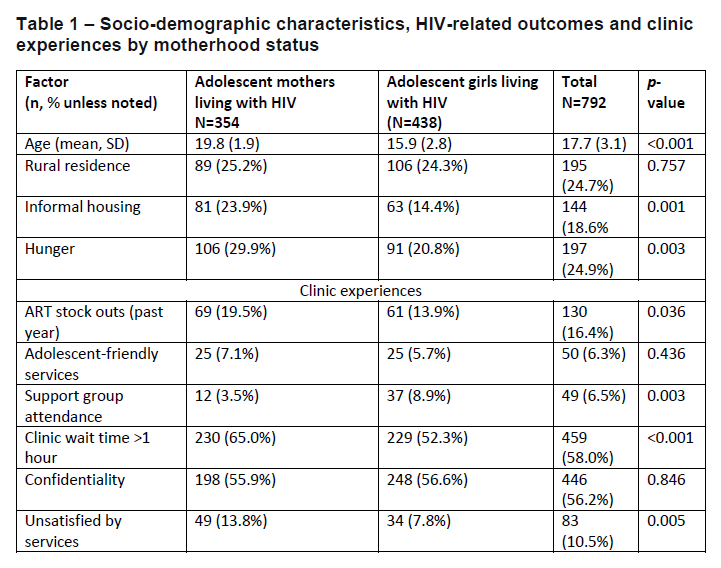
Socio-demographic characteristics, HIV related outcomes and clinic experiences among participants by motherhood are included in Table 1. Among adolescent mothers living with HIV, n=225 (82.6%) knew their children’s HIV-status and fifteen (5%) had at least one child living with HIV. One in six (16%) adolescent mothers living with HIV was not on consistent ART during pregnancy and breastfeeding, and another third (34%) started after the first trimester. Compared to non-mothers, adolescent mothers living with HIV were more likely to report past-week non-adherence (26.0% vs 18.7%, p=0.014), and past-year treatment interruptions (32.8% vs 18.7%, p<0.001). Adolescent mothers were more likely to report ART unavailability due to clinic stock-outs (19.5% vs 13.9%, p=0.036) and be unsatisfied with how they were treated at health facilities during routine care (13.8% vs 7.8%, p=0.005). In multivariate analyses, ART stockouts were associated with past-week non-adherence (aOR32.65 95%CI15.64-68.14, p<0.001) and treatment interruptions (aOR20.72 95%CI 8.85-48.54, p<0.001). Adolescent-sensitive services were associated with lower odds of treatment interruptions (aOR=0.31 95%CI0.09-0.97 p=0.044).
More effective and acceptable clinic-based services are critical to treatment adherence and reducing onward HIV-transmission to partners and their HIV-exposed children.