Bariatric surgery (BS) is a major strategy to manage patients with morbid obesity which needs to be comparatively evaluated in HIV+ and HIV- patients.
ObeVIH is a prospective ongoing study of HIV+ patients with BMI >35kg/m2 with comorbidities, or >40kg/m2, and plasma HIV-RNA<20copies/ml undergoing single port sleeve gastrectomy. We compared HIV+ and HIV- groups matched 1:1 on age, sex, and BMI and evaluated the impact of HIV/ART on subcutaneous (SCAT), visceral adipose tissue (VAT) and liver histology. During BS, VAT/SCAT was recovered and scored for inflammation (macrophage crown-like structure)/peri-lobular fibrosis/peri-adipocyte fibrosis, and liver biopsies were scored for steatosis/inflammation/fibrosis. We report here patients' baseline characteristics including comorbidities and cardiovascular (CV) parameters: echocardiography findings (left ventricular mass index (LVMi) and ejection fraction (LVEF), and coronary calcium score (CCS).
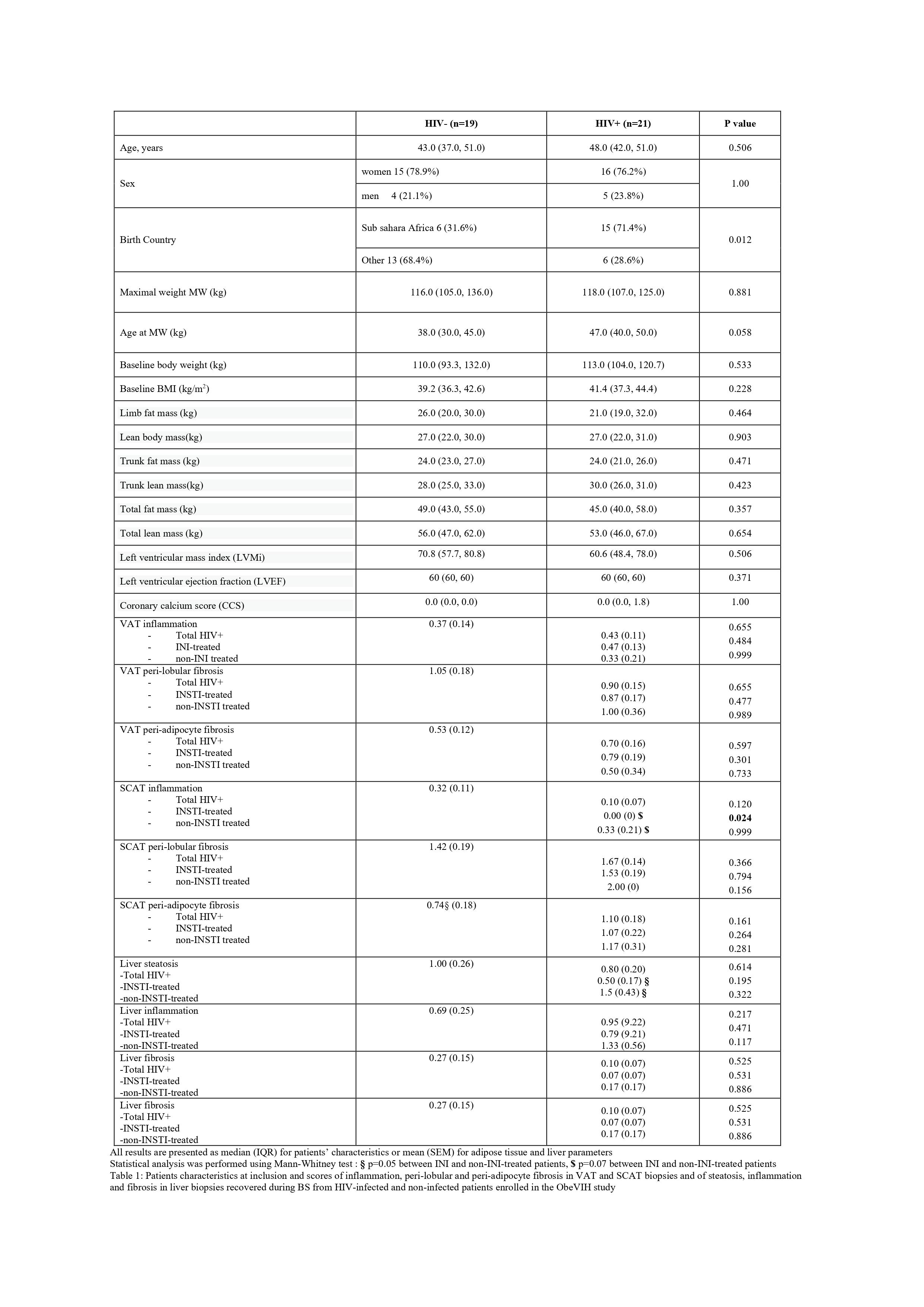
ObeVIH enrolled a total of 40 patients: 19 HIV- and 21 HIV+ with median (IQR) ART duration: 15y (7.5-17.5), viral suppression duration: 3.5y (2-6), and CD4 count: 864/mm3 (560-1066). ART was INSTI-Based in 15 and PI/NNRTI based in 6. The anthropometric, CV, adipose tissue and liver characteristics are presented in Table 1. No difference in the prevalence of sleep apnea, hypertension, diabetes, liver/bone/kidney diseases, dyslipidemia was observed. Moreover, there was no difference between groups for LVMi (p=0.506), LVEF (p=0.371), and CCS (p=1.00). In adipose tissue, the level of inflammation was lower in SCAT of INSTI-treated subjects than in HIV- (p=0.02) and non-INSTI-treated HIV+ (p=0.07). NASH was diagnosed by SAF score in 1/14 INSTI-treated, 2/6 non-INSTI treated HIV+ and 1/16 HIV-. The level of liver steatosis was lower in INSTI-treated than non-INSTI treated HIV+ (p=0.05). There was no overall difference between HIV+ and HIV- patients.
We report here that HIV+ and HIV- subjects undergoing BS presented a similar profile regarding baseline CV parameters and prevalence of comorbidities. However, there were differences between INSTI-and non-INSTI treated HIV+ in SCAT and liver histology. None INSTI-treated patients had inflammation in SCAT while it was present in some non-INSTI treated HIV+ and HIV- patients, which could suggest an anti-inflammatory effect of INSTI. Moreover, liver histology showed a milder profile with less steatosis in INSTI-treated than non-INSTI treated HIV+.